

As 2025 comes to an end, it’s traditional here at The Quantum Insider to take a look back at the stories that moved the community.
Certainly, one way to create these lists is to rely on your editorial judgment to determine which stories had the most impact, but interest and bias can skew the list. (Also, you get a lot of angry emails over the holidays.)
That led to the tradition of letting you — the reader — pick at least one of the story lists we publish. The following is the top ten stories in 2025 (so far) as determined by our web and social media statistics.
Not surprisingly, these stories trace several themes that have consumed the community over the past year: quantum moving from lab to commerce, entanglement intersecting with fundamental physics, large-scale funding and geopolitical risk entering the fray and cryptography’s ticking-clock crossing into serious territory.

Philosophy — the ontological impact of quantum mechanics, especially — creeped into our web stats, which means that not only are we worried about commercialization and economic effect of quantum, we’re also — maybe in our quiet moments — thinking about what quantum science is really saying about the world and universe around us.
For anyone tracking the quantum ecosystem, we think the list of most popular stories capably capture 2025 — an inflection point of inflection points of sorts — the hype-to-hope transitions, the zoom-out big picture thinking and the strategic maneuvers shaping what many suggest is the dawning of the “quantum era”.
Google’s Quantum Chip Sparks Debate on Multiverse Theory

Google’s latest quantum computer chip, which the team dubbed Willow, has ignited a heated debate in the scientific community over the existence of parallel universes.
Following an eye-opening achievement in computational problem-solving, claims have surfaced that the chip’s success aligns with the theory of a multiverse, a concept that suggests our universe is one of many coexisting in parallel dimensions. In this piece, we’ll examine both sides of this argument that seems to have opened up a parallel universe of its own — with one universe of scientists suggesting the Willow experiments offer evidence of a multiverse and the other suggesting it has nothing to do with the theory at all.
Investor Says Quantum Computing Is Underestimated, Likely to Commercialize in a Few Years
While many experts in the quantum industry are concerned about the hype surrounding the technology, some are suggesting quantum tech might not be hyped enough. According to one respected deep-tech investor, quantum computing is still underestimated and is only a few years away from commercial use.
Karthee Madasamy, founder of Silicon Valley venture fund MFV Partners, told Nikkei Asia he sees strong momentum in quantum computing, likening it to how ChatGPT surprised the world.
“People are going to underestimate [quantum computing] … It’s like ChatGPT,” he told Nikkei Asia. “Until ChatGPT, nobody was thinking about natural language … Now everybody’s like, ‘It’s going to kill this world.’
Study Suggests Quantum Entanglement May Rewrite the Rules of Gravity

A new study proposes that quantum information, encoded in entanglement entropy, directly shapes the fabric of spacetime, offering a fresh path toward unifying gravity and quantum mechanics.
Published in Annals of Physics, the paper presents a reformulation of Einstein’s field equations, arguing that gravity is not just a response to mass and energy, but also to the information structure of quantum fields. This shift, if validated, would mark a fundamental transformation in how physicists understand both gravity and quantum computing.
Chinese Researchers Use Quantum Computer to Fine-Tune Billion-Parameter AI Model
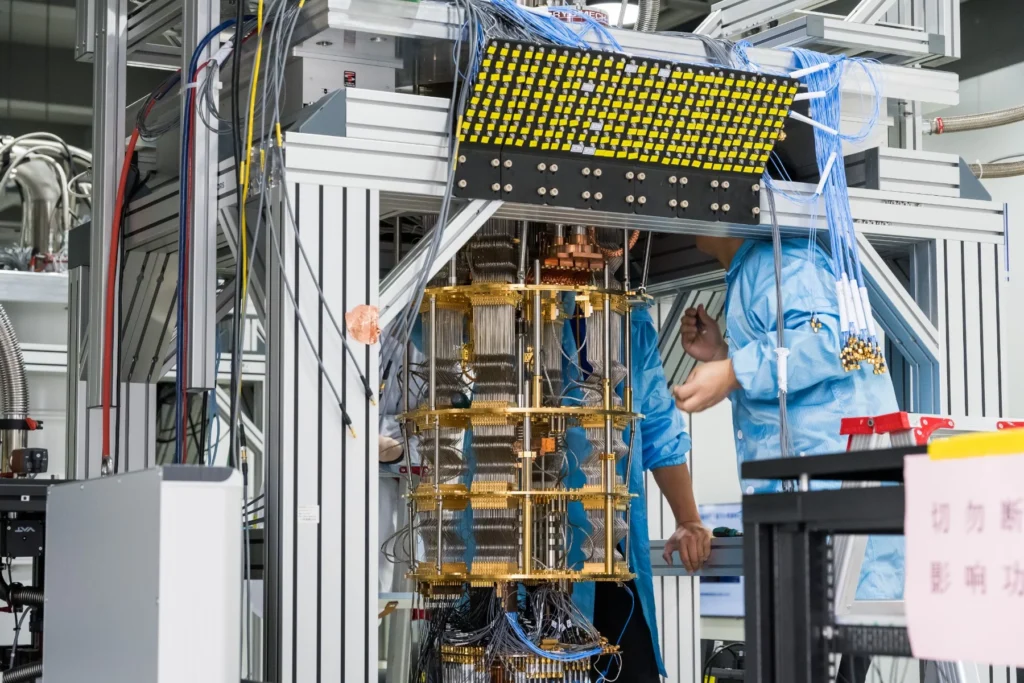
Chinese scientists used a quantum computer to fine-tune a billion-parameter artificial intelligence (AI) model, marking what they claim is a global first and a step toward combining quantum computing with advanced AI tasks, the state-affiliated Global Times reported.
The experiment was conducted on a superconducting quantum computer called Origin Wukong, which runs on a domestically built 72-qubit chip. According to Global Times, the fine-tuning task showed that quantum hardware could improve model training performance — even when the number of model parameters was drastically reduced — offering a potential solution to mounting demands for computing power.
Quantinuum Lands $1 Billion Quantum Deal in Historic U.S.–Qatar Investment Pact

Quantinuum has secured what may be the largest single deal in the quantum computing sector to date — finalizing an up to a $1 billion joint venture agreement with Qatar’s Al Rabban Capital to expand quantum technologies and workforce development in the United States, according to a White House statement and fact sheet.
The agreement, announced in Doha as part of a broader U.S.-Qatar economic summit, will fund advanced quantum research and bolster U.S. job creation in a field that national security officials and scientists say is critical to long-term American technological leadership. The joint venture also reflects how emerging technologies like quantum computing are moving toward the center of global investment strategy and geopolitical alignment.
Google Researcher Lowers Quantum Bar to Crack RSA Encryption
A new study from a Google Quantum AI researcher suggests that a 2048-bit RSA encryption key, a common standard for securing online data, could be cracked in less than a week using a quantum computer with fewer than a million noisy qubits—an order-of-magnitude drop from previous estimates.
The paper, authored by researcher Craig Gidney and posted to arXiv, redefines the technical barrier required to threaten one of the most widely used public-key cryptography systems in the world. The revised estimate represents a sharp drop from Gidney’s own 2019 projection, which pegged the cost at around 20 million qubits.
Morgan Stanley Discloses 7% Stake in IonQ

Morgan Stanley has disclosed a stake of roughly 7% in IonQ, signaling another major Wall Street player is positioning itself in the closely watched quantum computing market.
According to a Schedule 13G filed with the U.S. Securities and Exchange Commission earlier in August, According to the Schedule 13G filed with the SEC in August, Morgan Stanley Investment Management (MSIM) reported beneficial ownership of 18.4 million shares of IonQ, equivalent to about 7% of the company’s float. The disclosure, reflecting holdings as of June 30, indicates the stake is held across pooled investment vehicles MSIM manages for pensions, endowments, and other investors..
Andhra Pradesh Plans Quantum Valley to Advance India’s National Quantum Mission

The Andhra Pradesh government has announced plans to establish a Quantum Valley, a quantum computing hub in Amaravati, as part of India’s National Quantum Mission. The initiative, led by Chief Minister N. Chandrababu Naidu, is intended to provide the infrastructure necessary in hopes of establishing the state as a leading center for quantum technology research and development in India.
According to a recent post from The Hindu, Naidu stated, “Just as we led the Information Technology revolution in the 1990s, we want Andhra Pradesh to lead advancements in Quantum Technology, securing a first-mover advantage in this transformative field.” To support this effort, the state government is forming a task force to oversee the development of the hub and drive investments into the sector.
IBM CEO Sees Something ‘Remarkable’ Happening in Quantum Over Next Three-to-Five Years

As debates about quantum’s timeline continue to rage, IBM is betting that quantum computing will be a cornerstone of future technology, with chief executive Arvind Krishna telling Time Magazine the company is on track to achieve significant advances in error correction and coherence times by the end of the decade.
IBM has spent over a decade developing quantum hardware, a technology Krishna describes as more of an engineering problem than a scientific one. The challenge, he explains, comes down to two key issues: high error rates and coherence loss. While all computers experience errors, classical computing systems have built-in mechanisms that make them nearly invisible to users. Quantum computers, by contrast, are far more sensitive to disruptions, as tiny amounts of energy can interfere with their calculations.
Chinese Team Officially Report on Zuchongzhi 3.0 — Claims Million-Times Speed-up Over Google’s Willow
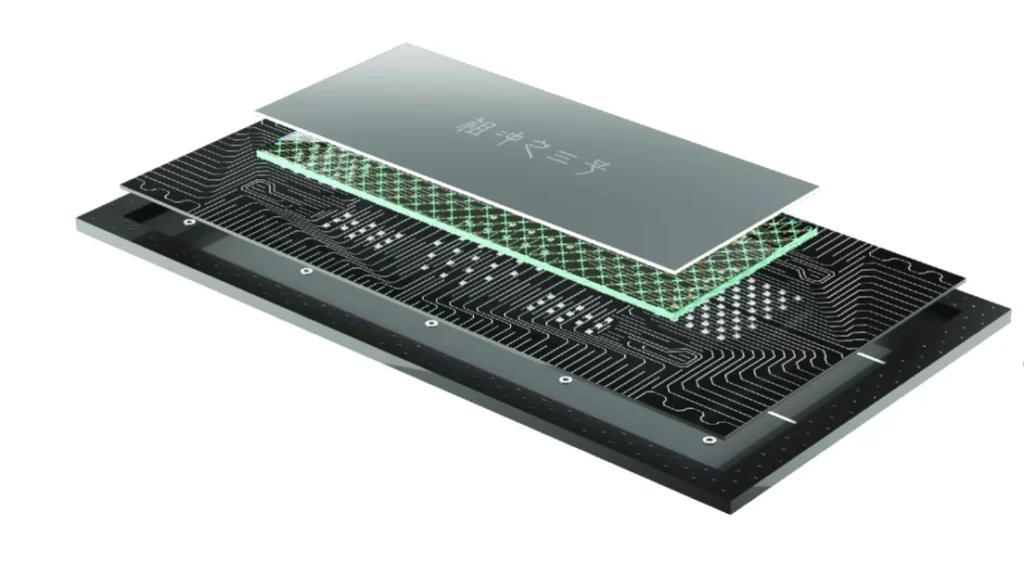
A Chinese research team has officially published findings that their quantum processor, Zuchongzhi 3.0, outperforms Google’s Sycamore quantum computing efforts by a factor of one million. The study, released in Physical Review Letters and detailed previously on arXiv, reinforces China’s growing influence in the race for quantum computational advantage, a milestone where quantum computers outperform classical machines in specific tasks.
Initial details on the experiment had been released prior in the pre-print server for early review.