

Insider Brief
- Microsoft has expanded its quantum computing facility in Lyngby, Denmark, making it the company’s largest quantum site and bringing its total investment in Denmark to more than DKK 1 billion.
- The expanded lab will advance development of Microsoft’s topological qubits and enable full fabrication of the “Majorana 1” chip, designed to scale to millions of qubits on a single processor.
- The investment strengthens Denmark’s role as a European quantum hub and supports broader EU ambitions for quantum leadership and digital sovereignty by 2030.
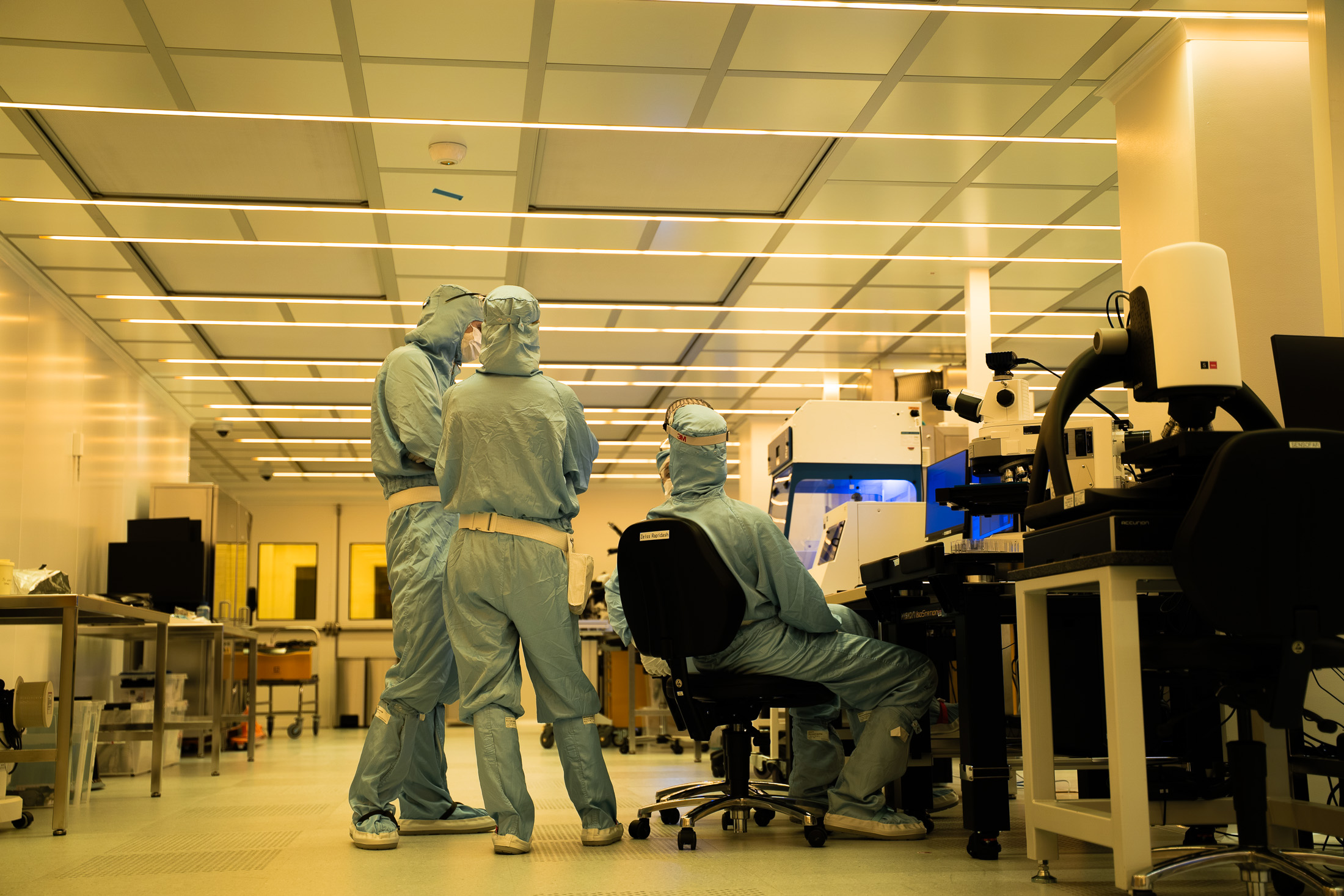
Microsoft has opened a major expansion of its quantum-computing facility in Lyngby, Denmark, according to a company blog post.
The expanded site becomes Microsoft’s largest quantum-lab globally and reflects an investment exceeding DKK 1 billion in Denmark’s quantum infrastructure.
The facility houses teams of physicists, materials scientists, micro- and nanofabrication specialists and software engineers — representing over 20 nationalities and many with PhDs — working in close cooperation across continents, according to the post.

“Building a fault tolerant quantum computer requires scientific breakthroughs and engineering at scale. Denmark’s worldclass ecosystem leading institutions and industry partners – plays an important role to Microsoft’s quantum program,” Jason Zander, Executive Vice President, Microsoft, said in a statement. “With this expansion of the Lyngby lab, we are converting deep physics into manufacturable technology, while reinforcing our commitment to Denmark and to Europe, advancing transatlantic collaboration.”
Topological Qubits and the “Majorana 1” Chip
A key focus at Lyngby is the development of topological qubits — the variant that Microsoft identifies as the “heart” of its Majorana 1 quantum-processing unit.
Topological qubits are engineered to embed quantum states in exotic materials or configurations that are intrinsically more error-resistant than conventional qubits. With the new lab capacity, the Microsoft team suggests fabrication of these cores will now be carried out in Denmark. Meanwhile, the company introduced Majorana 1 earlier this year, positioning it as the first quantum-processing unit built on a topological core and designed to scale to millions of qubits on a single chip.
“This new facility gives our teams the cleanroom capacity, instrumentation, and process control needed to iterate faster and at higher yield on topological qubits – a promising route to error-resilience and scalable architectures,” said Lauri Sainiemi, Vice President, Microsoft, and Leader of the Lyngby Quantum Lab. “This reinforces our confidence in achieving true quantum scale. Denmark offers a rare combination of talent, infrastructure, and partnership culture, and we’re excited to deepen our investment in the local ecosystem and skills pipeline.”
The expansion aligns with Europe’s broader push for quantum leadership by 2030, including chip design, material breakthroughs and quantum software development.
Microsoft described its investment in Denmark as part of this Europe-wide strategy and as a signal of its long-term commitment to partner with European institutions and industry. The Lyngby expansion is also billed as one of the world’s first AI-enabled hardware labs, offering new opportunities for innovation and skills development in the Nordic region.
Denmark’s Quantum Ecosystem Role
For several years, Microsoft has partnered with Danish universities such as the Niels Bohr Institute and the Technical University of Denmark to advance device-engineering for topological qubits.
The original Lyngby lab — opened in 2018 — was the world’s first dedicated to building the qubit core, laying the groundwork for today’s expansion. In 2025, the company also entered the Nordic initiative “QuNorth,” backed by Denmark’s Export & Investment Fund (EIFO) and the Novo Nordisk Foundation, which aims to host the next-generation quantum computer “Magne” in the region.
According to the post, Magne will combing Microsoft’s advanced error correction software with Atom Computing’s neutral-atom hardware. Construction began in autumn 2025 and is expected to be operational by late 2026.
Microsoft provided the operating system, cloud integration and developer tools to enable a full-stack solution for research and commercial applications and is suited for discovery in areas like materials science and biotechnology, the team writes.