New Report Recommends Near-Term Strategies for HPC Centers to Prepare for Quantum Integration



Insider Brief
- Alice & Bob and Hyperion Research released a joint report projecting that early fault-tolerant quantum computing (eFTQC) will accelerate critical high-performance computing (HPC) applications within the next five years.
- The study estimates that up to 50% of workloads at top U.S. government HPC facilities could benefit from eFTQC, especially in fields such as materials science, quantum chemistry, and fusion energy.
- The report urges HPC centers to prepare now by co-designing hybrid workflows, developing software stacks, and training users to integrate quantum processors alongside CPUs and GPUs.
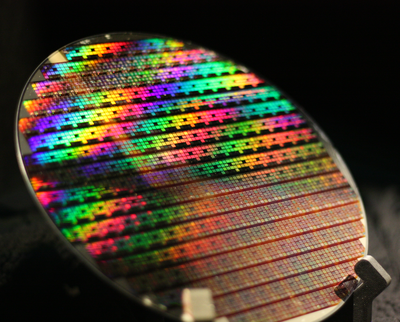
- Image: Photo by İsmail Enes Ayhan on Unsplash
PRESS RELEASE — Alice & Bob, a global leader in the race for fault-tolerant quantum computing, and Hyperion Research, the premier industry analysis and market intelligence firm for high performance computing (HPC), today announced the release of a joint report detailing how early fault-tolerant quantum computing (eFTQC) will accelerate solutions in critical HPC applications beyond classical supercomputing capabilities within the next five years.
The study, “Seizing Quantum’s Edge: Why and How HPC Should Prepare for eFTQC,“ provides guidance on how HPC professionals can invest today in the design and integration of useful hybrid workflows for near-term applications.
According to the report, up to 50% of current HPC workloads at top U.S. government research institutions like Los Alamos National Laboratory, the National Energy Research Scientific Computing Center and U.S. Department of Energy leadership computing facilities could benefit from eFTQC.

“Quantum technologies are a pivotal opportunity for the HPC community, offering the potential to significantly accelerate a wide range of critical science and engineering applications in the near-term,” said Bob Sorensen, Senior Vice President and Chief Analyst for Quantum Computing at Hyperion Research. “However, these machines won’t be plug-and-play, so HPC centers should begin preparing for integration now, ensuring they can both influence system design and gain early operational expertise.”
The report describes how physical limits on transistor size and chip energy capacity have considerably slowed performance gains in classical HPC systems in the past 10 years. Meanwhile, the timeline to useful quantum applications has shortened, as evidenced by the 1000x reduction in the estimated resources required to run Shor’s algorithm.
In the next 5 years, the report projects that quantum computers with 100 to 1,000 logical qubits and a logical error rate between 10-6 and 10-10 will significantly accelerate scientific computing applications starting with materials science and rapidly reaching quantum chemistry and fusion energy simulations.
“HPC users will see benefits in accuracy, time-to-solution and computational cost as hybrid HPC-quantum workflows shift some computationally complex subproblems to quantum processors,” said Théau Peronnin, CEO of Alice & Bob. “HPC centers that want to lead have to co-design these hybrid workflows with users and vendors, shape efficient software and hardware infrastructure and deploy eFTQC prototypes to secure first-mover advantage.”
The report describes how to integrate eFTQC, GPUs, and CPUs into an existing supercomputing center and includes recommendations for building application codes for HPC users, developing the hybrid software stack, and training the HPC user base for eFTQC adoption.
To establish a quantum-ready workforce and infrastructure and maximize the benefits of quantum processing, the report recommends that HPC centers explore heterogeneous workloads by collaborating with quantum vendors today.
“The HPC community has always been quick to adopt disruptive architectures – from vector processors to GPUs – and quantum computing is no exception,” said Juliette Peyronnet, US General Manager at Alice & Bob, who co-authored the report. “This work is a call to action for HPC centers to begin preparing for eFTQC integration now, so they are ready to harness the next major HPC accelerator.”
Read the full report here: https://alice-bob.com/wp-content/uploads/2025/08/Seizing-Quantum-Edge-eFTQC-HPC-Report-Alice-Bob.pdf

Keep track of everything going on in the Quantum Technology Market. In one place.
Topics

Matt Swayne
With a several-decades long background in journalism and communications, Matt Swayne has worked as a science communicator for an R1 university for more than 12 years, specializing in translating high tech and deep tech for the general audience. He has served as a writer, editor and analyst at The Quantum Insider since its inception. In addition to his service as a science communicator, Matt also develops courses to improve the media and communications skills of scientists and has taught courses.
[email protected]

Stay Ahead of Quantum
Get the latest research, company news, and market intelligence every week.
MENTIONED IN THE ARTICLE

Alice&Bob
Alice&Bob are working towards building an error corrected, fault tolerant quantum computer. They are working with superconducting circuits called ‘Cat Qubits’ which reduce the hardware required for error correction. With a cat Qubit, it is possible to stabilize two particular states in which quantum information is encoded autonomously.
→

Los Alamos National Laboratory
Los Alamos National Laboratory (LANL) is a U.S. national security laboratory in New Mexico. Founded in 1943 to develop the first atomic bombs during the Manhattan Project, it holds a significant role in aerospace, developing space-based sensors, instruments, and plutonium-238 heat sources for NASA missions, spanning over 60 years of space-based research.
→

U.S. Department of Energy (DOE)
The mission of the Department of Energy is to ensure America's security and prosperity by addressing its energy, environmental, and nuclear challenges through transformative science and technology solutions. In September, 2022, Research supported by ASCR demonstrated that classical machine learning algorithms can accurately predict ground state properties and classify quantum phases of matter using data generated from quantum experiments. In November, 2022, Research supported by Q-NEXT revealed that the performance of a sensor network is constrained by the intrinsic noise associated with the quantum states used in the network. In March, 2023, Research funded by DOE SC NP achieved the first experimental observation of entanglement between dissimilar particles, specifically positive and negative pions. In August, 2023, Research funded by DOE SC BER demonstrated strong preservation of entanglement in a two-photon absorption process involving organic molecules, offering a new approach for developing quantum light-based spectroscopy and microscopy.
→