Canadian Scientists Pioneer Made-in-Canada Quantum-powered AI Solution



Insider Brief
- A Canadian-led research team from TRIUMF and the Perimeter Institute has developed a quantum-assisted AI model to simulate particle collisions more efficiently, addressing global computational challenges.
- The study demonstrates that combining deep learning with quantum computing—using technology from D-Wave—can significantly reduce the time and cost of high-energy physics simulations.
- Published in npj Quantum Information, the work supports future upgrades to CERN’s Large Hadron Collider and underscores Canada’s growing leadership in quantum and AI-driven scientific research.
PRESS RELEASE — In a landmark achievement for Canadian science, a team of scientists led by TRIUMF and the Perimeter Institute for Theoretical Physics have unveiled transformative research that – for the first time – merges quantum computing techniques with advanced AI to model complex simulations in a fast, accurate and energy-efficient way.
“This is a uniquely Canadian success story,” said Wojciech Fedorko, Deputy Department Head, Scientific Computing at TRIUMF. “Uniting the expertise from our country’s research institutions and industry leaders has not only advanced our ability to carry out fundamental research, but also demonstrated Canada’s ability to lead the world in quantum and AI innovation.”
Traditional simulations of particle collisions are already both time-consuming and costly, often running on massive supercomputers for weeks or months. By leveraging quantum processes and technology made possible by California-based D-Wave Quantum Inc., the researchers were able to create a new “quantum-assisted” generative model capable of running simulations and open new opportunities to cost-effectively analyze rapidly growing data sets.

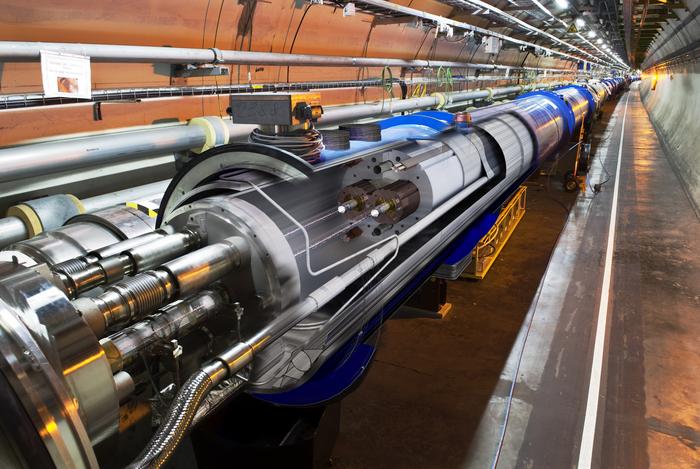
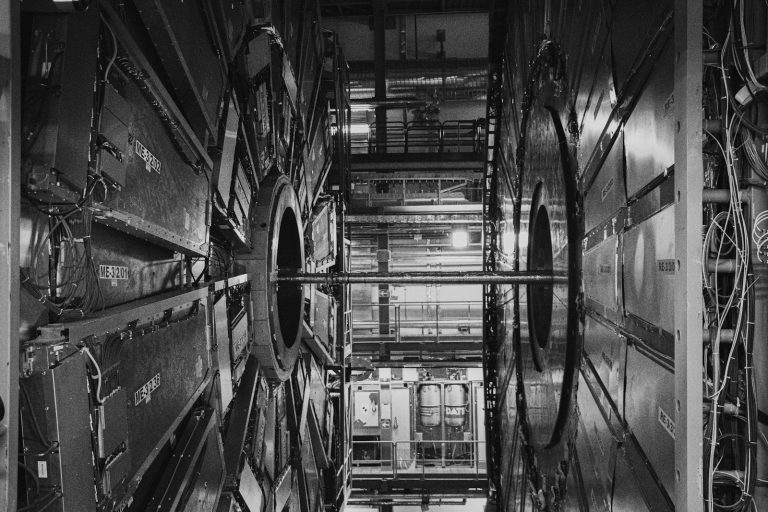
The research, published today in npj Quantum Information, is part of a worldwide effort to create the tools needed to accommodate upgrades to CERN’s particle accelerator, the Large Hadron Collider (LHC), and alleviate a computational bottleneck that would impact researchers all over the world.
“Our method shows that quantum and AI technologies developed here in Canada can solve real-world scientific bottlenecks,” said Javier Toledo-Marín, joint appointee at TRIUMF and Perimeter Institute. “By combining deep learning with quantum technology, we are forging a new path for both theoretical experimentation and technological application.”
In addition to TRIUMF and Perimeter, contributions to the published research came from the National Research Council of Canada (NRC), the University of British Columbia and the University of Virginia, showcasing not only the wealth of research talent and scientific ingenuity across the country, but also the international collaboration that places Canada at the forefront of worldwide scientific innovation.

Keep track of everything going on in the Quantum Technology Market. In one place.
Topics

Matt Swayne
With a several-decades long background in journalism and communications, Matt Swayne has worked as a science communicator for an R1 university for more than 12 years, specializing in translating high tech and deep tech for the general audience. He has served as a writer, editor and analyst at The Quantum Insider since its inception. In addition to his service as a science communicator, Matt also develops courses to improve the media and communications skills of scientists and has taught courses.
[email protected]

Stay Ahead of Quantum
Get the latest research, company news, and market intelligence every week.
MENTIONED IN THE ARTICLE

D-Wave Quantum
D-Wave Quantum is a pioneering dual-platform quantum computing company that partners with aerospace organizations to solve complex logistical, defense, and satellite challenges. Founded in 1999, the company’s quantum annealing technology is utilized by industry leaders like Lockheed Martin to optimize aircraft networks, improve manufacturing efficiencies, and support critical national security initiatives.
→
CERN
The European Organization for Nuclear Research, known as CERN, is a European research organization that operates the largest particle physics laboratory in the world. Established in 1954, the organization is based in a northwest suburb of Geneva on the Franco-Swiss border and has 23 member states.
→

National Research Council of Canada
National Research Council Canada is the primary national agency of the Government of Canada dedicated to science and technology research and development. It is the largest federal R&D organization in Canada, supporting innovation through research centres, collaboration programs, and funding initiatives. NRC's work spans aerospace, construction, digital technologies, health, metrology, quantum and nanotechnologies, and more, aiming to accelerate scientific breakthroughs and address national priorities. It partners with industry, academia, and government to deliver impactful solutions and foster Canadian competitiveness.
→