IonQ and Einride Partner to Bring Quantum-Enhanced Logistics to Autonomous Freight Operations


Insider Brief:
- IonQ and Einride announced a strategic partnership to develop quantum computing applications for optimizing autonomous and electric freight fleet operations.
- The collaboration targets complex routing and scheduling challenges that surpass the capabilities of classical computing, with a goal to boost efficiency, reliability, and sustainability in logistics.
- This partnership reinforces IonQ’s expansion into Europe, particularly Sweden, and follows recent collaborations with Airbus, AstraZeneca, and others.
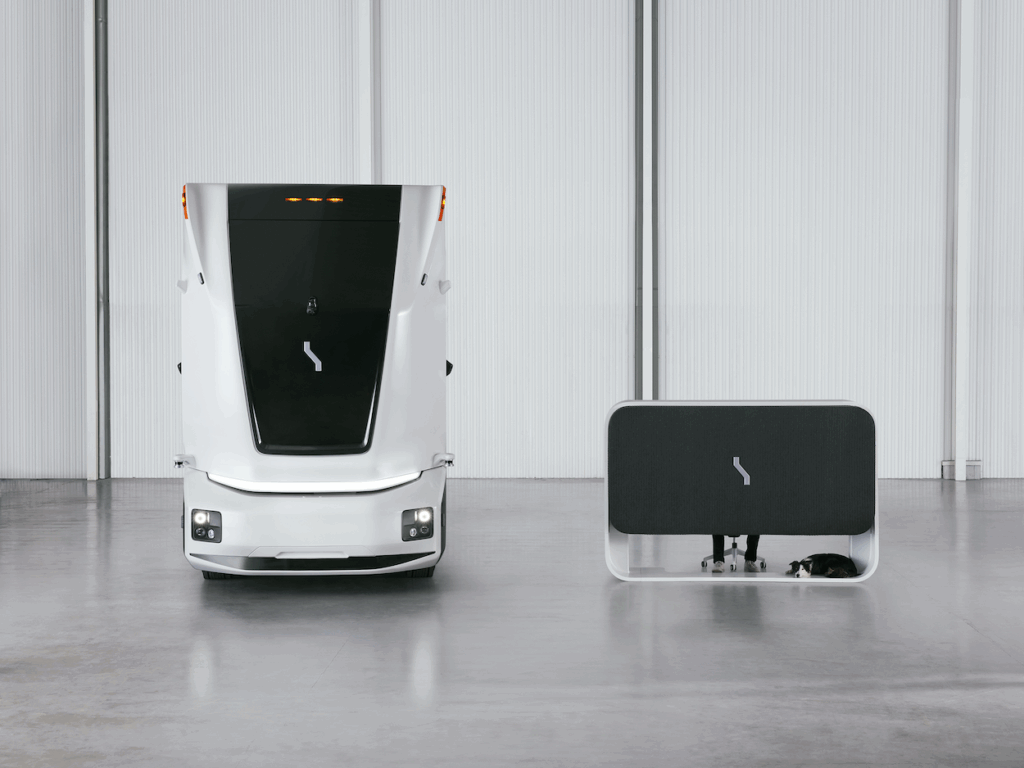
- Image Credit: Einride
PRESS RELEASE — IonQ, a leading commercial quantum computing and networking company, today announced an investment partnership with Einride, a leading global freight mobility company that provides digital, electric, and autonomous technology to explore how quantum computing can drive the next generation of fleet optimization and logistics. Together, IonQ and Einride will develop quantum applications that address large-scale routing and scheduling problems that have traditionally challenged classical computing.
By combining IonQ’s advanced quantum systems with Einride’s expertise in autonomous fleet logistics, the two companies will work to unlock new levels of efficiency, reliability, and sustainability for the global freight industry.
“Einride shares our belief that quantum computing will fundamentally reshape and improve how large industries such as transportation and logistics operate,” said Niccolo de Masi, CEO of IonQ. “This partnership is aimed at creating a powerful platform with unique insights into real-world quantum advantage in a sizable market. Our investment and collaboration with Einride reinforces our commitment to building a quantum-ready economy across Europe.”

As Einride scales its autonomous and electric fleet operations worldwide, routing and fleet management challenges grow exponentially more complex, creating optimization challenges that are increasingly difficult for classical computers to address. Quantum computing offers a new path forward by improving the efficiency and optimization of logistics and routing operations, all while reducing costs and improving speed to solution.
“At Einride, we are committed to transforming freight mobility, and we see quantum computing as a key enabler of that vision,” said Robert Falck, Founder and CEO of Einride. “Through our work with IonQ, we are laying the foundation for a future where logistics networks are smarter, cleaner, and far more efficient for customers around the world.”
Today’s announcement builds on IonQ’s quantum application progress with Airbus on cargo loading optimization and Thompson Machinery on predictive maintenance, among others. The partnership also heralds IonQ’s continued expansion into Sweden and the European market, following its recent collaboration with AstraZeneca to establish a new quantum application development center in Sweden. Earlier this year, IonQ established its first European Innovation Center at QuantumBasel in Switzerland and the company completed its acquisition of Switzerland-based IDQ.
Globally, IonQ recently signed an MOU with Intellian in South Korea and agreements with Toyota Tsusho and AIST’s G-QuAT in Japan. With data centers now in the Washington, D.C., Seattle, and Basel, Switzerland areas, IonQ has firmly established a global data center footprint, reinforcing its position as a leader in quantum technology. Today’s announcement also reflects IonQ’s growing momentum in building quantum ecosystems that drive real-world value across industries including transportation, logistics, manufacturing, and energy.
SOURCE: IonQ

Keep track of everything going on in the Quantum Technology Market. In one place.
Topics

Cierra Choucair
Cierra Choucair is a journalist and data analyst at The Quantum Insider, where she covers quantum computing and emerging technologies. With a background that blends scientific analysis, public communication, and product storytelling, she bridges technical complexity and industry insight across research, startups, and policy. She is the author of The Daily Qubit, a widely read newsletter spotlighting quantum research, use cases, and industry trends.

Stay Ahead of Quantum
Get the latest research, company news, and market intelligence every week.
MENTIONED IN THE ARTICLE

IonQ
IonQ is a developer in trapped ion quantum computing founded in 2015 that actively applies its technology to the aerospace and defense sectors. The company empowers satellite-based quantum networks and quantum enabled drones to improve positioning, navigation, and timing resilience in GPS denied environments, and collaborates with industry leaders like Airbus to optimize aircraft loading.
→

Airbus
Airbus, founded in 1970, is a global European aerospace corporation and one of the world's largest manufacturer of airliners. Headquartered in Leiden, Netherlands, with major operations in France, Germany, Spain, and the UK, the company specializes in designing, manufacturing, and supporting commercial aircraft, helicopters, defense systems, and space technology.
→

QuantumBasel
QuantumBasel, Switzerland's first commercial quantum computing hub, is a center of competence for quantum computing and AI. It focuses on democratizing quantum technology and accelerating its commercial applications.
→

Toyota
Toyota Motor Corporation is a Japanese multinational automotive manufacturer headquartered in Toyota, Aichi, Japan.
→

G-QuAT
G-QuAT is a research centre operated by National Institute of Advanced Industrial Science and Technology (AIST) in Japan specialising in hybrid quantum-AI and convergence computation technologies. It focuses on developing advanced quantum-classical hybrid infrastructures, creating industrial use cases, and promoting standardisation and ecosystem building. G-QuAT currently houses three types of quantum computers. There are plans to expand its capacity to host startups and SMEs from eight to more than 40 over the next three years. Developed at a cost of ¥62 billion JPY (about $430 million USD)
→