

Insider Brief
- The Quantum Insider and HorizonX Consulting have launched the Quantum Innovation Index – Life Sciences, ranking over 30 life-sciences organizations on workforce capabilities, R&D investment, and strategic partnerships.
- The index reveals that leading pharmaceutical companies, hospitals, and chemical firms are integrating quantum technologies into research pipelines, signaling early-stage commercial adoption.
- Top performers include Boehringer Ingelheim, Cleveland Clinic, Merck, and Roche, with use cases ranging from quantum-enhanced drug simulations to predictive models for clinical treatments.
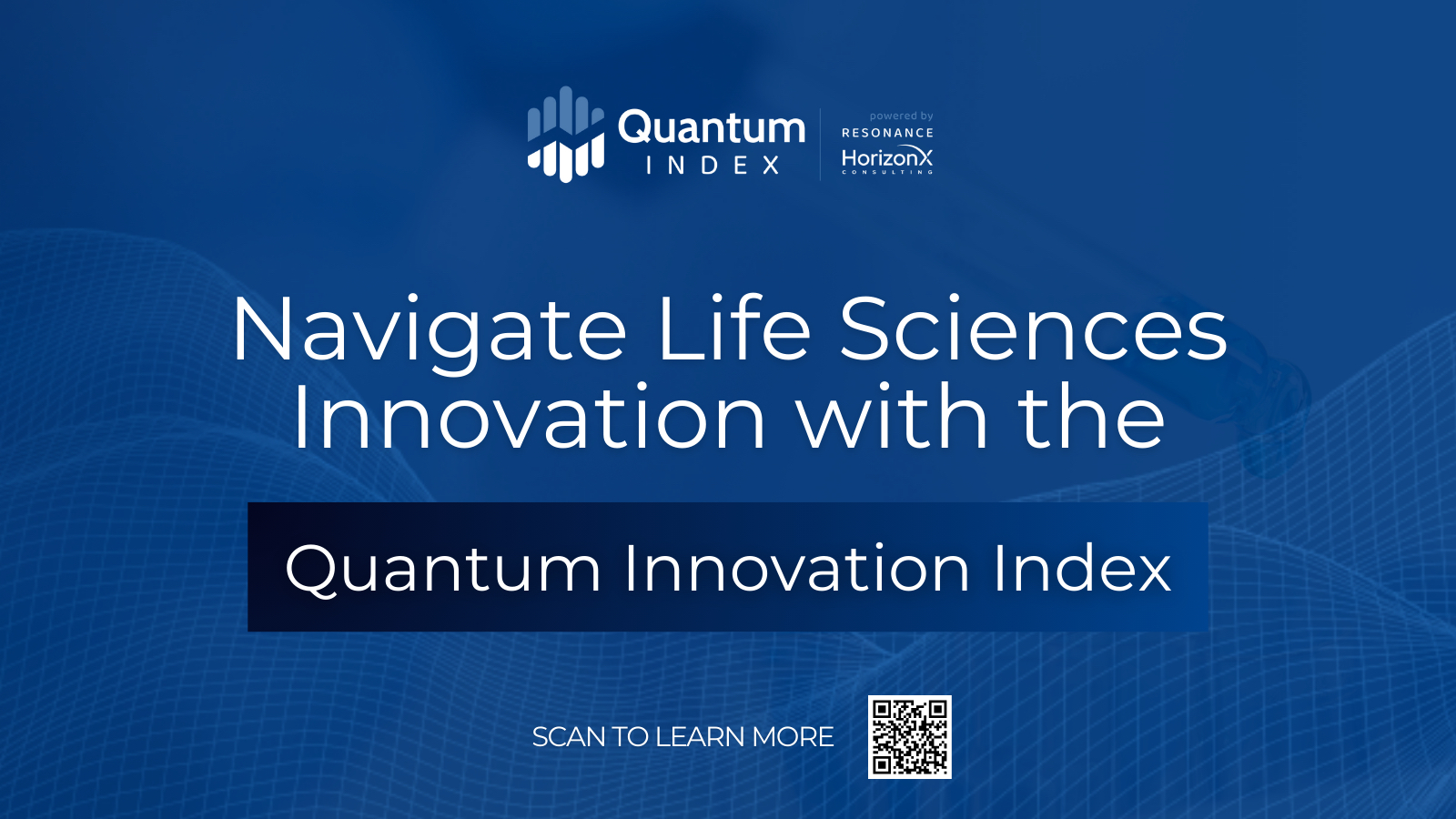
The Quantum Insider and HorizonX Consulting announce the creation of The Quantum Innovation Index – Life Sciences Index, which grades more than 30 life-sciences organizations on three equal criteria — internal skills, research spending and outside partnerships.
The new industry scorecard shows that large drug makers, hospitals and chemical suppliers are already weaving quantum hardware and software into their research pipelines, a sign that the once-experimental technology is edging toward routine medical use.
“Quantum computing’s potential in accelerating drug discovery and precision medicine is rapidly becoming a commercial reality,” noted Alex Challans, CEO of Resonance, which operates The Quantum Insider. “The Quantum Index – Life Sciences underscores industry leaders who are boldly investing and strategically partnering to harness quantum’s unprecedented computational power.”

Steve Suarez, founder and CEO of Horizon Consulting and co-founder of The Quantum Index, said that the index was designed to help guide data-driven decisions about the use of quantum technologies in the life sciences.
“The Quantum Index – Life Sciences highlights where early advances are being made at the intersection of quantum and healthcare,” said Suarez. “It offers a clear, data-driven view of where the most promising work is happening—and where the future potential lies.”
Life Science Quantum Innovation Leaders
According to the index, Boehringer Ingelheim tops the list with 80, followed by Cleveland Clinic and Merck Group (tied at 77), and Roche (74).
Here’s a look at a few of these quantum life science leaders and some of their efforts to tap the potential of quantum technologies.
Boehringer Ingelheim
Boehringer Ingelheim has moved a quantum workflow onto Google’s Sycamore testbed to rank diabetes and fibrosis molecules. Internal documents show a three-fold gain in simulation speed on key sub-routines when compared with traditional high-performance computing.
Merck’s Quantum Partnerships
Merck is exploring neutral-atom hardware from Pasqal to develop quantum algorithms that model complex molecular interactions, aiming to accelerate drug development cycles significantly.
Roche Quantinuum Collaboration
Roche reported working with Cambridge Quantum – now merged with Quantinuum – to investigate quantum algorithms for early-stage drug discovery and development for diseases, including Alzheimer’s Disease.
Cleveland Clinic
Cleveland Clinic, the first private customer to host an IBM Quantum System One on site, is feeding genomic and clinical records into quantum-enhanced machine-learning models to predict antibiotic efficacy and protein folding pathways. Early results show accuracy gains of five percentage points on lab-verified benchmarks.
Methodology And Weightings
The index assigns up to 100 points in each category. Workforce scores reflect the number of full-time quantum specialists and internal training hours; R&D tallies disclosed spend and peer-reviewed output; partnership points capture joint ventures, accelerator memberships and proofs-of-concept. Scores are normalised against the highest performer in each bucket, then averaged. Companies that do not publicly report quantum activity receive an automatic zero for that element, encouraging fuller disclosure.
A Widening Gap
The Quantum Insider projects that quantum applications could add $1 trillion to the global economy by 2035, with life sciences among the top five beneficiaries. Firms already running pilots are likely to capture out-sized shares of that value, the analysts warn, because quantum workflows integrate deeply with existing discovery platforms and electronic-health infrastructures.
Implications For Investors and Regulators
Venture funds searching for or vetting quantum drug-discovery startups can use the index to identify potential exit partners; hospital systems deciding when to buy quantum access can benchmark peer adoption curves. Policymakers, especially those drafting post-quantum security rules for medical data, can see where encryption requirements may bite first.
What Happens Next
HorizonX and The Quantum Insider plan to refresh the life-sciences table every six months and to add sub-rankings for imaging, clinical-trial design and supply-chain optimisation.
Future editions will also track carbon abatement achieved through quantum-enabled process improvements – an increasingly material factor for global pharmaceutical groups.
To review the Quantum Innovation Index – Life Sciences, or learn more, go here and click on the Life Sciences tab.