Investor Says Quantum Computing Is Underestimated, Likely to Commercialize in a Few Years


Insider Brief
- Quantum computing is still underestimated but could see commercial applications within a few years, according to venture investor Karthee Madasamy.
- Madasamy, whose fund backs PsiQuantum, said the company’s photon-based approach could make quantum systems easier to scale, potentially accelerating adoption.
- While Nvidia CEO Jensen Huang suggested practical quantum computing may be decades away, Madasamy said progress is happening faster than many expect.
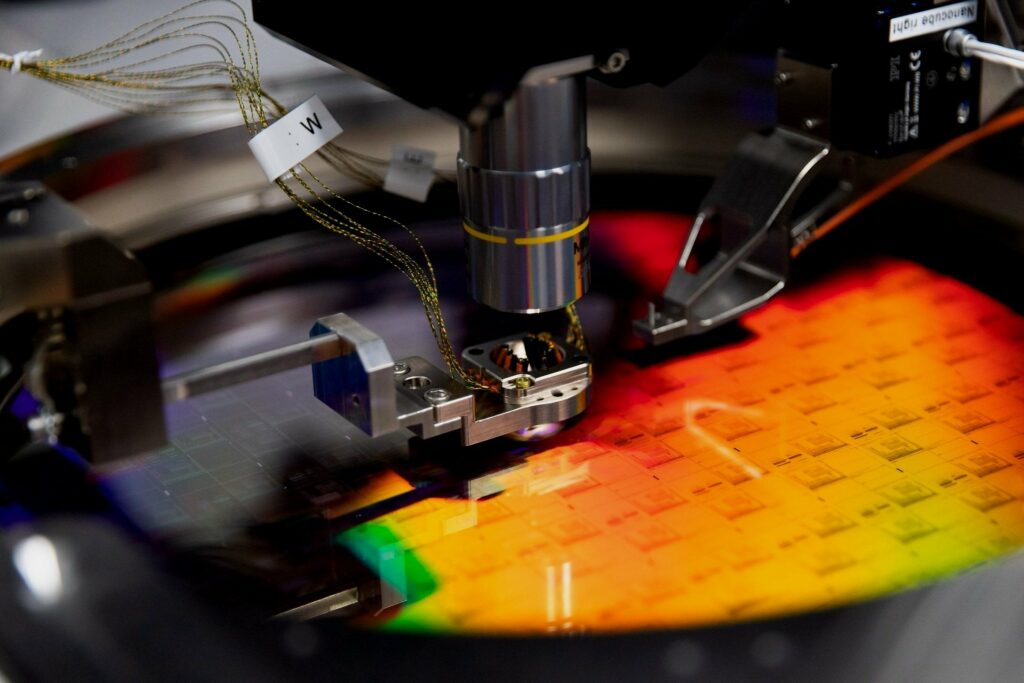
- Image: PsiQuantum
While many experts in the quantum industry are concerned about the hype surrounding the technology, some are suggesting quantum tech might not be hyped enough. According to one respected deep-tech investor, quantum computing is still underestimated and is only a few years away from commercial use.
Karthee Madasamy, founder of Silicon Valley venture fund MFV Partners, told Nikkei Asia he sees strong momentum in quantum computing, likening it to how ChatGPT surprised the world.
“People are going to underestimate [quantum computing] … It’s like ChatGPT,” he told Nikkei Asia. “Until ChatGPT, nobody was thinking about natural language … Now everybody’s like, ‘It’s going to kill this world.’”

Madasamy, whose firm backs U.S.-based quantum startup PsiQuantum, said he is “confident” in the company’s technological progress. PsiQuantum was valued at $3.15 billion in 2023, and he expects it to go public in 2028, though he noted that the final decision on the timing has not yet been made.
PsiQuantum’s Approach to Scaling Quantum Systems
Unlike competitors relying on superconductors or atomic particles, PsiQuantum uses photons — the smallest particles of light — to perform quantum calculations. Madasamy said this eliminates the need for complex cooling systems, which could make the technology easier to scale.
Quantum computers, in theory, can solve certain types of problems much faster than conventional machines. They operate on quantum bits, or qubits, which differ from classical bits that can only be either 0 or 1. Qubits, however, can exist in a superposition — essentially being 0, 1, or a probabilistic combination of both states –allowing for more powerful calculations.
Short-Term Potential in Drug Discovery, Long-Term Role in AI
Madasamy told Nikkei Asia he expects quantum computing to be applied to simulations in drug development and other fields within three years. Tech giants, including Microsoft and Google, are developing their own quantum chips, racing to commercialize the technology.
The biggest long-term impact, he said, could be in artificial intelligence (AI). Training advanced AI models requires immense computing power, straining existing infrastructure. Quantum computing could alleviate that bottleneck, potentially transforming AI development.
“It may take 10 years,” he said, as reported by Nikkei Asia, but he added that the technology has the potential to enhance AI’s capabilities, perhaps exponentially so.
Disagreement Over Timelines
Market expectations for quantum computing have fluctuated. Nvidia CEO Jensen Huang said in January that practical quantum computing solutions might be 20 years away. Madasamy, however, pushed back.
“Everybody has opinions, … nobody is completely right,” Madasamy told Nikkei Asia. “We’ve been investors in PsiQuantum for six years now, so we have seen progress. I think people are underestimating it.”
MFV Partners, founded in 2018, focuses on deep-tech investments, including quantum computing, AI, and robotics, with $100 million in assets under management. Madasamy, a former Qualcomm Ventures investor, is known for his role in backing Waze, the Israeli mapping company acquired by Google in 2013.

Keep track of everything going on in the Quantum Technology Market. In one place.

Matt Swayne
With a several-decades long background in journalism and communications, Matt Swayne has worked as a science communicator for an R1 university for more than 12 years, specializing in translating high tech and deep tech for the general audience. He has served as a writer, editor and analyst at The Quantum Insider since its inception. In addition to his service as a science communicator, Matt also develops courses to improve the media and communications skills of scientists and has taught courses.
[email protected]

Stay Ahead of Quantum
Get the latest research, company news, and market intelligence every week.
MENTIONED IN THE ARTICLE

PsiQuantum
PsiQuantum is developing a utility scale fault tolerant quantum computer utilizing photonic qubits and standard semiconductor manufacturing processes. Founded in 2015, the company collaborates with aerospace partners like Airbus and Lockheed Martin on algorithms for fluid mechanics, aerodynamics, and impact modeling.
→
NVIDIA
NVIDIA Corporation is an American multinational technology company and a global player in accelerated computing and Artificial Intelligence (AI). Founded in 1993, the company pushes the aerospace frontier with the Space-1 Vera Rubin Module, a platform for orbital data centers that delivers massive AI-compute Space Computing. This NVIDIA technology enables satellites and autonomous spacecraft to process and fuse sensor data rapidly Space Computing.
→

Microsoft
Microsoft engages in the creation and licensing of software for both consumer and enterprise use. The company is renowned for its development of Windows operating systems and the Office suite designed for productivity. Microsoft's structure encompasses three major segments of roughly equal size: productivity and business processes, which encompasses legacy Microsoft Office, cloud-based Office 365, Exchange, SharePoint, Skype, LinkedIn, and Dynamics; the intelligence cloud, which includes offerings like Azure, Windows Server OS, and SQL Server; and more personal computing, which covers Windows Client, Xbox, Bing search, display advertising, and a range of Surface laptops, tablets, and desktops.
→