China Unveils New Quantum Computing Cloud Platform



Insider Brief
- China unveiled a quantum computing cloud platform that will offer access to quantum computing at unparalleled speed.
- The platform was unveiled during the ongoing 2023 Zhongguancun Forum in Beijing.
- With over 2,000 domestic and foreign users, it has facilitated more than 500,000 quantum computing tasks, according to media reports.
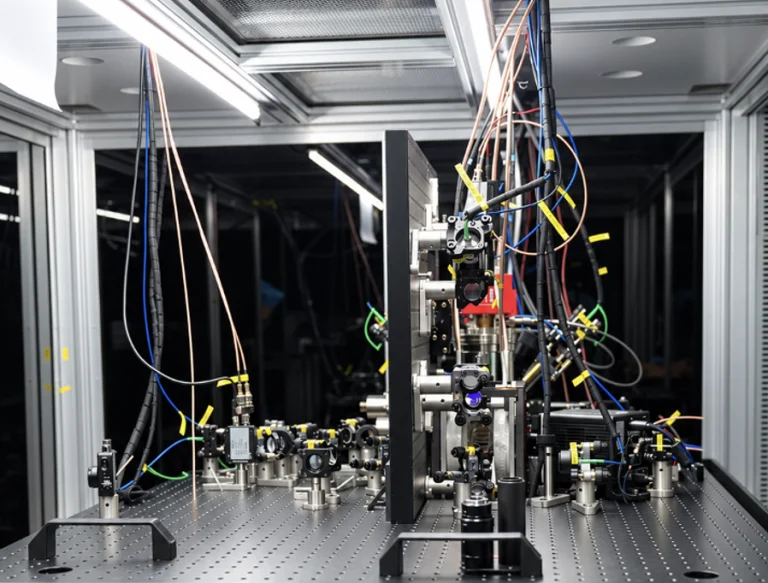
China has launched a cutting-edge quantum computing cloud platform that promises to revolutionize computational tasks and grant public access to quantum computing at unparalleled speeds, according to Chinese media reports.
The platform, a collaborative effort between the Beijing Academy of Quantum Information Sciences (BAQIS), the Institute of Physics (IOP) under the Chinese Academy of Sciences, and Tsinghua University, was unveiled during the ongoing 2023 Zhongguancun Forum in Beijing, according to The China Daily.
The advanced platform boasts the ability to aggregate the computing power of three superconducting quantum chips, each equipped with varying qubit capacities. Remarkably, these chips can be synchronized despite being physically separated by a distance of 50 kilometers, according to reports.

The newspaper reported that since November of last year the platform has been open for testing and has already garnered significant attention. With over 2,000 domestic and foreign users, it has facilitated more than 500,000 quantum computing tasks, displaying consistent and efficient performance, as confirmed by the BAQIS.
According to The China Daily, one of the key features of the platform is its compatibility with open quantum assembly language, enabling seamless integration with existing quantum programming frameworks. Additionally, it offers a user-friendly graphic interface that simplifies the programming process.
Research teams have swiftly embraced the platform, utilizing remote access to quantum chips for their scientific investigations and the development of application software. This marks a significant step in the ongoing construction of the quantum computing ecosystem.
“The cloud platform serves as the foundation for the quantum computing ecosystem. Therefore, its expeditious development is of utmost importance,” emphasized Fan Heng, a researcher at the IOP, told The China Daily.
The media reports suggest that China’s latest quantum computing cloud platform represents a substantial leap forward in the global pursuit of quantum supremacy. As it continues to evolve, it has the potential to unlock unprecedented computing power and propel advancements across a myriad of scientific disciplines and industries.
If you found this article to be informative, you can explore more current quantum news here, exclusives, interviews, and podcasts.

Keep track of everything going on in the Quantum Technology Market. In one place.
Topics

Matt Swayne
With a several-decades long background in journalism and communications, Matt Swayne has worked as a science communicator for an R1 university for more than 12 years, specializing in translating high tech and deep tech for the general audience. He has served as a writer, editor and analyst at The Quantum Insider since its inception. In addition to his service as a science communicator, Matt also develops courses to improve the media and communications skills of scientists and has taught courses.
[email protected]

Stay Ahead of Quantum
Get the latest research, company news, and market intelligence every week.
MENTIONED IN THE ARTICLE
Chinese Academy of Sciences
The Chinese Academy of Sciences (CAS) is China's academic institution and research organization in natural sciences, technological innovation, and high-tech development. Established in 1949, CAS operates under the State Council and plays a crucial role in national strategic research and policy advising. It oversees a vast network of research institutes, universities, and enterprises that contribute to China's scientific and technological advancements, particularly in aerospace, quantum technology, artificial intelligence, and biotechnology. CAS is responsible for significant breakthroughs in quantum communication, space science, and high-performance computing, including the launch of the Micius (Mozi) satellite, the world’s first quantum communication satellite. It also leads China’s participation in global scientific collaborations and fosters innovation through partnerships with universities and industries.
→

Tsinghua University
Tsinghua University is a Chinese national public research institution located in Beijing. It is supported by the Ministry of Education and is part of the C9 League, Double First Class University Plan, and previous Project 985 and Project 211 initiatives.
→