Zhengyuan Quantum Raises Angel Funding For 1,000-Qubit Computer


Insider Brief
- Zhengyuan Quantum has completed an angel funding round of undisclosed size to develop a 1,000-qubit superconducting quantum computer, according to media reports.
- The funding will support computer development and testing of three-dimensional packaging, low-temperature connections, and integrated measurement and control technologies.
- Dealroom reported that the startup has secured component orders and is discussing complete systems with potential customers, but disclosed no delivery timeline for its planned computer.
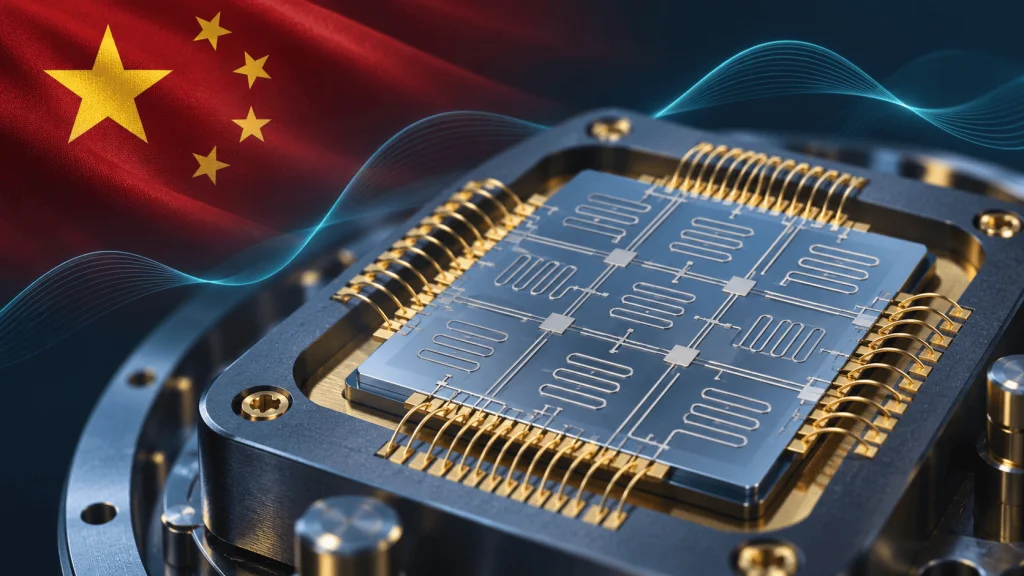
Chinese quantum computing startup Zhengyuan Quantum has completed an angel funding round to support development of a 1,000-qubit superconducting computer, according to media reports.
The company announced the financing Nov. 10, according to a Jiemian News report republished by Sohu. Investors include Shenzhen Capital Group, Pudong Venture Capital, Dening Capital, Xiangjiang Xincheng and Shenzen Angel Fund of Funds, according to Dealroom. Duowei Capital served as the exclusive financial adviser.
The size of the round was not disclosed and no delivery timeline for the computer was offered, according to the reports.

The funding will primarily support research and development of the machine and testing of three technologies needed to connect and operate its hardware: three-dimensional packaging, connections that work at extremely low temperatures, and integrated measurement and control, according to Jiemian News.
Founded in 2026, Zhengyuan is pursuing the 1,000-qubit system as a step toward general-purpose quantum computing, Dealroom reported.
Qubits are the basic units of information in a quantum computer. Superconducting systems use electrical circuits cooled to extremely low temperatures to perform quantum operations. It’s important to note that 1,000 qubits does not guarantee a useful quantum computing because building a larger machine requires more than adding qubits. Engineers must also deliver control signals and read results while limiting interference and unwanted heat.
Dealroom described those connections as a main focus of Zhengyuan’s technology. As the number of qubits increases, space for wiring around a chip’s edges becomes crowded. Additional lines running through the cooling equipment can also introduce heat and interfere with signals, according to its account.
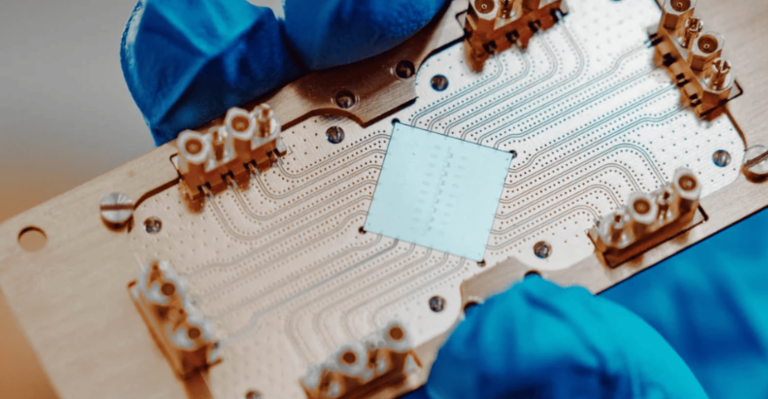
Zhengyuan is developing connections that pass vertically through silicon, along with three-dimensional packaging, to route signals out of the chip, Dealroom reported. The approach would give engineers another route for making connections beyond the chip’s perimeter. Whether it can support the company’s planned system remains to be demonstrated.
The reported spending priorities also extend to the equipment needed to manage a complete machine. Low-temperature connections must carry signals within the cooled hardware, while measurement and control systems direct operations and collect results. Jiemian News described these areas as targets for technology verification, rather than completed capabilities.
Alongside its computer development, Zhengyuan has secured orders for quantum chips and signal amplifiers, according to Dealroom. Its report did not identify the customers or disclose the value of those orders. It also said the company is discussing demand for complete machines with potential customers; those discussions were not described as signed system orders.
Dealroom identified the founder as Zheng Yarui, who holds a doctorate from the Chinese Academy of Sciences’ Institute of Physics and previously led superconducting quantum hardware work at a major internet company. The report did not name that employer. Co-founder Wu Dachao worked on research associated with the Zuchongzhi 3.0 quantum processor, according to Dealroom.

Keep track of everything going on in the Quantum Technology Market. In one place.
Topics

Matt Swayne
With a several-decades long background in journalism and communications, Matt Swayne has worked as a science communicator for an R1 university for more than 12 years, specializing in translating high tech and deep tech for the general audience. He has served as a writer, editor and analyst at The Quantum Insider since its inception. In addition to his service as a science communicator, Matt also develops courses to improve the media and communications skills of scientists and has taught courses.
[email protected]

Stay Ahead of Quantum
Get the latest research, company news, and market intelligence every week.
MENTIONED IN THE ARTICLE
Shenzhen Capital Group
Shenzhen Capital Group (SCGC) is a leading venture capital firm established in 1999. The group was initially a company formerly known as Shenzhen Innovation and Technology Investment company, established on August 26, 1999.
→
PV
Pudong Venture Capital
Pudong Venture Capital is a state-owned venture capital firm based in Shanghai, China, established in 1997. Operating under the Pudong New Area government, it focuses on hard technology sectors such as artificial intelligence, integrated circuits, biomedicine, and quantum technology. The firm specializes in early-stage and seed investments, supporting startups in high-risk, high-tech fields to advance China's technological capabilities. Pudong Venture Capital is a key player in the Shanghai quantum ecosystem, investing in companies developing photonic quantum computing hardware and related technologies.
→

Shenzhen Angel FOF
Launched in 2018, Shenzhen Angel FOF Fund is an angel investment vehicle funded by Shenzhen Government Guiding FOF. It had raised RMB5 billion (US$720 million) in seed capital to guide personal capital to early-stage projects and facilitate financing for Shenzhen-based enterprises in March.
→