



Insider Brief
- IonQ has launched Superion 256, a 256-qubit trapped-ion quantum computing platform designed as the foundation for its future compute products.
- The system uses IonQ’s Electronic Qubit Control technology and semiconductor manufacturing through SkyWater, with the company targeting customer deliveries in 2027.
- IonQ is developing Superion 256 alongside Superion 10K, with the platform intended to scale from 256 qubits toward millions of qubits and support fault-tolerant quantum computing.
PRESS RELEASE — IonQ (NYSE: IONQ), the world’s leading full-stack quantum platform and foundry, today announced IonQ Superion 256, its sixth-generation quantum computing platform. This system is the first in the Superion platform that all future compute products are expected to be built on. The company also plans on revealing the industrial design of IonQ Superion 256, at its 2026 Investor Day later today at the New York Stock Exchange.
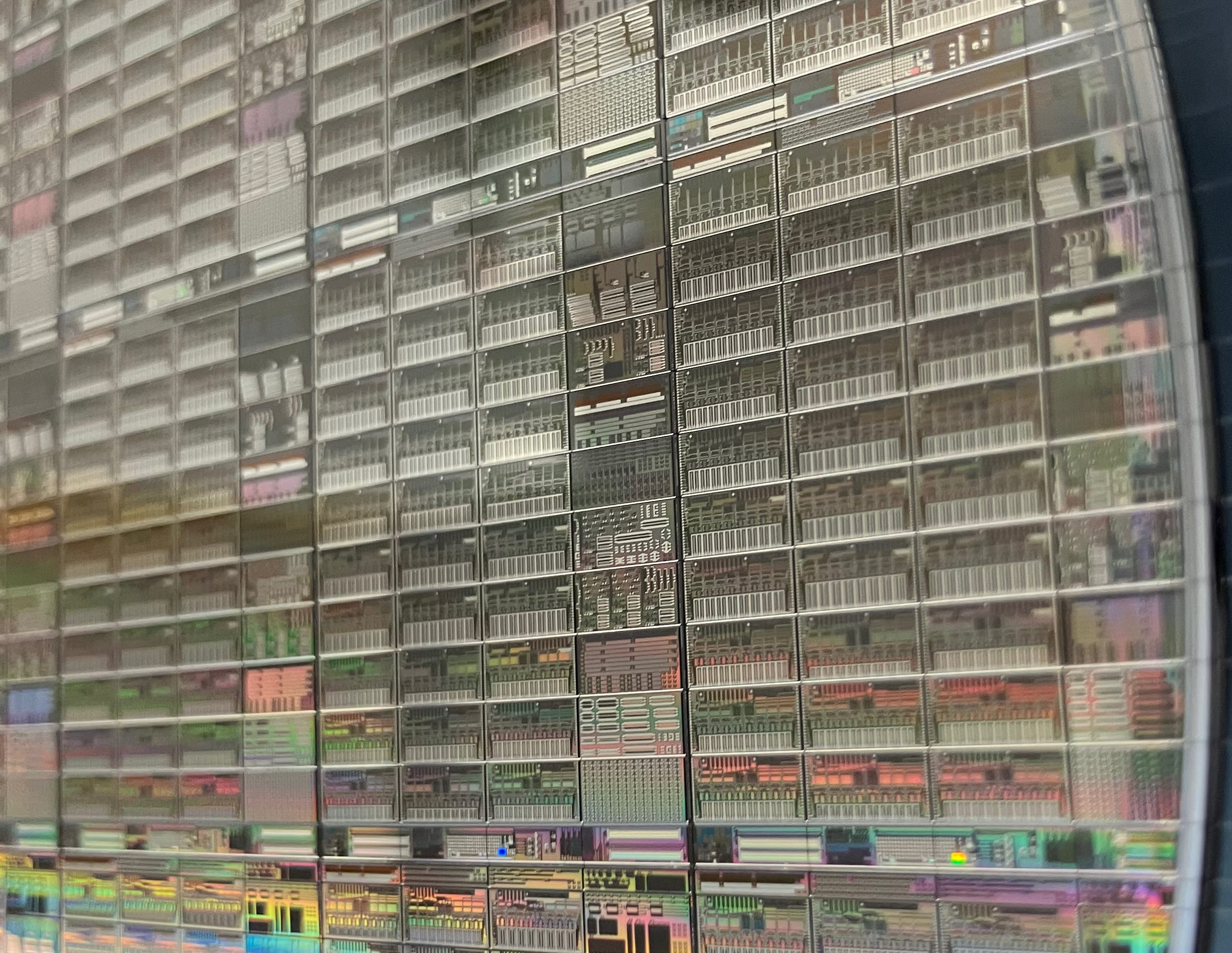
Superion 256 has rapidly progressed from early design to trapping ions in under a year. IonQ has fabricated its first fully integrated 256-qubit quantum processing units (QPUs) at its subsidiary SkyWater. IonQ has trapped the first ions in prototype Superion 256 systems now being built in parallel at multiple IonQ facilities across the U.S. The chip, designed and fabricated jointly by IonQ and SkyWater, went through six tapeouts in the first half of 2026. Working closely with SkyWater’s quantum foundry, IonQ’s design cycle compressed from nine months to two, and the teams delivered 12x more wafer lots over a six-month period than at a previous foundry.
“Superion is the result of two strategic acquisitions coming together to deliver this historic milestone. Oxford Ionics enabled IonQ to control natural, trapped-ion qubits using standard electronics, and SkyWater unlocked the ability to manufacture at semiconductor costs and scale,” said Niccolo de Masi, Chairman and CEO of IonQ. “Quantum computing, like classical computing before it, ultimately scales most powerfully on a semiconductor foundation. Superion 256 is the first quantum computer platform designed to be built by the hundreds rather than one at a time. Every generation that follows will be designed, fabricated, and packaged similarly – creating unique upgradeability in our Superion platform.”

Powering the system is IonQ‘s Electronic Qubit Control (EQC), which controls trapped-ion qubits with electronics integrated on the chip rather than with laser systems. The underlying qubit control is manufactured with standard semiconductor processes. At the heart of the chip is the same Electronic Qubit Control technology IonQ used to set its 99.99% two-qubit gate fidelity world record in October 2025. The system is built for data centers and occupies a standard server rack footprint without bespoke buildout. Superion draws less power than a rack of GPUs and has a cooling system that integrates into typical data center settings.
The Superion platform scales from 256 qubits to millions of qubits. Every generation that follows Superion 256 expands use of the same ions, the same qubits, the same electronic control, and the same chip fabric. IonQ Superion 10K is well underway and integrates CMOS onto the chip, a scaling technique SkyWater already manufactures at volume.
IonQ is developing both its 256 and 10K generations concurrently. The company’s first cryo-CMOS test chips for the 10K can be seen today at the New York Stock Exchange. The 10K is the first hardware generation built to run IonQ’s Walking Cat architecture. Walking Cat was the blueprint published in April 2026 for how applications compile into instructions, how errors are corrected, and how ions move across the chip. IonQ expects the shift from laser-based to semiconductor-based control to reduce cost-per-qubit by more than 300x across the roadmap.
“Superion marks the most important inflection point the quantum computing industry has yet seen. It accelerates our industry from one-off lab machines to quantum computers manufactured at scale with compelling unit economics and modest energy consumption,” said Chris Ballance, President of Quantum Computing at IonQ. “The step from 256 to 10K qubits is being delivered by integrating CMOS onto the chip – something the semiconductor industry has done many times and SkyWater does every day. CMOS integration is expected to reach full fault tolerance reality in a 2027 lab setting at IonQ, and manufacturable, commercial reality in 2028.”
Superion 256 is available to order now, with customer deliveries in 2027. In the first quarter of 2026, IonQ pre-sold its first Superion 256 system. Production-grade systems will also run and be offered on IonQ’s cloud.
IonQ has deployed five generations of quantum computers to customers since 2019, most recently IonQ Tempo. In April 2026, the company published the Walking Cat architecture, and in August 2026 it reported breakeven quantum error correction using qLDPC codes on a Tempo engineering test system, validating key elements of that architecture on hardware.
Investor Day
IonQ will host a live webcast at 12:30 p.m. Eastern time today. It will be available live via webcast on the company’s website here, or directly here. A recording will be available shortly after the call and will remain available for one year.