


Insider Brief
- IBM has released Nighthawk r2, a 120-qubit processor designed to deliver more useful computation through substantially faster qubit resets.
- The processor can execute more than 100,000 circuits per second, 25 times the throughput of IBM’s Heron systems, while maintaining comparable gate accuracy.
- Nighthawk r2 has demonstrated accurate estimates on circuits containing more than 7,500 gates and supports in-circuit resets for quantum error-correction research.
- IBM has released its fastest quantum processor to date, using a new qubit-reset system to run substantially more computations without sacrificing accuracy.
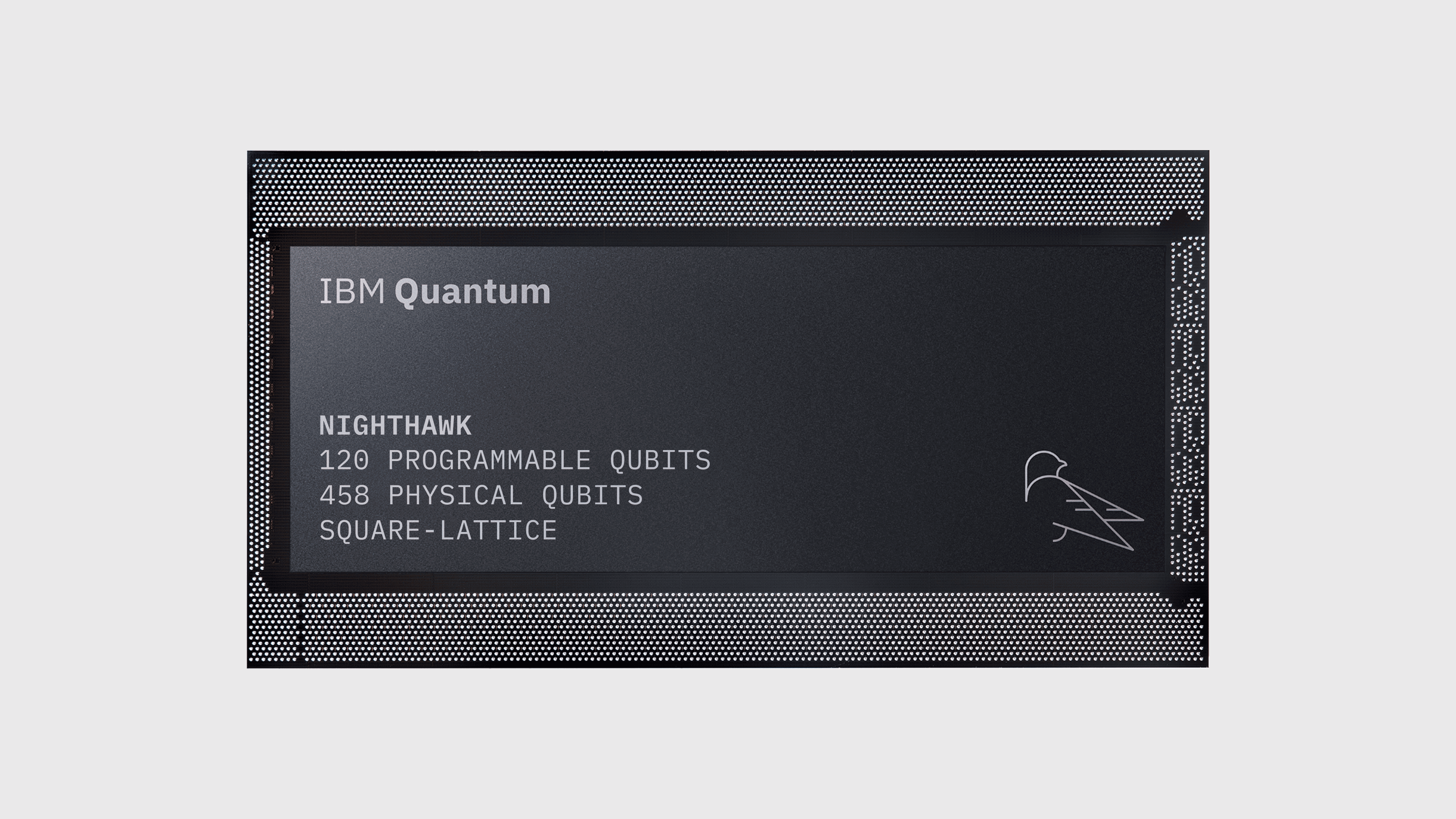
The IBM Quantum Nighthawk r2 processor can execute more than 100,000 quantum circuits per second, according to a post published on the IBM Quantum site. That is 25 times the circuit throughput of the company’s Heron processors, which run about 4,000 circuits per second.
Nighthawk r2 has 120 programmable quantum bits, or qubits, the same number as the first version of Nighthawk. Its main advance is speed rather than size. IBM said the processor reduces the time required to reset qubits between circuit runs, addressing a bottleneck that limits how much work a quantum computer can complete in a given period.
The processor is now available through the IBM Quantum Platform under a system called IBM Phoenix. IBM said early tests suggest the faster system could reduce the runtime of some large, repetitive quantum workloads by as much as 10 times without reducing their accuracy.

The information from IBM also reflects a wider change in how quantum-computing companies measure hardware progress. Qubit counts once served as the industry’s most visible benchmark, but a larger processor is not necessarily more useful if its qubits are prone to errors or operate too slowly. IBM now evaluates its quantum hardware according to much broader measures, such as scale, quality and speed.
Nighthawk r2 retains the scale of its predecessor, introduces targeted improvements in quality and focuses most heavily on speed. The company said the processor has already produced accurate estimates from circuits containing more than 7,500 quantum gates, meeting an objective on IBM’s 2026 quantum-development roadmap.
Removing The Reset Bottleneck
To understand the progress, it might be helpful to understand the basics of how quantum computers perform calculations. A quantum processor typically runs the same circuit many times to build a reliable statistical result. Each repetition, known as a shot, begins with the qubits prepared in a known state. The processor applies a sequence of quantum gates, measures the qubits and then prepares them to begin again.
Resetting the qubits can consume a meaningful portion of the total runtime. A qubit that remains in an excited state after one execution can introduce an error into the next.
Earlier IBM processors, including Heron, use a method called conditional reset. The system measures a qubit and, if it detects the qubit in its excited state, applies a pulse that flips it back to its lowest-energy, or ground, state.
That approach depends, first, on the accuracy of the measurement. It also cannot fully address leakage, which occurs when a qubit moves outside the two energy states used to represent the binary values zero and one. To give all qubits enough time to return to the correct state, earlier systems may remain idle for hundreds of microseconds between executions.
Nighthawk r2 replaces that waiting period with what IBM calls a dissipative reset gadget. Each programmable qubit connects through an adjustable coupler to a cold environment that draws energy away from the qubit when activated. Think of it as opening a drain that quickly carries away excess energy, returning the qubit to its resting state.
The system temporarily changes the qubit’s effective T1, a measure of how long it retains energy. IBM said the median effective T1 falls from about 200 microseconds to roughly 25 nanoseconds during the reset process. The processor can consequently reduce the idle period between circuit runs to as little as one microsecond.
The reset occurs independently for each qubit and is designed not to disrupt adjacent qubits. That feature is especially important for Nighthawk’s square-lattice design, in which most programmable qubits connect with four nearest neighbors. Earlier IBM architectures generally provided each qubit with two or three neighboring connections.
Greater connectivity can allow researchers to represent some algorithms more efficiently. In other words, the processor may need fewer steps to run some calculations. It can reduce the number of extra operations needed to move quantum information across the processor, but it also raises the engineering challenge of controlling one qubit without introducing errors in those nearby.
The new system also illustrates why a processor’s advertised qubit count does not capture all of its physical complexity. Nighthawk r2 contains 120 programmable qubits, 218 dedicated couplers and 120 separate reset elements, or 458 physical quantum elements in total.
IBM said the couplers and reset components are similar to programmable qubits from an engineering perspective, making Nighthawk r2 the most complex quantum processor the company has placed into production.
Speed and Accuracy
The usefulness of higher throughput depends on whether the processor can maintain the quality of individual operations. If a system runs more circuits but introduces additional errors, it may not produce more useful work.
IBM said Nighthawk r2 maintains gate performance comparable with its Heron processors while operating at higher speed. A quantum gate is a controlled operation that changes the state of one or more qubits and forms a basic step in a quantum algorithm.
The reset architecture also improves initialization, the process of placing qubits into their proper starting state. Because the system actively cools the qubits before computation begins, IBM reported an approximately 25-fold reduction in initialization error across the device.
Cleaner starting conditions improve the likelihood that a circuit’s output reflects the intended computation rather than an error carried over from a previous run. IBM said the reset operation does not measurably degrade the performance of surrounding qubits.
The practical gains depend on the type of workload. Short circuits or experiments that require relatively few repetitions may see more limited improvement. Large experiments that repeatedly execute many circuit configurations stand to benefit more because they spend a greater share of their runtime measuring and resetting qubits.
IBM said tests involving potential quantum-advantage experiments have shown runtime improvements of as much as 10 times without a loss of accuracy. Quantum advantage generally refers to a quantum computer completing a computational task that leading classical methods cannot perform practically at comparable scale, cost or accuracy.
The company reported using Nighthawk r2 for doped Clifford sampling experiments developed with researchers at the University of Chicago. The experiments are intended to show that quantum error-correcting codes can support computations beyond the practical reach of leading classical simulation methods while also allowing researchers to verify that the quantum computation was performed correctly.
Such experiments do not mean quantum computers have broadly surpassed conventional machines. Quantum advantage remains tied to specific tasks and carefully designed comparisons. IBM said Nighthawk’s greater connectivity could support tests across a wider set of circuits and problem types.
The processor also completed circuits containing more than 7,500 gates using a method called probabilistic error amplification. The method deliberately varies the amount of noise in a computation and uses the resulting data to estimate what the answer would look like with fewer errors. IBM described the test as a step toward the reliable execution of increasingly complex circuits.
In another experiment, researchers used the higher throughput to accelerate simulations of neutron-scattering spectra, which can help scientists study the structure and behavior of materials. IBM said Nighthawk r2 produced results that could be compared with laboratory data in about 60 seconds, representing a 12-fold speed increase.
Error Correction
Nighthawk r2 can reset qubits not only between separate circuit executions but also while a circuit is running. That could make the processor useful for research into quantum error correction, one of the principal requirements for building large and reliable quantum computers.
Quantum information is fragile with heat, electromagnetic interference, imperfect controls and other sources of noise potentially changing a qubit’s state before a computation finishes. Error correction seeks to protect information by distributing it across multiple physical qubits and repeatedly checking for signs of errors.
Those checks generally use auxiliary qubits, sometimes called ancilla qubits, to collect information about errors without directly measuring and destroying the quantum data being protected. After an auxiliary qubit is measured, it must be reset before it can perform another check.
An independent, rapid-reset system allows the same auxiliary qubits to be reused many times during a circuit. IBM said Nighthawk r2 can support repeated error-detection and error-correction operations, including space-time checks that look for patterns across both the processor and successive rounds of measurement.
The processor also supports dynamic circuits, which combine quantum operations with measurements and classical decisions during a single circuit execution. For example, the result of an intermediate measurement can determine which quantum operation the system performs next. Dynamic circuits are important for error correction and for workflows in which quantum and classical computers exchange information during a calculation.
IBM initially positioned the Nighthawk architecture as a system for scaling experiments that could demonstrate quantum advantage. The company now also describes it as a testbed for more advanced error-corrected operations.
The company acknowledges that this advance is just one step along the path of its roadmap. Nighthawk r2 is not a fault-tolerant quantum computer, which would be able to run long calculations while detecting and correcting errors faster than they accumulate. Its physical qubits remain susceptible to noise, and its early application demonstrations do not establish broad commercial advantage. The new reset system instead addresses one engineering constraint on the path toward those larger goals.
The complete update on Nighthawk r2 is available here.