
Insider Brief
- Chicago Mayor Brandon Johnson faced community opposition over the planned $9 billion Quantum Shore development but declined activists’ calls to halt the project.
- Community groups, including Southside Together, are urging the city to revoke permits, withdraw funding and tax incentives, and oppose further development of the quantum campus.
- Opponents have raised concerns about environmental risks, utility costs and displacement, while state and local officials have backed the project as a major technology and economic development initiative.
Chicago Mayor Brandon Johnson faced sharp opposition from Southeast Side residents Saturday over a planned $9 billion quantum computing development, as activists pressed him to withdraw city support and halt the project.
Johnson attended a “Community over Quantum” town hall organized by Southside Together at Arnold Mireles Academy in South Chicago, according to Block Club Chicago. Some attendees chanted, “Reverse the permits. Shut it down. Mayor Johnson, do it now.”
Johnson did not agree to the group’s demands to revoke permits or withdraw funding for the development. He instead pointed to his call for a moratorium on new data centers and a recent executive order imposing new requirements on data center development in Chicago.
“Here are my values: That innovation cannot take place at the expense of environmental justice, that … development cannot happen at the expense of utilities and working people, and that private investment cannot happen at the expense of our overall public health,” Johnson said, according to Block Club Chicago. “That is why just this past week, I signed an executive order strengthening our procurement as well as our regulatory processes to ensure that development is happening in favor of the interests of the community.”
The mayor later left the event as Southside Together member Lia Terrell criticized his position. The mayor’s departure drew boos and jeers from some in the audience, Block Club reported.
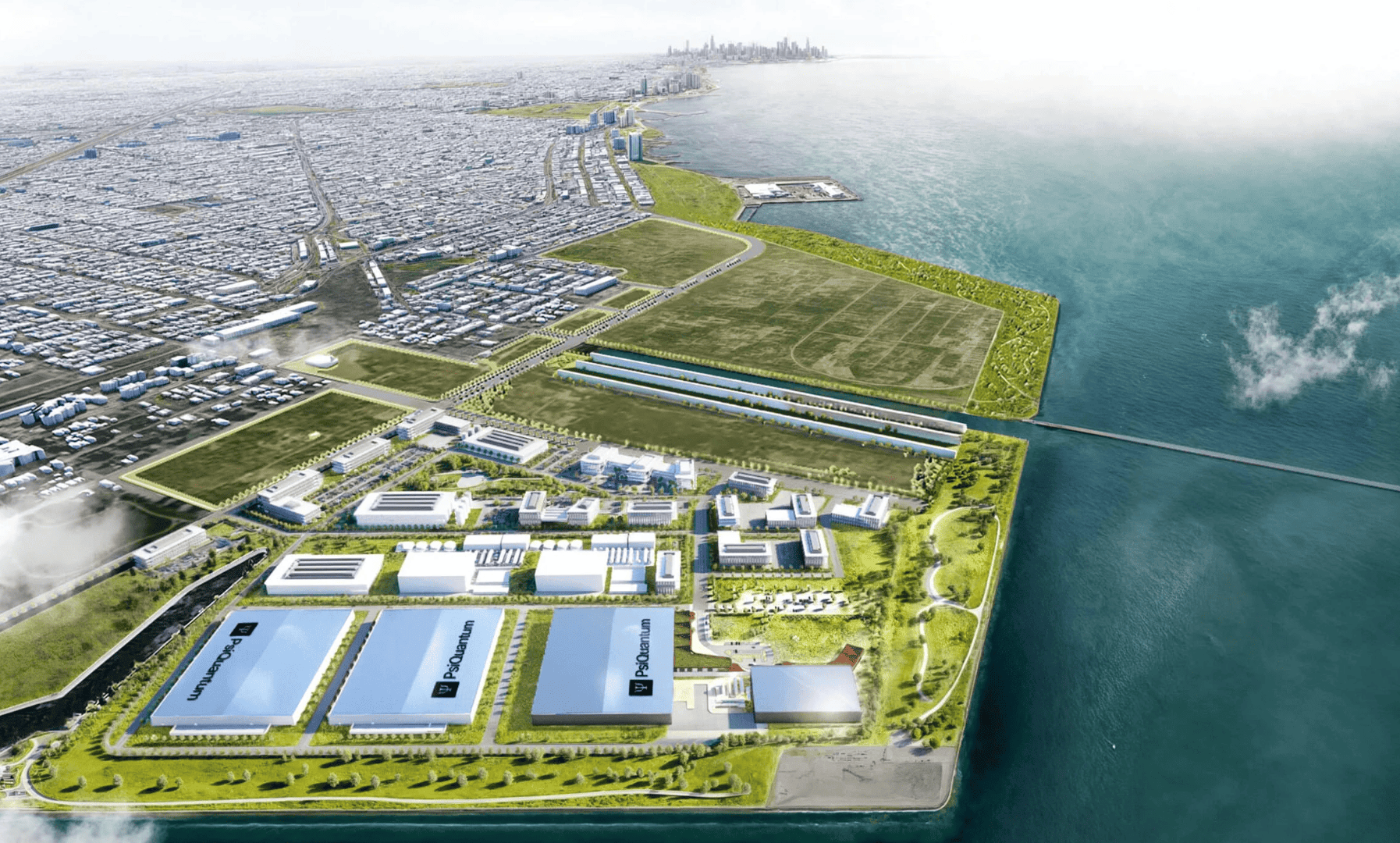
The dispute highlights growing community resistance to Quantum Shore Chicago, a large development planned for the former U.S. Steel South Works property along Lake Michigan. Related Midwest is leading development of a 128-acre quantum computing campus within the larger project.
The development includes the Illinois Quantum and Microelectronics Park, which is intended to bring quantum computing companies, researchers and universities together at one site. Quantum computers use the principles of quantum physics to perform certain calculations differently from conventional computers, although researchers have yet to demonstrate a broadly useful quantum computer that outperforms classical systems on commercially important problems.
PsiQuantum, IBM and Infleqtion have announced involvement in the development, along with Illinois universities and the federal Defense Advanced Research Projects Agency.
Public Funding, Private Development
State and local leaders have backed the project as an economic development initiative that could establish Chicago as a major center for quantum technology.
The campus is expected to cost about $9 billion, according to local leaders cited by Block Club. Illinois has committed $500 million, while the development is expected to receive an estimated $175 million in Cook County tax incentives over 30 years. Johnson has pledged $5 million through Chicago’s housing and economic development bond program.
Gov. JB Pritzker, Cook County Board President Toni Preckwinkle and local aldermen are among the officials supporting the project.
Construction formally began in October 2025 on the first phase of Quantum Shore.
Southside Together wants Johnson to revoke existing permits, withhold future permits, end a City Council-approved tax rebate for businesses at the site and withdraw the city’s $5 million commitment. The group is also asking Johnson to publicly oppose the project.
Opponents argue the development could increase pressure on electricity and water infrastructure, raise utility costs and contribute to displacement in surrounding neighborhoods. They also argue public funding should instead support projects selected by residents.
Data Center Concerns
The debate has become intertwined with concerns about data centers, which can consume large amounts of electricity and water.
Related Digital announced in March 2025 that it planned a hyperscale data center for AI and cloud computing at the northern end of the broader development. Johnson said Saturday that no data center is planned as part of the quantum campus itself, according to CBS Chicago.
The city’s Department of Business Affairs and Consumer Protection also has no pending license application for the data center site, spokesperson Elisa Sledzinska told Block Club earlier this month.
Johnson recently issued an executive order establishing additional reviews and regulations for data centers and has called for a moratorium on new facilities.
Environmental concerns also remain central to the dispute because the development is being built on the site of the former South Works steel mill. The Illinois Environmental Protection Agency approved a new cleanup plan for the 440-acre property late last year.
Johnson told residents Saturday that remediation of the former industrial site would continue.