

Diraq Names Former Broadcom CEO Scott McGregor as Chairman

Scott McGregor
Hub Hub

Insider Brief

  • Diraq has appointed former Broadcom and Philips Semiconductors executive Scott A. McGregor as Chairman of its Board of Directors.
  • McGregor brings semiconductor industry experience that aligns with Diraq’s CMOS-compatible silicon quantum computing approach.
  • The appointment comes as Diraq expands its U.S. presence, develops industry partnerships, and advances plans for commercial quantum computing systems.

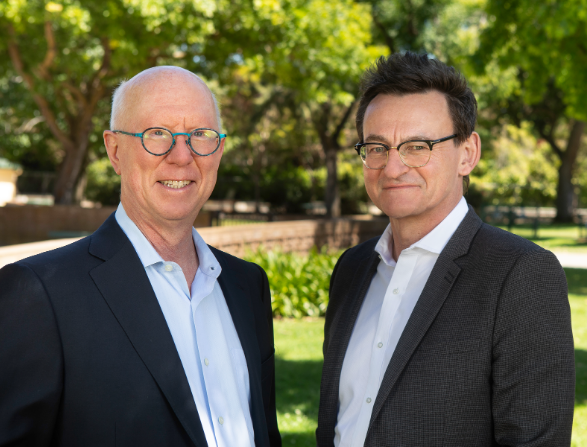
PRESS RELEASE — Diraq, the quantum computing pioneer, today announced the appointment of Scott A. McGregor as Chairman of the Board of Directors. McGregor, known for leading development of Microsoft Windows 1.0 and serving as CEO and President for both Broadcom and Philips Semiconductors (now NXP), brings a strong background in CMOS technology that complements Diraq’s silicon-based quantum approach. The previous chairman, the Hon. William Jeffrey (former Director of NIST, and former CEO of SRI International and HRL), will remain a member of the board.

“We’ve shown that silicon chips are the best path forward for economical and ubiquitous quantum computing, and our focus is now entirely on delivering our first product by 2029, capable of outperforming existing supercomputers for tasks in finance, health and energy. Scott’s deep experience in leading global semiconductor giants matches this moment,” said Diraq CEO and Founder Andrew Dzurak. “His commercial leadership will be critical as we accelerate the roll out of our technology and scale the global deployment of Diraq’s quantum computers.”

“Bill has been instrumental in building Diraq’s systems engineering rigor and governance frameworks and preparing the team for DARPA‘s Quantum Benchmarking Initiative. I’m delighted that he will remain on the board and continue to provide strategic guidance as we enter this next chapter,” added Dzurak. 

Introducing TQI 2.0Introducing TQI 2.0

“The quantum computing race will closely mirror the evolution of the classic semiconductor industry, and the ultimate winners will have the most scalable manufacturing economics. Diraq’s silicon-based approach is the most promising path forward,” said incoming Diraq Chairman Scott A. McGregor. “Cost and manufacturability are the key factors in determining which infrastructure becomes the dominant computing layer, and Diraq’s fully CMOS-compatible method is the most powerful, scalable, and economical option. I look forward to helping the team accelerate this phase of the roadmap as the world enters a new era of quantum computing.”

The announcement comes amid a period of strong momentum for Diraq as the team develops its partnerships with leading technology providers including Nvidia, Dell and Global Foundries.  The company also recently announced a Letter of Intent with the U.S. Department of Commerce for up to $38 million in proposed federal funding from the CHIPS Research and Development Office. With a global team of over 100 employees across the United States and Australia, Diraq is rapidly growing and has open roles spanning technology, product and business.

Founded in Sydney in 2022, Diraq has raised over $100M to date from sophisticated investors that include deep-tech specialists, global semiconductor foundries, and major Australian pension funds. These include Quantonation, Morgan Creek Digital, TIS Intec, imec.xpand, Hostplus, and UniSuper, among others. Diraq also includes In-Q-Tel (IQT) as one of its early investors, the strategic investor that identifies, evaluates, and leverages emerging commercial technologies for the U.S. intelligence community and its allies.

“Quantum computing is poised to play an essential role in the broader technology landscape in the coming years,” said Diana Keenan, Director, IQT. “Making quantum available at scale is a necessity because the true value of quantum will come from widespread access to the technology, which is why Diraq’s focus on industrialization is important. We look forward to supporting the team as they advance toward commercialization.”

Diraq is pioneering the commercial use of silicon-based quantum processors, offering a more scalable and economical approach to quantum computing than competing methods. The company’s proprietary technology enables millions of quantum bits, or qubits, to be placed on a single chip while leveraging the established infrastructure and economics of the existing manufacturing processes of the semiconductor industry. With a target of deploying quantum computing systems into data centers worldwide by 2029, Diraq will deliver practical, commercialized quantum computing that is powerful, economical, scalable, and deployable.

To learn more about Diraq, visit diraq.com.

Keep track of everything going on in the Quantum Technology Market. In one place.

Share

Stay Ahead of Quantum

Get the latest research, company news, and market intelligence every week.

MENTIONED IN THE ARTICLE

Diraq
CompanyAustralia · 11-50 FTEs

Diraq is a full stack quantum company which is building a quantum computer using silicon CMOS-based spin qubits.

→
Broadcom
CompanyUnited States · 10001+ FTEs

Broadcom Inc. is a global technology company that designs, develops, and supplies a broad range of semiconductor and infrastructure software solutions. While the current entity (Broadcom Inc.) was formed later through mergers involving Avago Technologies (which has roots back to 1961), the "Broadcom" brand and its foundational technology originate from the 1991 startup. Originally rooted in communications chips, the company has grown through strategic acquisitions to become a giant in data center networking, AI acceleration, and enterprise software, serving critical functions in aerospace, defense, and industrial automation.

→
Microsoft
InvestorUnited States · 10001+ FTEs

Microsoft engages in the creation and licensing of software for both consumer and enterprise use. The company is renowned for its development of Windows operating systems and the Office suite designed for productivity. Microsoft's structure encompasses three major segments of roughly equal size: productivity and business processes, which encompasses legacy Microsoft Office, cloud-based Office 365, Exchange, SharePoint, Skype, LinkedIn, and Dynamics; the intelligence cloud, which includes offerings like Azure, Windows Server OS, and SQL Server; and more personal computing, which covers Windows Client, Xbox, Bing search, display advertising, and a range of Surface laptops, tablets, and desktops.

→
SRI International
CompanyUnited States · 1001-5000 FTEs

SRI International is an independent, nonprofit research institute with a rich history of supporting government and industry.

→
HRL Laboratories
Group & CenterUnited States · 501-1000 FTEs

HRL Laboratories is a world leader in developing solid-state technology for quantum computing and networking. They are advancing a variety of technologies including silicon heterostructure quantum dot qubits, silicon carbide photonics, superconducting nanowire single photon detectors, chip-scale atom-optics components, and microwave-dot hybrid systems. HRL’s campus in Malibu, CA is equipped with on-site epitaxial semiconductor growth tools, a 10,000-square-foot nano-fabrication cleanroom facility, high-performance computational resources for theory and simulation, and cryogenic test and measurement laboratories. It is the same site that originated with inventions such as the self-aligned gate MOSFET and the world’s first laser. HRL’s semiconductor quantum chip, known as SLEDGE, is one of the quantum computing devices that will be available for UW–Madison researchers and students under a new industry partnership through the LPS Qubit Collaboratory.

→
Defense Advanced Research Projects Agency (DARPA)
GovernmentUnited States · 101-500 FTEs

The Defense Advanced Research Projects Agency (DARPA) is an independent research and development agency within the U.S. Department of Defense (DoD) established in 1958 to prevent and create strategic technological surprises for national security. Operating with a relatively small staff of program managers who are empowered to take high-risk, high-reward approaches, DARPA functions by funding cutting-edge research in academia, industry, and government laboratories rather than conducting research in-house. Its mission focuses on creating revolutionary technologies—such as the Internet (ARPANET), stealth technology, GPS, and mRNA vaccine platforms—that transition into practical military and civilian applications. DARPA programs are typically finite in duration and demand transformational breakthroughs rather than incremental improvements, positioning the U.S. at the forefront of technological innovation.

→
NVIDIA
InvestorUnited States · 10001+ FTEs

NVIDIA Corporation is an American multinational technology company and a global player in accelerated computing and Artificial Intelligence (AI). Founded in 1993, the company pushes the aerospace frontier with the Space-1 Vera Rubin Module, a platform for orbital data centers that delivers massive AI-compute Space Computing. This NVIDIA technology enables satellites and autonomous spacecraft to process and fuse sensor data rapidly Space Computing.

→
Dell
InvestorUnited States · 10001+ FTEs

Dell Technologies functions as an extensive provider of information technology solutions, specializing predominantly in delivering hardware solutions to businesses. The company's primary focus lies in premium personal computers and enterprise hardware for on-premises data centers. It maintains dominant positions within its primary sectors of personal computers, peripheral displays, mainstream servers, and external storage. While Dell adopts a vertically-integrated approach, it also boasts a strong network of component and assembly collaborators. Additionally, the company heavily relies on its network of channel partners to facilitate its sales endeavors.

→

More in Research

Related Articles