
Insider Brief
- Florida launched its first quantum-safe corridor through a partnership between IonQ and Florida LambdaRail, marking a shift from planning to deployed infrastructure.
- The initial 100-mile corridor uses QKD over existing fiber to support secure communications and real-world testing across research institutions.
- The project positions Florida as a coordinated quantum infrastructure hub, linking research, defense, and commercial ecosystems
A series of announcements out of South Florida last week leave little doubt that the state’s quantum push has moved from positioning to delivery. The headline came on Friday at 2026 eMerge Americas Conference + Expo, when IonQ and Florida LambdaRail (FLR) signed a Master Service Agreement (read more here) to build what they describe as the first statewide quantum-safe network initiative in the United States. The initial phase will establish a roughly 100-mile, three-node quantum corridor from Palm Beach County to Miami-Dade, connecting research and education institutions over LambdaRail’s existing fiber network. The longer-term vision, subject to further funding and stakeholder participation, is statewide.
For a state that spent the last 12 months laying institutional groundwork (the Florida Alliance for Quantum Technology MOU at Quantum Beach, the Florida Quantum launch at Tech Basel, Palm Beach State College’s Quantum Innovation Center, and Florida Atlantic University’s D-Wave Advantage2 purchase), the LambdaRail southeast corridor is the first piece of physical, production quantum infrastructure to land. It is also one of the first U.S. efforts to put a coordinated quantum-safe networking layer onto a research and education network already carrying live academic traffic, on a comparable footing with state-led builds underway in Switzerland and Romania.
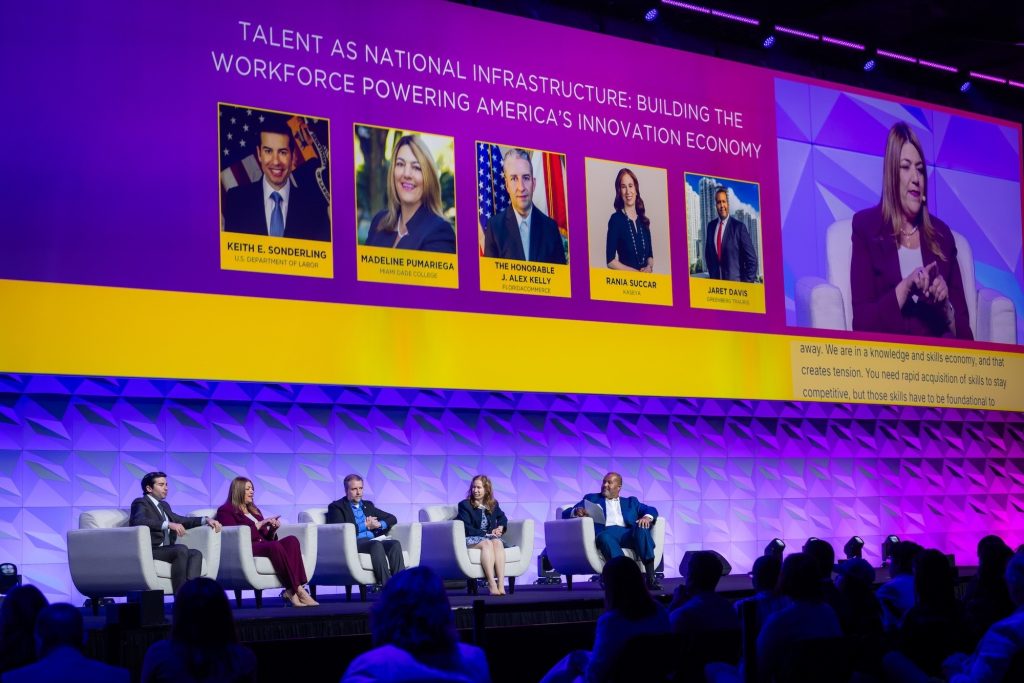
The LambdaRail Piece: Why it Matters
Florida LambdaRail (FLR) is the state’s nonprofit research and education fiber network. Its 1,540-mile dark fiber footprint connects 13 university equity partners and 58 affiliates spanning state universities, colleges, K-12 schools, healthcare systems, research facilities, and local government. The first phase of the corridor will use IonQ’s quantum key distribution (QKD) technology, which detects any interception attempt at the photon level and shifts part of the security model from mathematical complexity to physics-based protection.
“I’m grateful for the LambdaRail team, IonQ, and partners at FAU, Quantum Coast Capital and more for accelerating this critical multistep process to provide quantum-level security for Florida’s postsecondary fiber optics network—an investment with strong defense sector implications, “said Florida’s Secretary of Commerce J. Alex Kelly. “Several of Florida’s postsecondary institutions have regular working relationships with our 21 major military bases, and other public and private sector defense partners, and LambdaRail’s partnership with IonQ will fast-track this necessary step to secure those partnerships for years to come.”
Adding a quantum-safe networking layer on top of that footprint matters in three ways. First, it gives Florida institutions a working testbed for QKD-based key exchange before federal cryptographic migration mandates tighten further. Second, it gives in-state companies a procurement-grade reason to locate in Florida that goes beyond tax and talent arguments. Third, it positions LambdaRail itself as critical national infrastructure at a moment when other state research and education networks are watching closely.
“Florida LambdaRail’s collaboration with IonQ in this innovative quantum initiative will enable partner universities, researchers, and students to move quantum from the lab setting to real-world deployment,” said Jason Ball, chair of the Florida LambdaRail Board of Directors and associate provost and chief information officer at Florida Atlantic University, in announcing the agreement. “We’re confident that this public and private project will be a catalyst to accelerate scalable quantum-secure connectivity across the state.”
State-level coordination matters because quantum-safe networking is one of the quantum applications with a near-term, defensible buyer. Federal agencies, healthcare systems, financial institutions, and utilities are all under pressure to plan for cryptographic migration in anticipation of “store now, decrypt later” risks. A statewide network demonstrating QKD at scale, on real research traffic, gives Florida a credible answer to the “show me it works” question that has slowed enterprise adoption elsewhere.
The defense user is also closer at hand in Florida than almost anywhere else in the country. U.S. Special Operations Command (SOCOM) and U.S. Central Command (CENTCOM) are both headquartered at MacDill Air Force Base in Tampa, and U.S. Southern Command (SOUTHCOM) is headquartered in Doral. Three combatant commands sit on the same fiber footprint that LambdaRail is now upgrading to a quantum-safe layer, alongside Florida’s 21 major military installations. For agencies planning cryptographic migration against AOR-specific threats, having the testbed and the customer in the same state shortens the procurement path materially.
Our Quantum Future
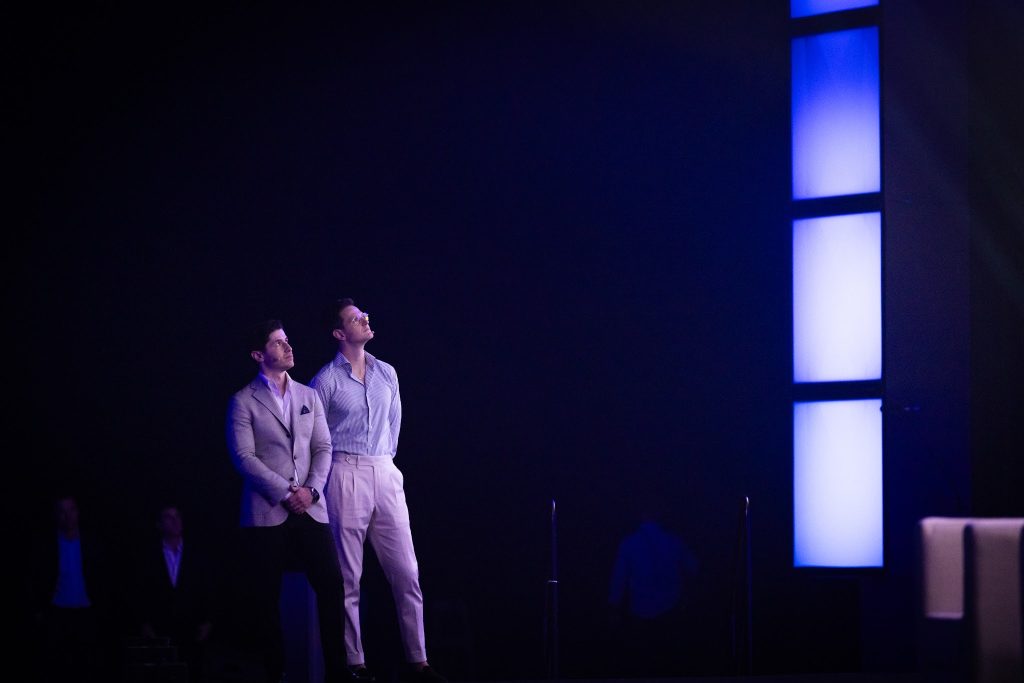
The case for that infrastructure is also being made culturally. A preview of Our Quantum Future, the documentary tracing the people and institutions building today’s quantum economy, was screened to eMerge audiences and presented by Evan Kubes, President and co-founder of Resonance, and Alex Challans, CEO and co-founder. The film’s central question, on who finances the bridge between scientific progress and commercial deployment, sits directly behind every Florida announcement this week.
Capital is a Constraint
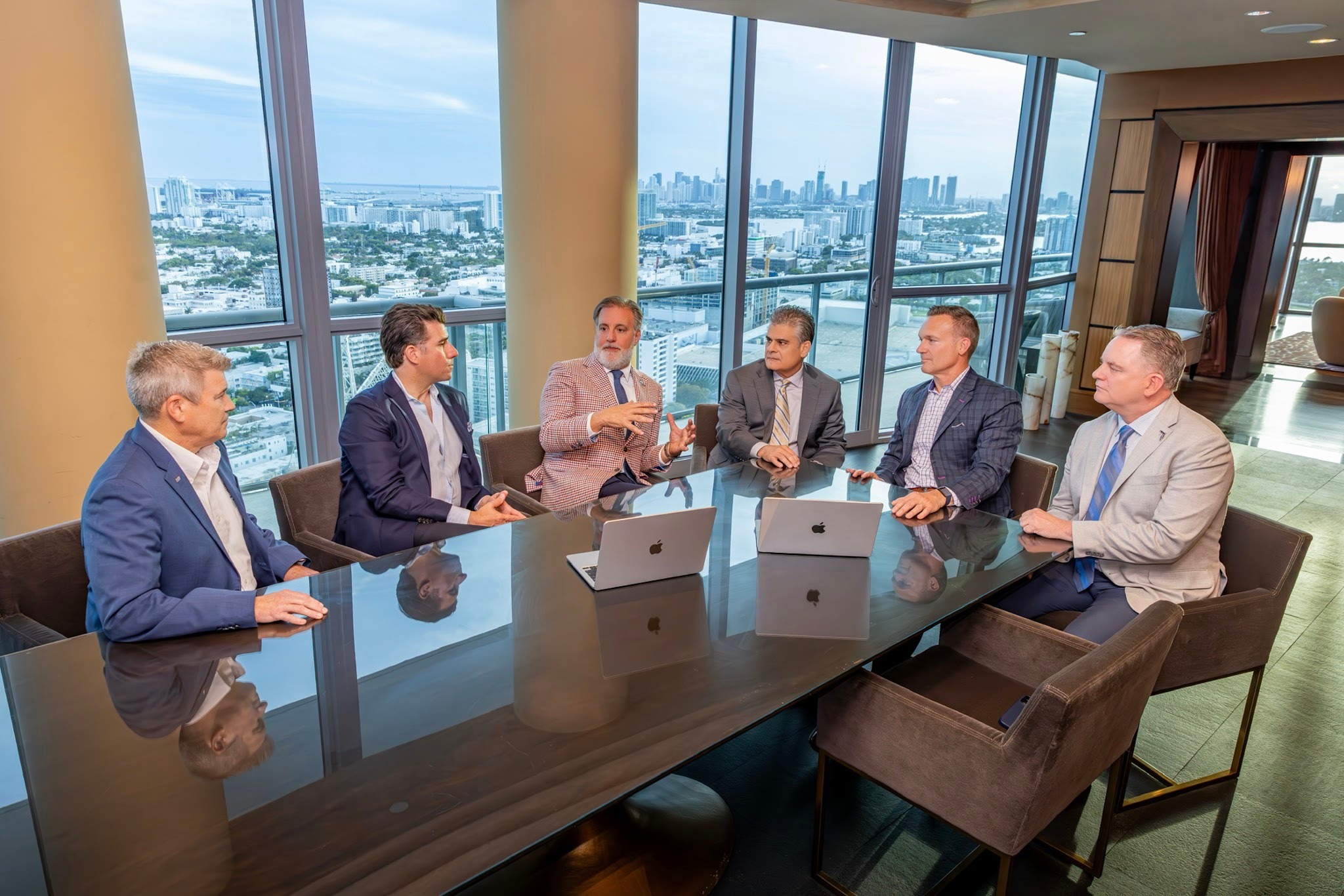
The technology pipeline is more mature than the funding pipeline. That gap was the throughline of a discussion between Matt Cimaglia, Managing Partner at Quantum Coast Capital and a founding member of Florida Quantum, and Kirk Haldeman, Managing Director and Global Head of Morgan Private Capital at J.P. Morgan, on the capital required to take quantum from validated science to deployed infrastructure.
Quantum Coast Capital’s thesis is that infrastructure comes before applications. The firm is focused on helping put the foundational layer of the quantum economy in place — the networks, facilities, and connective systems that early-stage quantum companies have historically had to build alongside their own products, a dynamic that has lengthened timelines and increased the capital required to reach commercial milestones. By helping coordinate that foundation now, Quantum Coast Capital is working to shape the environment into which it intends to invest, with the view that early-stage companies entering a more developed ecosystem may be positioned to focus capital and effort on their core technology rather than on building supporting infrastructure from scratch.
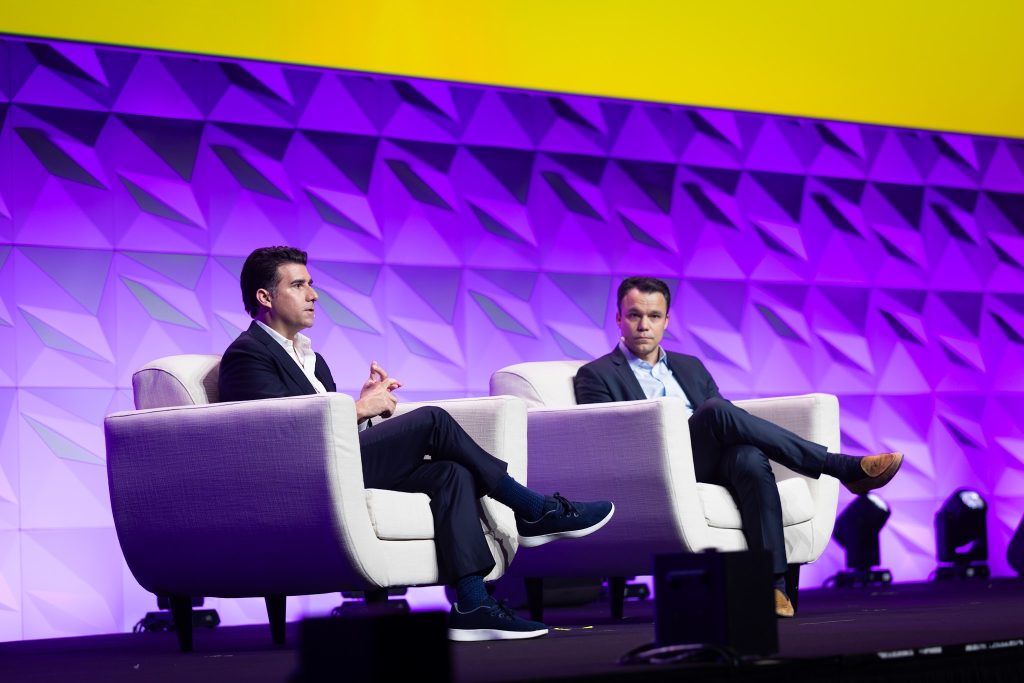
Cimaglia framed the LambdaRail agreement in similar terms when announcing the Master Service Agreement: “This effort reflects a broader shift in how infrastructure is being designed. By aligning networks, institutions, and investment, Florida is laying the groundwork for a quantum ecosystem that has the potential to drive innovation, attract talent, and support new opportunities across the state.”
The Business Development Board of Palm Beach County, led by Kelly Smallridge, coordinates economic development incentives and corporate location pipelines. The LambdaRail build provides demand-side infrastructure that gives those investments somewhere to plug in. Together, these efforts aim to bring companies, jobs, and long-term economic activity to Florida while contributing to the foundation of the broader quantum economy.
Florida at Quantum Scale
The commercialization panel at eMerge, moderated by Matt Cimaglia, brought together vendors, university leaders, and economic development figures to talk through what scaling Florida’s quantum effort actually looks like. The framing was deliberate: research-to-commercial-reality, not research alone. What that looks like in practice is vendors, universities, and economic development working off the same scoreboard.
Scale was the throughline. Most U.S. quantum activity still sits at single-institution or single-vendor pilot scale. Florida is now building at a different unit of measure: a statewide research and education network, three combatant commands potentially inside the same fiber footprint, a 15-university alliance, and a coordinated procurement runway tied to FAU’s on-prem D-Wave system, IonQ’s QKD layer over LambdaRail, and a workforce pipeline anchored at PBSC.
Florida has stopped trying to be a generalist quantum hub and is building around assets that scale: research network infrastructure, the ISS National Lab, the National High Magnetic Field Laboratory, and the state-college bench.
The state’s bet is that if the infrastructure is real, the capital will come. This week made that bet more real.