

Insider Brief
- Deep33 Ventures has launched a $150 million fund to back quantum computing and other deep-tech infrastructure, aiming to move quantum technologies from post-research development toward large-scale commercial and government deployment.
- The Israeli-U.S. firm argues that quantum and advanced AI systems are increasingly constrained by physical infrastructure limits — including power, compute and deployment capacity — rather than software alone.
- With a $100 million first close and offices in Tel Aviv, New York and Los Angeles, Deep33 plans to guide portfolio companies through regulatory, government-partnership and scale-up challenges across critical infrastructure sectors.
A new deep-tech investment firm has emerged from stealth with a $150 million fund designed to tie Israeli quantum and infrastructure innovation more closely to U.S. national needs, betting that the next phase of computing will be constrained less by software than by physical capacity.
According to the Jerusalem Post, the firm, Deep33 Ventures, announced Tuesday that it has secured a $100 million first close and will target companies working across quantum technology, energy systems, AI infrastructure and autonomous robotics. The fund’s thesis is that the rapid expansion of artificial intelligence is colliding with real-world bottlenecks — power, compute, materials and deployment capacity — that require long-cycle, capital-intensive solutions.
Deep33 positions itself as a bridge between Israel’s research-driven innovation base and U.S. industrial and government demand, with offices in Tel Aviv, New York and Los Angeles, according to the Post. The firm describes this strategy as an “allied infrastructure corridor,” aimed at accelerating technologies from the post-research stage into large-scale commercial and government use.

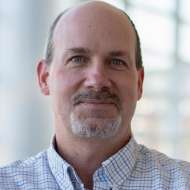
The fund is led by Lior Prosor, an entrepreneur and investor with experience spanning technology, energy and defense, alongside Michael Broukhim, a California-based entrepreneur and angel investor with early exposure to companies across computing, fintech and space. Eclipse Ventures founder Lior Susan will serve as chairman, while Yarden Golan, formerly chief of staff to Israel’s ambassador to the U.S., will oversee government relations and grant strategy.
Quantum as a Foundational Layer
While Deep33 will invest across several infrastructure-heavy verticals, quantum technology is positioned as a central pillar of the fund’s strategy. The firm argues that quantum computing represents a new computing layer — comparable in impact to earlier shifts such as cloud computing — that could unlock markets not yet fully defined.
According to information cited by the Jerusalem Post, Deep33’s quantum focus is guided by Col. (Res.) Joab Rosenberg, a quantum physicist affiliated with the Weizmann Institute and a former Talpiot commander. The firm views quantum not as an isolated research field, but as a future industrial capability that will require close coordination between hardware developers, energy providers, governments and large end users.
“Every time a new computing layer was added, vast markets were born. Quantum computing is the next layer, and its impact will cross almost every significant industry, including the other areas the fund will engage with – energy, AI infrastructure, and all other national infrastructures,” Rosenberg told The Jerusalem Post.
Deep33’s framing of quantum reflects a broader shift in investment in the technology. As governments move from research funding toward early deployment — particularly in national security, optimization and infrastructure planning — venture funds are increasingly positioning themselves as long-term partners capable of navigating regulatory, procurement and scale-up challenges.
Deep33 says it intends to help portfolio companies engage with government agencies during what it characterizes as a period of peak investment in critical infrastructure. That includes guidance on public-private partnerships, compliance and deployment at national scale, areas that have historically slowed the commercialization of advanced hardware technologies.
Infrastructure Bottlenecks Shape AI’s future
The fund’s launch comes amid growing concern that AI’s growth trajectory is being limited by physical constraints. Training and operating advanced AI systems requires massive amounts of energy, specialized chips, data-center capacity and reliable supply chains—areas where incremental software gains are no longer sufficient.
Deep33’s investment scope reflects that reality. Alongside quantum, the firm plans to back companies working in energy generation and management, AI-specific infrastructure and autonomous robotics, all of which are viewed as essential to sustaining AI’s expansion.
According to the Jerusalem Post, Deep33 has already made five initial investments aligned with this infrastructure-first approach, though specific portfolio companies were not disclosed. The fund’s first close was backed by a mix of family offices, institutional investors, deep-tech founders and venture capital partners in Israel and the United States.
The firm argues that the combination of Israeli technical depth, U.S. industrial scale and rising geopolitical urgency creates favorable conditions for building companies that can define entire categories rather than niche markets. That positioning aligns with a broader trend in deep-tech investing, where funds are increasingly emphasizing durability, strategic relevance and national importance over rapid exits.
Deep33 expects to complete its full $150 million raise by the end of the first quarter of 2026, according to the Jerusalem Post. If successful, the fund would add to a growing pool of capital aimed at the less visible—but increasingly decisive—infrastructure layers underpinning quantum computing and the global AI economy.