
Insider Brief
- The quantum sector is entering a critical scaling phase in which the primary risk has shifted from scientific feasibility to a shortage of later-stage capital needed to move companies from laboratory research into commercial growth.
- A new venture fund launched by Dr. Kris Naudts and Zeynep Korutürk, operating as Firgun Ventures, aims to address this gap by leading Series A and B rounds for quantum startups across computing, sensing, and communications.
- Drawing on backgrounds spanning medicine, neuroscience, and global finance, the founders assert that capital strategy, commercial talent, and execution will now determine which quantum companies succeed.
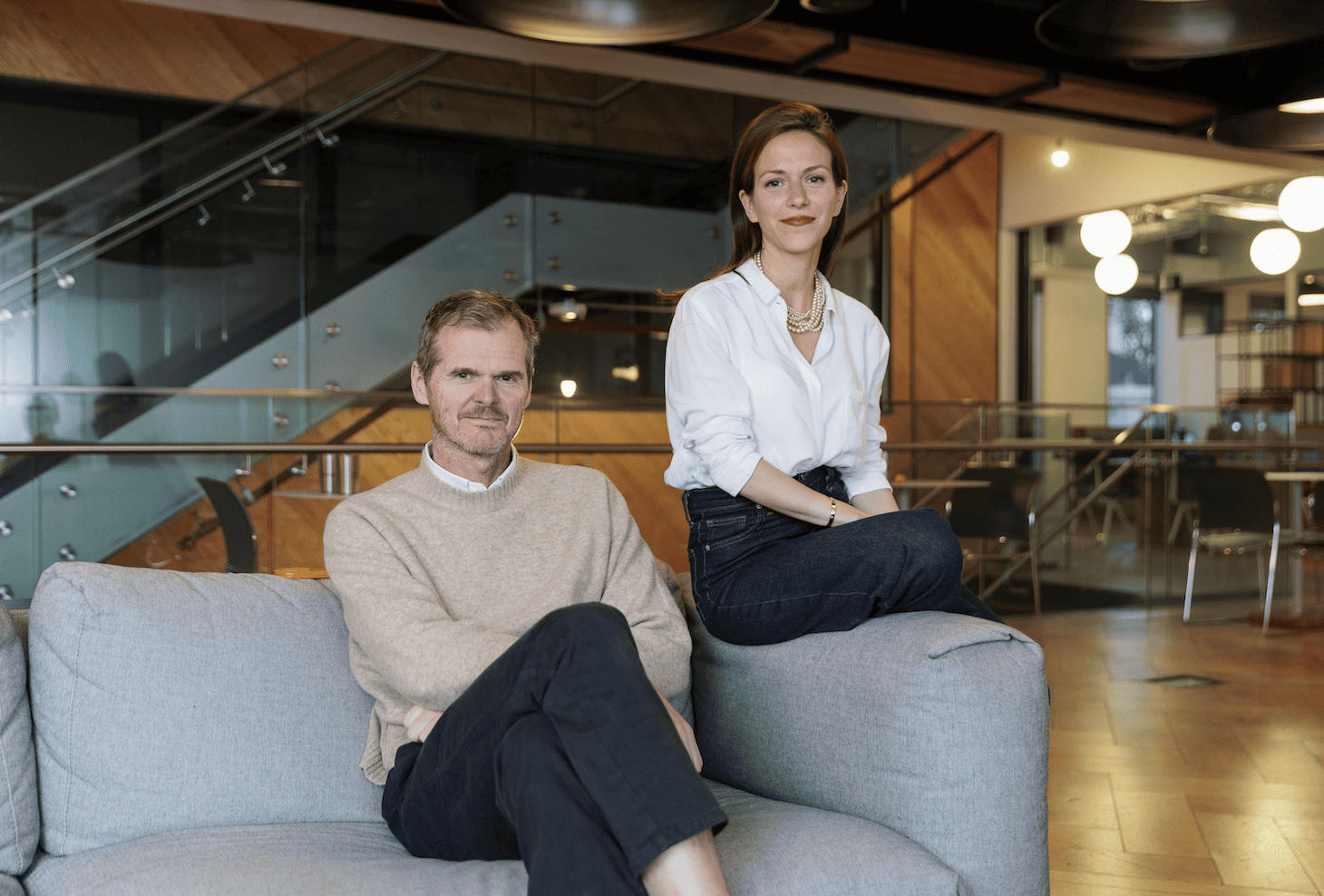
- Image: Dr Kris Naudts and Zeynep Koruturk 1 (c) Vicki Couchman, The Sunday Times, News Licensing
The quantum industry is emerging swiftly, but experts say the industry is at a moment when the greatest risk isn’t the scientific feasibility of the technology, but the widening gap between early research funding and the capital required to scale commercial companies.
A new venture fund led by pioneering quantum investors Dr. Kris Naudts, MD, PhD, and Zeynep Korutürk is aiming right at that gap.
The founders of UK-based Firgun Ventures, both early advocates of quantum technology and investors in Cambridge Quantum Computing nearly a decade ago, say quantum startups now face a structural bottleneck as they move from laboratory experiments into Series A and B growth rounds. While pre-seed and seed money have become more accessible, few funds are equipped to lead the larger rounds required to build manufacturing, hire commercial leadership, and pursue early enterprise customers.

Although they entered the quantum sector from different backgrounds, the founders view that divergence as a strategic asset, given the field’s reliance on physics, engineering, software, finance and industry expertise.
Korutürk, a former executive at Goldman-Sachs, entered quantum through finance.
After starting her career at a hedge fund covering technology stocks, Korutürk later joined Goldman Sachs in London to build a private-wealth technology investment team, a role that offered early exposure to European deep-tech deal flow.
In 2015 and 2026, while building Goldman’s internal technology initiative focused on strategic balance-sheet investments, Korutürk and team members conducted a review of future computing paradigms, including quantum and neuromorphic computing. At the time, the global quantum startup universe numbered roughly 20 companies. Cambridge Quantum Computing, then a pure software company developing quantum algorithms, emerged as one of the most relevant prospects.
After six months of technical and commercial diligence, Korutürk decided to invest personally. That decision placed her inside one of the earliest commercial quantum software efforts – one that later emerged into one of the world’s biggest pure-play quantum companies, Quantinuum – just as the modern quantum ecosystem began forming.
Naudts arrived from a radically different – but deeply aligned – path. Trained as a medical doctor and psychiatrist with a doctorate in computational neuroscience, he left academia to found and scale a consumer technology startup. While working on that project, he was misdiagnosed with a terminal neurological illness, only to learn two years later that the diagnosis was wrong. Searching for his next professional chapter, he returned to his long-standing interest in advanced computing and joined the Cambridge Quantum investment alongside his future co-founder.
Tracking a Quantum Transformation
Since that early interest and those early days of investment in quantum, the landscape of quantum has transformed. While less than two dozen quantum-related companies were part of the ecosystem, now hundreds of startups operate across hardware, software, sensing and communications. Government funding programs have multiplied across the U.S., U.K., Europe and Asia. Public markets have also absorbed a small number of quantum firms.
Yet the Firgun founders argue that capital availability has become somewhat uneven.
Venture capital in quantum today is heavily skewed toward academic spinouts at the earliest stages, while later-stage companies struggle to assemble credible financing syndicates. In their view, this is the investment sweet spot – the missing ingredient is institutional investment that can underwrite scaling risk, not just technical novelty.
“Over the last eight years, we probably met with over 150 to 200 companies in quantum and we really saw the ecosystem evolve, and which is why we thought that now we were really at a place where venture funding could make a big difference in these startups,” said Korutürk. “One of the key elements that we were seeing was that it was now quite easy to find pre seed and seed funding, but the minute companies got to the series A or Series B rounds, they find it impossible to have people that could credibly and consistently lead those rounds, and therefore it made a lot of sense for kris and I to actually focus our efforts in there.”
UK-Based With a Global Mandate
Although the fund is headquartered in Luxdmbourg and the team in the U.K., its mandate is global.
The founders cite Britain’s unusually dense academic ecosystem – particularly the “Golden Triangle”, which spans Oxford, Cambridge and London – as well as its position as the world’s second-largest hub for quantum startups by company count.
*“If you look at quantum, it (the UK) is very interesting as a country, in the sense it has a very deep academic ecosystem,” said Naudts. “And it is somewhere in between the US and continental Europe in terms of entrepreneurial culture. In quantum in particular, of the supposed 514 companies out there, according to the Tony Blair Institute, which released the report fairly recently, there is about 64 or so in the UK, which makes it the country, or the nation, at least, with the second most quantum startups in the world.”
Still, they say deal flow will ultimately dictate capital deployment, and they expect a meaningful portion of investments to occur outside Britain.
The fund will invest across the full quantum stack, including computing, sensing and communications. Within computing, it plans exposure to hardware, middleware and software. The goal is diversification across technical modalities and commercial timelines. Some applications require large numbers of logical qubits and deep error correction, while others can operate much earlier using specialized quantum sensors or cryptographic systems.
Filling Other Holes
They also said that the industry’s workforce challenge extends far beyond a shortage of trained quantum physicists.
While many national strategies emphasize engineering pipelines and doctoral programs, they warn of an emerging deficit in the commercial functions that determine whether a company ever reaches public markets.
Chief operating officers, marketing leaders, sales executives and regulatory specialists with deep-tech experience remain scarce. Founders frequently arrive from academic backgrounds with little exposure to scaling operations. The fund’s leadership says its own role will involve preparing companies not only for product development, but also for the demands of fundraising, governance and public-market readiness.
“A lot is said about the lack of trained quantum physicists, or there will be a skills gap in future and as true as that is, I think that skills gap also extends into the commercial functions,” said Naudts. “For example, where will we look for the COOs and the CMOs and the CROs? Yes, it’s deep tech and yes, there are similarities with other spaces, but it’s also a fairly unique space, so that all needs to be in place.”
Another weakness they highlight is storytelling.
Many quantum founders, they say, default to technical explanations and resist framing broader economic narratives around their businesses. As a result, potential investors often fail to understand how quantum capabilities translate into margins, revenue timelines or competitive moats. The fund intends to make “equity story” development a core part of its portfolio strategy.
Initial Quantum Impact And Future Quantum
While it’s difficult to accurately predict, Firgun’s founders lean toward the initial impact of quantum to fall in fields such as materials science, life sciences and cybersecurity. Materials and chemical simulation may yield early industrial use cases in batteries, catalysts and polymers. Life sciences applications for quantum include molecular modeling.
Cryptography is another area where industries will feel the early impact of quantum computing and quantum networking. Quantum key distribution and post-quantum cryptography may generate earlier security-driven revenue even before fault-tolerant computing arrives at scale.
They also note that quantum sensing could arrive faster than any computing-led breakthrough, particularly in navigation, imaging and industrial monitoring.
Looking ahead to 2030, the founders believe quantum computing is currently at a stage comparable to artificial intelligence five years ago. Public understanding remains limited. Most commercial discussions remain business-to-business. They expect that to shift as pilot deployments expand and quantum becomes visible in more applied industrial settings. They also note that published technology roadmaps across the industry have been shrinking rather than expanding, suggesting faster-than-anticipated progress toward practical systems.
The broader implications extend well beyond venture returns. Geopolitical disparities in quantum investment may solidify over the next five years. Countries that fail to build industrial-scale ecosystems now may find themselves locked out later, regardless of future spending. They point to examples in Europe where early public investment created durable advantages that now appear difficult for lagging regions to replicate.
Although a little reluctant to “just add a Q” to AI, they also anticipate increased convergence between quantum computing and artificial intelligence. The fund describes itself as opportunistic in evaluating hybrid companies that blend traditional AI with quantum-enabled algorithms. At the same time, the founders caution that hype cycles will accelerate as more startups attach quantum branding to incremental advances. In their view, disciplined technical and commercial diligence will be required to separate genuine capability from opportunistic rebranding.
By the end of the decade, the founders expect their fund to have both raised and deployed its full capital base, with a portfolio spanning multiple quantum subfields. Some companies, they believe, will begin generating meaningful commercial revenue. Others may remain in long-cycle development, dependent on breakthroughs in error correction and hardware scaling. The industry’s next phase, they argue, will not be defined by physics alone but by capital strategy, management talent and geopolitical alignment.