

It’s always good to get different perspectives on the emerging technology that is quantum computing (QC), something that The Quantum Insider has strived to do since its very inception.
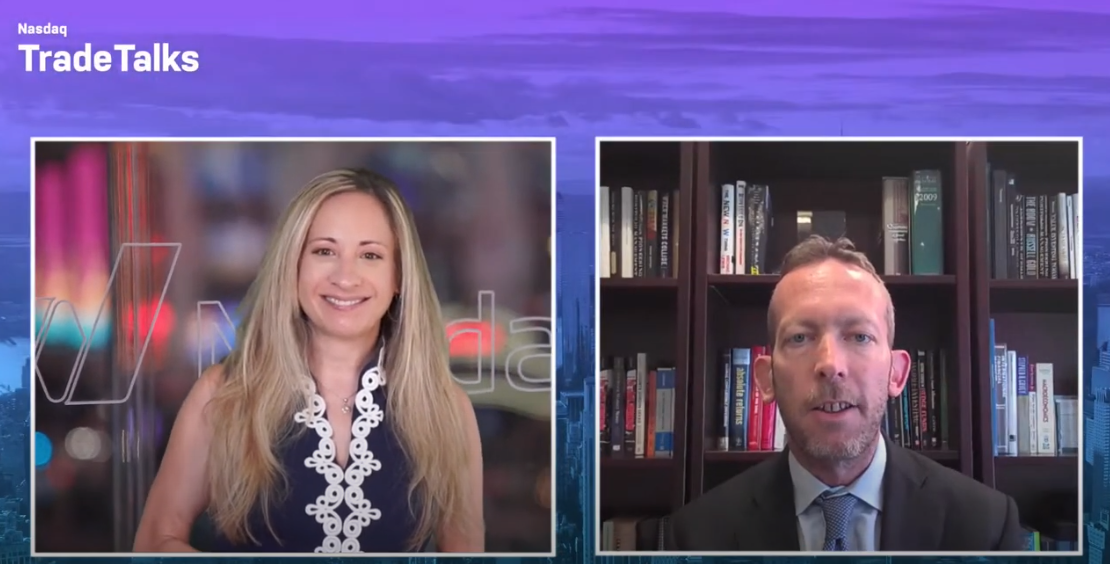
This week, Alex Gunz, Manager of the Future Trends Equity Fund at Heptagon Capital, was interviewed by Jill Malandrino, a global markets reporter at Nasdaq on the Nasdaq TradeTalks on the topic of quantum computing.
Author of Heptagon’s View From the Top monthly macro commentary and regular Future Trends thematic insights, Gunz brought over his detailed knowledge of equity markets to give insight into what is going on currently in the quantum computing market.
Super Exciting
“AI is super exciting at the moment, but I think really to get to the next level, we do need to think about quantum computing,” said Gunz, off Malandrino’s question as to what type of solutions quantum could provide. “And really, the excitement about quantum computing is all about the fact that we can do things more quickly and more efficiently in a quantum world. Think about it like this,” Gunz continued. “You’re going from a world of zeros and ones, which is classic computing, to a world where you can look at every possible combination between zero and one. So, when you think about these big problems that the world is trying to solve, things like how we allocate scarce resources in the face of a growing global population, this is what quantum can resolve.”

Gunz was then asked what has happened in quantum computing since 2017 when the equity fund manager first took an interest in the sector.
Academic Papers on the Rise
“A huge amount,” Gunz announced. “There’s been massive legitimization for the industry, and I’ll just give you three pointers that really build on this number: One would be to look at the sheer number of academic papers that have been published on quantum. Last year, it was about 2400, that’s double where it was a decade ago. Talk to companies and one in five today is saying they are investing in quantum. Go back a decade, it was only about one percent. And actually, just go on the web and look at cloud computing environments and there will be quantum applications, quantum units that even you or I could potentially trial today.”
When the question of whether companies are already leveraging quantum computing and whether they will ever replace traditional computers, Gunz’s answer was that ‘no’, they would not.
“I think you have to look at it as a compliment, just as AI can allow workers to be more productive,” said Gunz. “Quantum can allow companies to be more productive. And yes, we are seeing examples of this occurring today. You take many different industries, whether it’s someone like Boeing in aerospace, whether it’s Daimler in cars, whether it’s businesses like JP Morgan and Goldman looking at trading optimization, quantum is actually happening today.”
Gunz also added that a couple of billion dollars is being put into the market annually, adding that consultant reports estimates that the market could be anywhere between $60 billion and $120 billion in size by the end of this decade.
“You’ve got the big players like IBM and Google doing quite a lot in the quantum space. You’ve got the emergence of a few pureplay companies like Arqit, D-Wave and so on, but none is actually making any money today,” said Gunz.
When asked about the startup scene, Gunz was optimistic:
It’s a super exciting and vibrant startup environment, not just in an obvious geography like the US but also in the UK, in Israel, in Switzerland,” said Gunz. “And in some ways, if you take a step back,” Gunz went on, “you really need the whole computing architecture — or stack — to be rebuilt. We’re talking here about hardware, about software, about programming languages. So really, you are seeing a whole ecosystem being built or rebuilt, if you will, from the ground up.”
To end the interview, Gunz gave his assessment of when we will officially be in the quantum computing age.
“That’s a wonderful question and it really depends on who you ask,” he said. “I mean, the way I’d frame and answer it would really be as follows: We’re probably at peak AI hype at the moment. Quantum is there happening in the background, it’s growing in importance every day, every week, every year. So, we’re arguably in the Quantum Age already. It’s just that we don’t know it yet.”
Featured image: Nasdaq TradeTalks
If you found this article to be informative, you can explore more current quantum news here, exclusives, interviews, and podcasts.