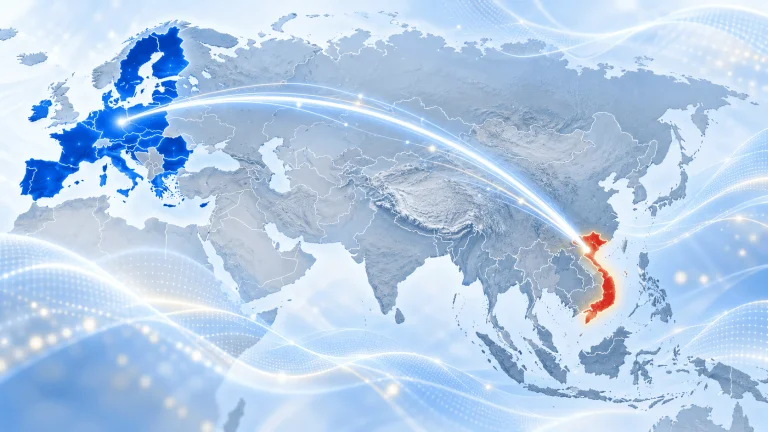
European Quantum Community Reacts to New Quantum Strategy

The European Commission proposed a Quantum Act yesterday to commercialize European quantum research, strengthen supply chains and coordinate the transition to post-quantum cryptography. The proposal would bring EU and national programs together to fund research, expand access to shared facilities and help companies bring quantum technologies to market.
The act would also lay the groundwork for a Sovereign Tech Equity Fund to invest in strategic technologies, and the European Parliament and Council will now consider the proposal.
Here are some reactions to the strategy:
Ali El Kaafarani, CEO and Founder of PQShield
“It is encouraging to see Europe recognising that the quantum transition is not only about developing new capabilities, but also about securing the systems those capabilities will depend on. Post-quantum cryptography needs to be built in from the outset.
“Many of the chips, devices and networks being designed today will still be in use a decade from now. The security decisions being made now will determine how resilient those systems are in the quantum era. Secure boot, firmware updates, device identity, communications and the underlying roots of trust all need to be designed with that transition in mind.
“Quantum readiness also has to mean more than supporting the right algorithm. PQC needs to be securely implemented, resistant to side-channel attacks and designed with enough crypto agility to adapt as standards and threats evolve. Europe has a major opportunity to build the next generation of technology so it remains secure over its full lifetime.”
Anne Marie Engtoft Meldgaard, CCO, Sparrow Quantum & Former Tech Ambassador for Denmark
On the significance of the EU Quantum Act
“Quantum technology is an area where Europe has some of the world’s best talent and innovation. The Act represents a unique opportunity to turn that advantage into global leadership, rather than miss out on another major technology revolution, as it has at points over the past three decades.
Over the past seven years, we have had a great awakening up to the importance of sovereignty over our critical digital infrastructure. The EU Quantum Act recognises that quantum must be part of this ambition. It sets a north star for unifying efforts across member states, strengthening Europe’s position in the global quantum value chain and building the industrial capabilities needed to compete.
One of its greatest achievements is bringing together 27 countries, with very different levels of quantum maturity, around a shared ambition. Europe has the talent and research to lead; now it needs to act together and help shape the future of this defining technology.”
On what it will take to make the Act a success
“The Quantum Act is a strong and necessary start to ensure that Europe makes the most of the quantum opportunity. However, legislation and political strategies must be backed by funding, strong implementation and, above all, a willingness to do things differently.
200 start-ups is not enough for Europe to compete globally. We need scale-ups that can compete internationally, governments willing to back European champions rather than only national ones, and, critically, buyers for European quantum technology. Public procurement across member states is one of the strongest levers we have to create that demand.
We can not do it all in isolation. We must work with like-minded partners to secure supply chains, shape how the technology is governed as it matures, and ensure its benefits are shared globally.
There are no quick fixes to Europe’s challenges around capital markets, fragmentation, and trust in technology leadership – but the Act gives us a political reason to be more ambitious. It encourages us to pick winners, pursue industrial policy, unlock Europe’s financial firepower, take risks and create markets for European technology.”
Juliana Kleisch, Counsel at Bird & Bird:
“The Quantum Act could make public procurement an instrument of European technological sovereignty. For quantum procurements, access to the EU’s public market could depend not simply on where a company is established, but on who controls it.
One of the legal challenges will be drawing the line between strategic autonomy and self-defeating protectionism. Europe has a legitimate interest in securing critical quantum capabilities, but rules designed to promote European champions must not inadvertently deprive those same companies of the global capital and partnerships they need to scale.
The Quantum Act adds another legal dimension to investment in EU’s quantum companies. A foreign investment may be permissible under FDI rules, but could still have consequences for the company’s eligibility for strategically important public contracts if EU control becomes the relevant test.
The Quantum Act is not only about developing quantum technology, but also about preparing for the cybersecurity risks it creates. It establishes post-quantum cryptography requirements, obliging Member States. For businesses, quantum readiness will start becoming a procurement and compliance issue well before cryptographically relevant quantum computers arrive.”
Jan Goetz, CEO and Co-founder of IQM Quantum
Europe enters the industrial phase of quantum from a position of strength. It has the science, the talent, the supercomputing infrastructure and a first generation of quantum companies already selling systems around the world. With the Quantum Act, it now has a plan to match.
The framework, the priorities and the milestones are right. With a dedicated budget that reaches Europe’s scaling companies and a clear route to manufacturing, Europe can lead a global industry, built on quantum companies whose products win business anywhere in the world.
We look forward to working with the Commission, Parliament and the Council to make the Quantum Act a success.
From “The EU Quantum Act gets Europe’s quantum plan right. Now let’s make it work.“
Jason Lynch, CEO of Equal1
“Today’s proposal is an important step. It gives Europe the framework and direction it needs to compete in quantum technology. We have world-class research and engineering expertise, but we now need to translate that into industrial and commercial advantage. The new Sovereign Tech Equity Fund and the focus on European supply chains are exactly the right signals.
“Europe has a particularly strong opportunity in silicon spin qubits. Put simply, this approach uses the same manufacturing techniques that underpin today’s semiconductor industry, so Europe can build on capabilities it already has. Our RacQ server, operating today at the European Space Agency, shows that silicon quantum computers can already run in real-world environments.
“Now the detail matters. As the Act moves through the European Parliament and the Council, it must make sure that quantum chips made with semiconductor processes are fully supported, and that it works hand in hand with the Chips Act 2.0 so that these technologies don’t fall between the two. Public procurement criteria should reward European design, European manufacturing and proven deployment, so that European companies have a genuine chance to compete for public contracts.
“Europe’s experience with ASML shows what can be achieved when sustained investment, specialist engineering and industrial collaboration come together. We should bring the same ambition to quantum computing. The test of the Act will be whether it helps companies access the capital, customers and industrial partnerships they need to scale in Europe, rather than seeing the benefits of European research commercialised elsewhere.”
Image: Photo by Alexey Larionov on Unsplash
Keep track of everything going on in the Quantum Technology Market. In one place.
Topics

Matt Swayne
With a several-decades long background in journalism and communications, Matt Swayne has worked as a science communicator for an R1 university for more than 12 years, specializing in translating high tech and deep tech for the general audience. He has served as a writer, editor and analyst at The Quantum Insider since its inception. In addition to his service as a science communicator, Matt also develops courses to improve the media and communications skills of scientists and has taught courses.
[email protected]
Stay Ahead of Quantum
Get the latest research, company news, and market intelligence every week.
MENTIONED IN THE ARTICLE

European Commission
The Commission represents and upholds the interests of the EU as a whole, and is independent of national governments. The European Commission prepares legislation for adoption by the Council (representing the member countries) and the Parliament (representing the citizens). It administers the budget and the policy programmes (agriculture, fisheries, research etc.) in cooperation with authorities in the member countries.
→
PQShield
PQShield is a cybersecurity company specializing in post-quantum cryptography (PQC) to safeguard digital systems against potential quantum computing threats. They focus on modernizing security measures across technology supply chains by offering quantum-resistant hardware and software solutions.
→

Sparrow Quantum
Sparrow Quantum is a Danish photonic quantum technology company developing deterministic single-photon sources and integrated photon-generation systems for quantum computing, communications and research. The company originated from research at the University of Copenhagen’s Niels Bohr Institute.
→
Jan Goetz
Dr. Jan Goetz is the Co-Founder and CEO of IQM Quantum Computers, a European developer of superconducting quantum systems.
→
IQM
IQM Finland builds scalable hardware for universal quantum computers, focusing on superconducting technology.
→

Equal1
Equal1 creates quantum-on-chip technologies integrating qubits, error correction, and control microelectronics in a single chip.
→