AQSolotl Reports 6.94-Microsecond Latency in NVIDIA NVQLink Integration Test


Insider Brief
- AQSolotl has reported initial results from integrating NVIDIA NVQLink into its Chronos-Q quantum control platform, recording a minimum round-trip latency of 6.94 microseconds when connected to NVIDIA DGX Spark.
- Across 1,000 requests, the test recorded a median latency of 8.02 microseconds and a 99th-percentile latency of 9.01 microseconds, with measurements covering both communication and processing time.
- AQSolotl plans to use the integration in further testing of GPU-assisted quantum calibration workflows with its calibration partners, although no quantum processor was involved in the initial latency test.
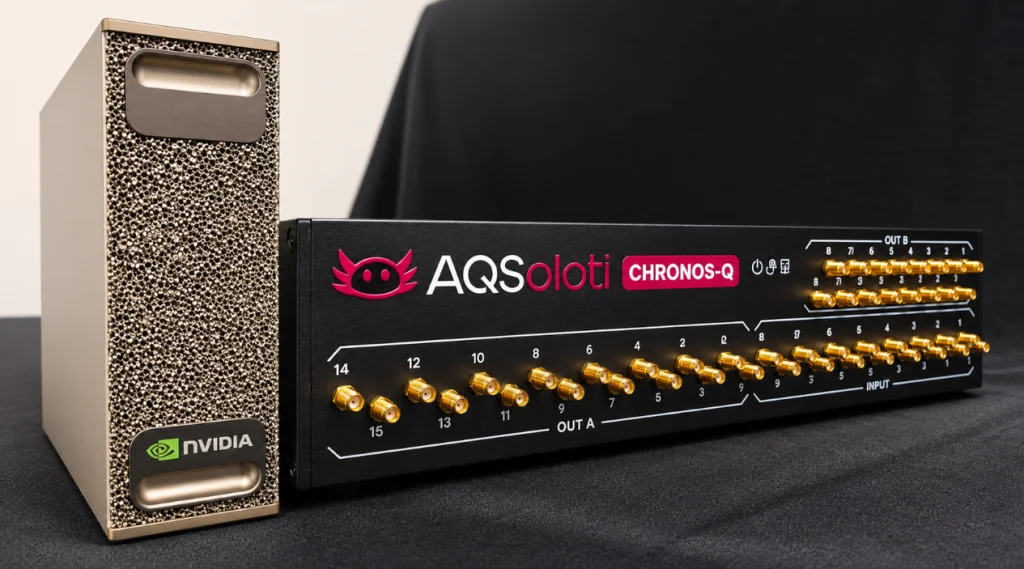
PRESS RELEASE — AQSolotl, a developer of quantum control systems, today announced initial results from integrating NVIDIA NVQLink into its Chronos-Q platform. Tests connecting Chronos-Q with NVIDIA DGX Spark recorded a minimum round-trip latency of 6.94 microseconds across 1,000 requests.
Quantum processors rely on classical computing to control and fine-tune their operations. NVQLink is the open reference architecture for connecting these systems so they can exchange information with little delay and high throughput. Faster communication can help bring GPU processing into the real-time feedback loops used to calibrate quantum hardware.
“Connecting quantum control to accelerated computing is an important step towards hybrid quantum-classical computing,” said Patrick Bore, Co-founder and CEO of AQSolotl.

“These initial results give us a starting point to work with our calibration partners on GPU-assisted quantum calibration workflows.”
AQSolotl measured round-trip latency from request transmission by Chronos-Q to receipt of the corresponding processed response, using internal time tagging within Chronos-Q. Each request consisted of a single 64-byte packet. A total of 1,000 requests were transmitted in 250 groups of four, with 100 milliseconds between requests within each group. The interval between groups was determined by the timing-data collection process. A DGX Spark performed a simple addition operation before returning each response. Observed round-trip latency ranged from 6.94 to 14.77 microseconds, with a median of 8.02 microseconds and a 99th-percentile (p99) latency of 9.01 microseconds. These measurements included communication and processing time; no quantum processor was involved in the test.
Building on these results, AQSolotl plans to pursue more advanced calibration using NVQLink as the main communication link between accelerated computing and quantum control within its system. AQSolotl’s calibration partners will be the first users of the integration, supporting further testing and refinement. This next phase will explore how closer integration can help teams tune quantum processors more efficiently and maintain consistent performance.

Keep track of everything going on in the Quantum Technology Market. In one place.

Mohib Ur Rehman
Covering quantum and emerging technologies, Mohib explores the intersection of technology, security, and society. His work also frequently examines surveillance infrastructure and the institutions shaping the digital world. In addition to his work at The Quantum Insider, he co-runs SK NEXUS, an independent technology publication that helps readers understand the technologies shaping their lives.

Stay Ahead of Quantum
Get the latest research, company news, and market intelligence every week.