Atom Computing Finalizes $100 Million U.S. Department of Commerce R&D Award


Insider Brief
- Atom Computing signed an agreement for up to $100 million with the U.S. Department of Commerce to accelerate development of fault-tolerant, utility-scale quantum computers.
- The funding will support in-house technology development, expanded engineering and testing infrastructure, and collaboration with supply chain partners.
- Atom Computing also advanced to Stage C of DARPA’s Quantum Benchmarking Initiative, with potential funding of up to $300 million.
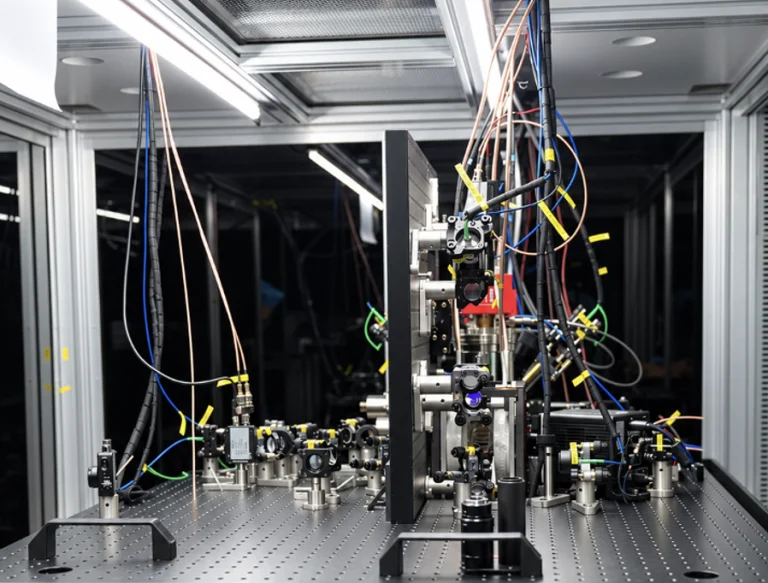
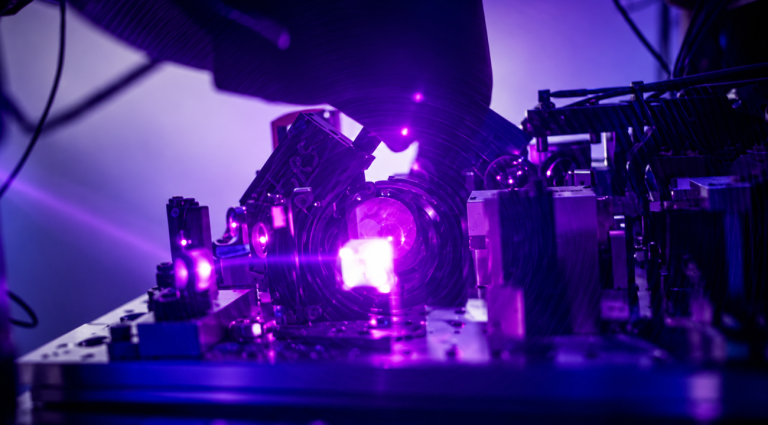
PRESS RELEASE — Atom Computing, a leader in scalable neutral-atom quantum computing, today announced it has signed an agreement for up to $100 million with the U.S. Department of Commerce to accelerate research and development of fault-tolerant, utility-scale quantum computers. The award follows a Letter of Intent announced earlier this year and represents a significant investment in advancing next-generation computing technologies critical to U.S. economic competitiveness, scientific leadership, and national security.
Atom Computing‘s neutral-atom architecture is increasingly recognized as one of the most viable approaches for building large-scale, commercially useful quantum computers. Today’s announcement closely follows the company’s recent selection as the only neutral atom company to advance to Stage C of the Defense Advanced Research Projects Agency Quantum Benchmarking Initiative (DARPA QBI) with potential funding up to $300 million.
Atom has consistently demonstrated technical leadership through several industry milestones, including being the first to build a platform with more than 1,000 qubits, the first neutral-atom company to demonstrate sub-threshold behavior on a system with full, end-to-end quantum error correction over many rounds, and the first to commercially offer a logical-qubit quantum computer. In 2025 Atom Computing sold its first commercial on-premises quantum computer to QuNorth, a Nordic quantum initiative funded by EIFO and Novo Nordisk Foundation.

“Quantum computing is reaching a critical inflection point where scientific breakthroughs must rapidly translate into commercial reality,” said Dr. Ben Bloom, CEO and Founder of Atom Computing. “This $100 million contract enables us to aggressively scale the engineering required to bring fault-tolerant quantum computing to market and ensure the United States leads the transition into the utility-scale era.”
The Department of Commerce contract will accelerate several of Atom Computing’s strategic R&D initiatives which will shorten the timeline to economically viable quantum computing, including:
- Developing critical technologies in-house to improve system performance, reliability, and vertical integration
- Expanding parallel engineering and testbed infrastructure to rapidly validate innovations and speed product development
- Strengthening R&D collaboration with key supply chain partners to support manufacturing scale-up and long-term growth
Industry and government interest in practical quantum computing continues to accelerate, with advances in error correction, system scale, and hardware performance driving increased confidence in the technology’s commercial potential. Atom Computing has demonstrated leadership in logical-qubit systems and fault-tolerant architectures, translating scientific breakthroughs into deployable commercial systems for real-world applications.

Keep track of everything going on in the Quantum Technology Market. In one place.

Matt Swayne
With a several-decades long background in journalism and communications, Matt Swayne has worked as a science communicator for an R1 university for more than 12 years, specializing in translating high tech and deep tech for the general audience. He has served as a writer, editor and analyst at The Quantum Insider since its inception. In addition to his service as a science communicator, Matt also develops courses to improve the media and communications skills of scientists and has taught courses.
[email protected]

Stay Ahead of Quantum
Get the latest research, company news, and market intelligence every week.
MENTIONED IN THE ARTICLE

Atom Computing
Atom Computing builds quantum computers using nuclear spin qubits formed from arrays of optically-trapped neutral atoms.
→

Department of Commerce
The U.S. Department of Commerce is a federal executive department responsible for creating the conditions for economic growth and opportunity in the United States. Through its 13 bureaus, it drives U.S. economic competitiveness, strengthens domestic industry, and supports job growth. The Department fosters innovation in emerging technologies, including quantum computing and artificial intelligence, and provides research and development resources through agencies such as NIST and NTIA.
→

Defense Advanced Research Projects Agency (DARPA)
The Defense Advanced Research Projects Agency (DARPA) is an independent research and development agency within the U.S. Department of Defense (DoD) established in 1958 to prevent and create strategic technological surprises for national security. Operating with a relatively small staff of program managers who are empowered to take high-risk, high-reward approaches, DARPA functions by funding cutting-edge research in academia, industry, and government laboratories rather than conducting research in-house. Its mission focuses on creating revolutionary technologies—such as the Internet (ARPANET), stealth technology, GPS, and mRNA vaccine platforms—that transition into practical military and civilian applications. DARPA programs are typically finite in duration and demand transformational breakthroughs rather than incremental improvements, positioning the U.S. at the forefront of technological innovation.
→