Diraq Deploys Silicon Spin Quantum Computer Inside a Commercial Data Center


Insider Brief
- Diraq has installed an eight-qubit silicon spin quantum computer at Equinix’s Sydney data center, describing it as the first commercial data center deployment of the technology.
- The system consumes less than 20 kilowatts and occupies 170 square feet, with Diraq targeting an upgrade to as many as 256 qubits within a year.
- Diraq’s new Quantum at Work report examines potential applications, including modeling suggesting a 10-percentage-point increase in clinical trial success rates could save about $600 million per medicine.
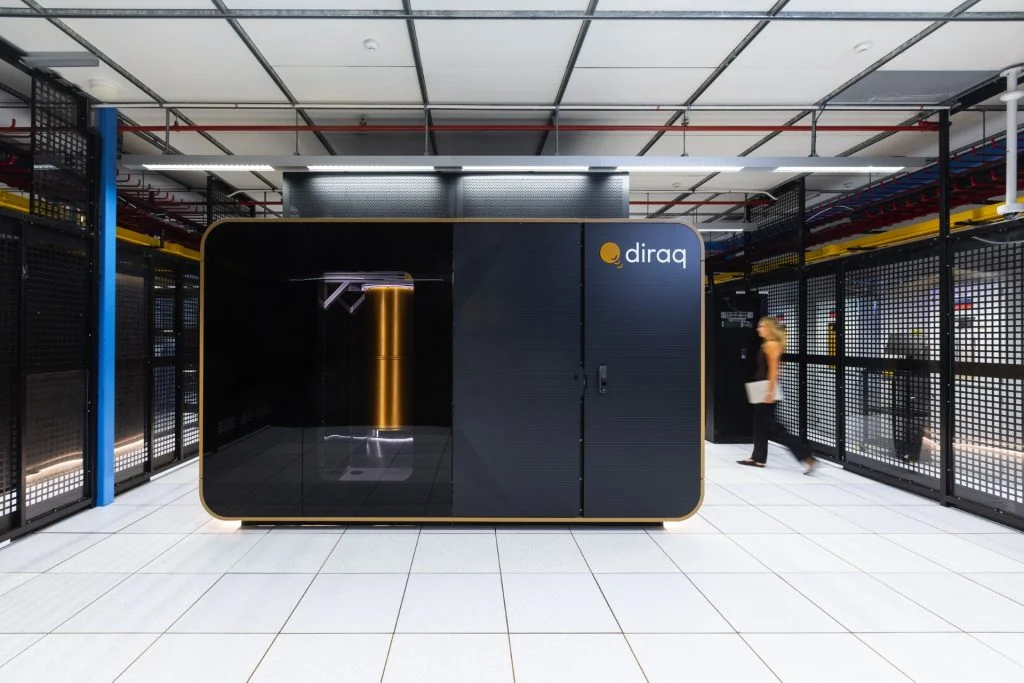
PRESS RELEASE — Quantum computing pioneer Diraq has installed the world’s first silicon spin quantum computer inside a commercial data center, now live at Equinix (Nasdaq: EQIX) in Sydney, Australia. As quantum computing moves into the everyday infrastructure that businesses rely on, Diraq is also launching Quantum at Work, a new report exploring how the technology could be put to work on some of the world’s hardest problems including medicine discovery.
“We are now at a point where quantum computing can start to reach industries and the people they serve,” said Andrew Dzurak, CEO and Founder of Diraq. “That shift matters more than any single milestone, because it changes what’s possible for every field quantum touches, from medicine to materials to logistics. Our silicon spin approach is what puts that within reach in five years, not decades. It gives us a manufacturing path already proven at industrial scale, a cost curve that improves as we add qubits, and a system designed to run inside today’s existing computing infrastructure.”
A new benchmark for commercial deployment

The deployment marks a significant step for silicon spin quantum technology, taking it from the lab and into Equinix’s data center, home to everyday computing infrastructure for banking, healthcare, utilities, manufacturing and retail industries.
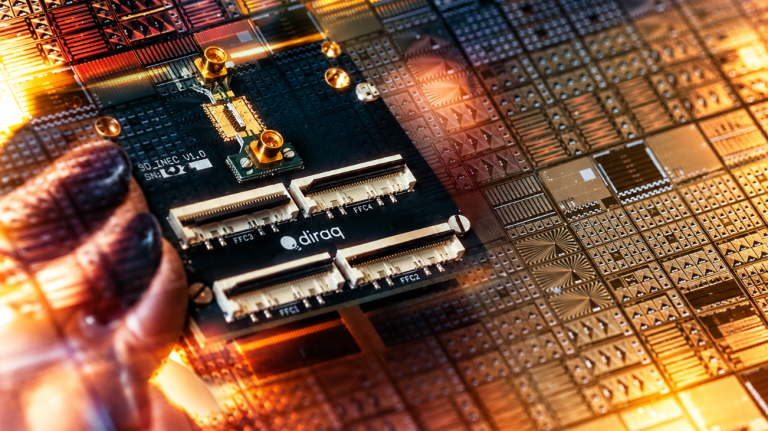
Diraq’s quantum computers are designed to scale without requiring data centres to scale around them. Its silicon spin architecture is built using the same semiconductor manufacturing processes used to produce today’s conventional computer chips. This allows customers to increase computing power by upgrading the quantum processor, with minimal changes to the surrounding infrastructure. The system at Equinix currently operates with eight qubits, and Diraq is targeting up to 256 qubits in the same deployed system within the next year.
That strategy impacts the system’s power and physical footprint. The current quantum computer draws less than 20 kW, and Diraq expects a future utility-scale system to draw around 300 kW, less than a third of the power demanded by a single next-generation AI rack. The current system takes just 170 square feet of floor space, and future utility-scale deployments could be as small as 50 square feet. By keeping quantum computing compact and relatively low power as it scales, Diraq aims to avoid the costly and disruptive infrastructure expansion that other quantum technologies would require.
“The next chapter of computing won’t be defined by AI, cloud or quantum in isolation, but by how these technologies work together,” said Harmeen Mehta, Executive Vice President and Chief Digital and Innovation Officer, Equinix. “Diraq’s deployment in our data center is an important proof point for quantum, demonstrating a path for these systems to operate alongside the digital infrastructure enterprises already rely on.”
The deployment follows Diraq’s recent advancement to Stage C of DARPA’s Quantum Benchmarking Initiative, a program testing paths to utility-scale quantum computing, one of just six companies to reach the program’s final stage with potential funding of up to US$300 million. Diraq also signed a US$38 million letter of intent with the Department of Commerce under the CHIPS and Science Act, the only company focused on silicon spin qubits in that funding round.
A future case for medicine
Alongside the deployment, Diraq is launching Quantum at Work, a new report examining how quantum computing could contribute to progress across fields including medicine, energy, materials, climate and transport. This makes up part of Diraq’s broader work outlining what future, utility scale quantum computers will make possible.
“Quantum computing’s economic value isn’t a distant promise,” said Matt Langione, Managing Director and Partner, Boston Consulting Group. “Our research shows that technologies leveraging advanced quantum physics have already compounded $19 to $27 trillion in value today, through semiconductors, GPS, MRI and early drug discovery. We think quantum computing can unlock a further $3.5 trillion at maturity.”
Developing a new medicine costs more than US$2 billion and takes up to 15 years, with fewer than 1 in 10 candidates ever reaching a patient. New Diraq analysis, built on a 2010 industry cost study published in Nature Reviews Drug Discovery and modeled on FDA approval data, developed for the Quantum at Work report, found:
- More medicines reaching patients: Lifting clinical trial success rates by just 10 percentage points could mean around 50% more potentially lifesaving medicines reaching patients each year, up to 25 additional medicines in a market the size of the US alone, as fewer viable candidates are abandoned due to cost.
- Economics that stack up: A 10 percentage point improvement in clinical trial success rates could save around US$600 million per medicine by ruling out failed candidates earlier. Other quantum modalities can become increasingly expensive as they scale, requiring significant cooling, wiring and control infrastructure. Diraq is targeting at most tens of millions of dollars for its utility-scale systems, helping make the potential economic benefits of quantum computing achievable in practice.
“Being inside a commercial data center is how we start proving that claim,” said Dzurak. “This deployment puts the system where it will actually operate, running alongside the infrastructure it’s designed to work with. If we get this right, it could mean more lifesaving medicines reaching the people who need them, and our target of scaling to 256 qubits in the next year is the next proof point on that path.”
Diraq has operations in Palo Alto, Los Angeles, Chicago and Albuquerque, alongside its Australian research operations.

Keep track of everything going on in the Quantum Technology Market. In one place.
Topics

Matt Swayne
With a several-decades long background in journalism and communications, Matt Swayne has worked as a science communicator for an R1 university for more than 12 years, specializing in translating high tech and deep tech for the general audience. He has served as a writer, editor and analyst at The Quantum Insider since its inception. In addition to his service as a science communicator, Matt also develops courses to improve the media and communications skills of scientists and has taught courses.
[email protected]

Stay Ahead of Quantum
Get the latest research, company news, and market intelligence every week.
MENTIONED IN THE ARTICLE