Zumo and Quantum Chain Partner on Quantum-Resilient Finance


Insider Brief
- Zumo and Quantum Chain have signed a memorandum of understanding to explore quantum-resilient infrastructure for UK digital assets and blockchain-based financial services.
- The collaboration will examine applications across private networks, tokenised deposits, payments and institutional digital assets, including a potential quantum-resistant GBP stablecoin subject to regulatory requirements.
- The companies aim to support cryptographic agility and post-quantum security for financial institutions as concerns grow about future quantum computers that could compromise current public-key cryptography.
PRESS RELEASE — Crypto-as-a-service platform Zumo has signed a Memorandum of Understanding (MoU) with Quantum Chain, a quantum-resilient blockchain and infrastructure platform, with the companies uniting to help safeguard the UK’s developing digital assets sector against the spectre of future quantum threats.
There are growing fears regarding the imminence of Cryptographically Relevant Quantum Computers (CRQCs) that will soon be able to break standard public-key cryptography that underpins blockchain security, asset ownership, and institutional custody.
In response, the National Cyber Security Centre (NCSC) is advising financial institutions to ensure they are completely migrated to post-quantum cryptography (PQC) by 2035. Most estimates point to the 2030s for ‘Q-Day’, which will herald the arrival of CRQCs powerful enough to break public-key encryption standards using algorithms like Shor’s algorithm.

However, with research from Google indicating that CRQCs capable of shattering traditional encryption could become a reality as early as 2029, the window to act is shrinking rapidly.
There are also widespread worries about “Harvest Now, Decrypt Later (HNDL)” attacks, in which state-sponsored actors and cybercriminals are believed to be intercepting and storing encrypted financial data today with the aim of decrypting it once a CRQC exists.
According to a recent survey by Thales, HNDL is now the most pressing quantum concern for security professionals, cited by 61% of respondents, while there are also major concerns regarding Quantum-Enabled AI, which would dramatically expand the destructive capability of CRQCs.
“In my view, Q-Day isn’t a specific day when a CRQC is created but rather a range of time when they become commercialised, weaponised, and publicised,” says Max Denega, Founder and CEO, Quantum Chain, who has a background in counter-terror operations and a decade in the financial industry.
“The likelihood is that when attacks begin, they will be purposefully suppressed and misreported to stave off public chaos. So the concern is Q-Day will actually be when the damage is too great and too frequent to stop the media from spreading the word.”
Fitting more than just new locks
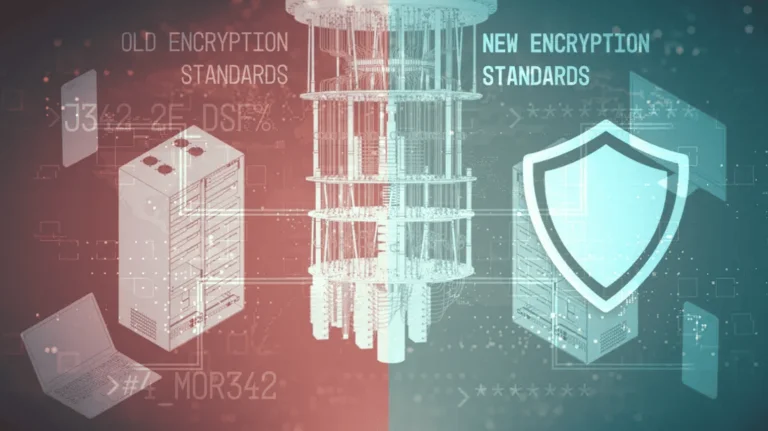
For the fast-moving digital assets ecosystem, achieving cryptographic agility – which is the ability to quickly swap out vulnerable code blocks, namely encryptions, without destroying network functionality – has therefore become a priority.
The timely collaboration brings together Zumo’s compliant digital asset infrastructure, and experience supporting emerging enterprise and institutional propositions, with Quantum Chain’s quantum-resilient blockchain infrastructure. Under the terms of the MoU, this strategic integration aims to support quantum-safe digital currency and asset management across central banks, banks, and regulated financial institutions.
Quantum Chain provides built-in solutions designed to help financial institutions defend themselves against both AI-led and quantum-era cyber threats.
The company’s network architecture has been engineered from day-1 to counter the rapid evolution of machine-speed attacks. It uses newer encryption methods aligned to the National Institute of Standards and Technology (NIST) and can be quickly swapped out if any element is compromised. Quantum Chain also supports public-permissioned protocols to maintain institutional privacy and retail distribution.
Commenting on the partnership, Zumo’s Founder and CEO Nick Jones says:
“While today’s encryption can be considered a lock that would take ordinary computers thousands of years to pick, a powerful CRQC could allow cybercriminals and other bad actors to pick it in hours.”
“I recently spoke with someone who oversees cryptography for a major UK bank and suffice it to say he is extremely concerned. As banks and wealth managers ramp up their adoption of blockchain-based infrastructure for payments, deposits, and digital assets, our partnership with Quantum Chain will focus on ensuring that Zumo’s services remain secure and resilient in the face of these emerging threats.”
“It reflects a much more forward-looking approach to infrastructure, embedding more robust security measures into systems that are being built for long-term use.”
Quantum Chain’s Founder and CEO Max Denega adds:
“I don’t wholly agree with PQC migration as it is sold today, which has become the leading sales narrative of the large consultancies. It locks banks into cumbersome contracts for inventories, a Cryptographic Bill of Materials, and eventually updated encryptions that will simply be a copy-paste of open-sourced jurisdictional solutions. This is an over-expensive delivery that is frankly rude to financial institutions. This works for the vendor, not for the bank.”
“A PQC migration does not actually change underlying systems or architecture, so adds an enterprise-wide burden, rather than combining solutions to save the bank time and cost. For example, a PQC migration does not support a bank’s effort to move towards on-chain finance, meaning the bank and the existing blockchain vendors must transition with incredible risk. Quantum Chain brings you onto a post-quantum blockchain infrastructure now – allowing you to focus on the application layer and product expansion while others fight to catch up.”
“With Quantum and AI progressing so fast, we’re heading towards a new normal in which there could be constant cyclical updates of encryptions needed as their obsoletion rate speeds up. This makes cryptographic agility absolutely vital – and this is one of many benefits our collaboration with Zumo provides.”
The two companies will now work together to support the development of an ecosystem in which institutions can deploy future-proofed digital assets and blockchain-based financial services.
This work will encompass potential applications across private networks, tokenised deposits, payments, and institutional digital assets – including the exploration of a quantum-resistant GBP stablecoin, subject to regulatory requirements.

Keep track of everything going on in the Quantum Technology Market. In one place.

Mohib Ur Rehman
Covering quantum and emerging technologies, Mohib explores the intersection of technology, security, and society. His work also frequently examines surveillance infrastructure and the institutions shaping the digital world. In addition to his work at The Quantum Insider, he co-runs SK NEXUS, an independent technology publication that helps readers understand the technologies shaping their lives.

Stay Ahead of Quantum
Get the latest research, company news, and market intelligence every week.
MENTIONED IN THE ARTICLE

Zumo
Zumo is a digital-assets-as-a-service platform purpose-built for the UK market, providing compliant and sustainable crypto infrastructure for institutions. Its modular platform covers fiat on/off ramping, UK custody and trading, customer onboarding, identity and financial crime checks, and financial promotions workflows, delivered through its embedded Crypto Access solution for crypto firms, fintechs, neobanks, wealth managers, and institutional digital asset firms. Zumo also offers Oxygen, a sustainability solution that measures and mitigates the environmental impact of digital asset activities in line with net-zero and ESG principles. The company is registered with the UK Financial Conduct Authority under the Money Laundering Regulations and is ISO/IEC 27001:2022 certified.
→

Quantum Chain
Quantum Chain specializes in quantum-resistant blockchain infrastructure for financial institutions, central banks, and regulated issuers. The company develops post-quantum cryptography solutions and AI-powered compliance engines to address the risks posed by quantum computing to current financial systems. Its platform is designed for institutional-grade security, regulatory compliance, and seamless integration with existing financial infrastructure. Quantum Chain emphasizes programmable, permissioned governance and real-time compliance monitoring, enabling secure tokenization, settlement, and digital currency issuance. The company aims to provide a future-proof alternative to legacy systems such as SWIFT, supporting the transition to a post-quantum financial ecosystem.
→