

By Zeynep Koruturk, Dr. Kris Naudts, and Donald Harmitt @ Firgun Ventures.
Firgun Ventures is a VC firm investing in Series A/B quantum scale-ups globally.
Demand for critical minerals is rising just as copper exploration is becoming harder. The IEA projects copper supply to fall around 25% short of primary requirements by 2035, while the cobalt gap has widened to more than 25% following the DRC’s export quotas. Closing those gaps will require more primary supply, making new discoveries increasingly important. Yet many of the accessible targets have already been found, pushing exploration towards deeper, more complex targets. S&P Global estimates that average copper drilling depth has risen nearly 50% since 2010 to around 600 metres, which means every unsuccessful deep target can require substantially more drilling before miners learn that the ore is not there.
That cost is what makes measurement before drilling worth paying for, and two instruments are being built for the job. Quantum gravimeters use clouds of laser-cooled atoms as a stable reference for small variations in gravity caused by underground density differences, while quantum magnetometers read subtle magnetic field changes that reveal particular rock formations. Neither technology produces a complete underground map or removes the need to drill. What they offer is a better-calibrated sense of where to drill and, just as usefully, where not to. Better subsurface information informs which targets get funded, and underscores the question of who controls a country’s geological picture. And a useful by-product of deploying quantum technologies in the mineral sector is meeting the increasing material needs of quantum itself.

What quantum sensors add to the mineral exploration toolkit
Mineral exploration requires assembling an incomplete picture from indirect signals, among them sampling, seismic surveys, gravity and magnetic data, and the machine learning models built on them. A gravity anomaly identified by quantum instruments does not verify that a viable orebody lies beneath it, and different structures can produce similar signals. Drilling decisions remain the proper test of commercial value within mining. But drilling is expensive, disruptive, and narrow; although quantum instruments may not be able to produce a geological photograph, they can vastly improve a probability map.
Early field results suggest an initial role for quantum sensors to support conventional platforms. Researchers at the Centre for Quantum Technologies in Singapore and Nanyang Technological University reported in February 2026 on a survey across 24 square kilometres of tropical terrain, where an on-site atomic gravimeter recalibrated two conventional spring gravimeters over seven days. What that buys is a better probability map rather than a geological photograph, since a gravity anomaly cannot confirm an orebody and different structures can produce similar signals.
Commercial investment and partnership activity is backing the same arrangement with quantum added to an existing toolkit rather than replacing it. BHP Ventures joined a $12.7 million round for Singapore-based Atomionics in September 2025, months after it began testing its Gravio sensor with Rio Tinto Exploration. Meanwhile, Fleet Space is adding quantum gravimeters from Nomad Atomics and diamond-on-chip magnetometers from DeteQt to an ExoSphere platform already used by BHP, Rio Tinto, Barrick Mining, and Gold Fields. Integrating quantum sensors into survey systems miners already trust is a far shorter route to revenue than persuading them to rebuild their existing toolkits.
The first quantum advantage in mining may be a hole never drilled
Cost avoidance offers the clearest initial business case because it can be counted. Ruling a target out takes less proof than confirming one, which is where a probability map earns its keep. Ore is dense, so if a survey finds nothing heavy where the model expected something heavy, the target can be dropped without drilling, saving the hole, the crew and equipment behind it, and the months of analysis that would have followed. On the other hand, revenue upside is harder to attribute, though better targeting could in principle raise the chance of finding an economic deposit beneath cover, identify extensions to a known resource, or justify extending a mine’s life. Quantum sensing would not generate that revenue directly but would shift the probability attached to each outcome, and a modest gain in discovery odds matters when a deposit is worth billions.
Building a market for quantum subsurface intelligence
Geological information determines how mining assets are valued, since an early exploration licence is worth little while so little is known, and each credible survey or drill result raises confidence and price. If uncertainty can be reduced with less drilling, smaller explorers could reach the same confidence on less capital, delaying the sale of a project to a major until it is worth more. Larger miners could screen wider portfolios and direct budgets towards the deposits carrying the strongest evidence. Several commercial models are already visible. Nomad Atomics sells integrated survey services built around its absolute quantum gravimeter, Atomionics pairs Gravio with AI interpretation, and Fleet Space folds several sensing methods into its ExoSphere platform the major miners already use. All three are selling different layers of the same outcome: greater confidence about the ground before companies commit to drilling. Measurable savings support conventional pricing more comfortably than discovery upside ever will, leaving room for providers willing to take success fees or equity.
Governments are also strategically important customers. In most countries, subsoil minerals are vested in the state, and public geological surveys finance mapping at scales that individual exploration companies rarely can. Mining companies generally spend more in total, but a government typically buys a whole territory at once rather than one project at a time. Public agencies and state backed miners could therefore become some of the market’s largest buyers.
Geological data could become a sovereign asset
Competition over critical minerals begins before extraction, in the information deciding where exploration capital flows. The DRC, the world’s largest cobalt producer and second-largest copper supplier, has only around 20% of its territory systematically explored. The DRC is building a national geological databank partly fed by a $180 million airborne mapping contract with Spain’s Xcalibur across more than 700,000 square kilometres. Access will be tiered, with basic information free while more sensitive datasets will carry fees. Raoul Wazenga Vitima, director general of the National Geological Survey of Congo, calls the resulting data “a strategic asset of the Congolese state“, which gives the DRC greater influence over the information that guides exploration investment and future mining negotiations.
The United States is connecting this strategy to quantum more directly. The Quantum-Enhanced Critical Minerals Mapping Act of 2026 was proposed in July by Representatives Jeff Hurd (R-CO), and Salud Carbajal (D-CA). If enacted, it would require the US Geological Survey to run quantum gravity gradiometry surveys over at least three priority areas under its Earth Mapping Resources Initiative. The results would be compared against classical surveys, and the data released to exploration companies. Infleqtion, a US quantum computing and sensing company, whose chief executive, Matt Kinsella, testified in support of the bill, will field test the technology in Colorado in 2027, which is the evidence that could bolster the legislation.
The loop then closes on the quantum industry itself, which draws critical minerals such as niobium, isotopically-enriched silicon, photonic materials, and engineered diamond from concentrated supply chains, as the Firgun Ventures Insights Series Quantum Supply Chain piece has examined. Hence, better mineral intelligence indirectly strengthens the industrial base quantum hardware depends on.
What quantum sensing can and cannot take off the table
Quantum sensing will not make exploration deterministic. Finding a deposit does not resolve the financing, permitting, processing, and infrastructure problems that stretch the path from discovery to production to roughly 18 years. Those constraints are institutional and no instrument moves them, which is why the geological question is the one worth answering first, since every later step is wasted on barren ground. For the companies building these instruments, the near-term business is measurable avoided cost, with discovery upside built around it once the data justifies the claim. Mining has always rewarded those who drill where the evidence points. Ownership of that evidence is largely settled, since the ground generally belongs to states. What remains open, and what a quantum sensing company can own, is the ability to significantly increase the precision in reading it.
About Firgun Ventures:
Firgun Ventures is the first venture capital firm specialising in Series A/B quantum technology scale-ups. Headquartered in London with a global investment mandate, Firgun invests across quantum computing, sensing and communications, backing pioneering companies developing solutions to some of the world’s most pressing challenges in healthcare, climate science, finance, cybersecurity and beyond.
Combining deep quantum expertise, investment experience and a global network of industry leaders and advisers, Firgun provides capital and strategic support to help exceptional entrepreneurs turn scientific breakthroughs into commercially scalable businesses. Its growing portfolio includes Photonic Inc., Quantum Motion, Oxford Quantum Circuits, Silicon Quantum Computing, Universal Quantum, Quantum Elements, and ZuriQ (as of October 2026).
Firgun Ventures is committed to accelerating the commercial adoption of quantum technologies and supporting the next generation of category-defining companies as the industry moves from research and development towards real-world economic impact. Learn more at firgun.vc.
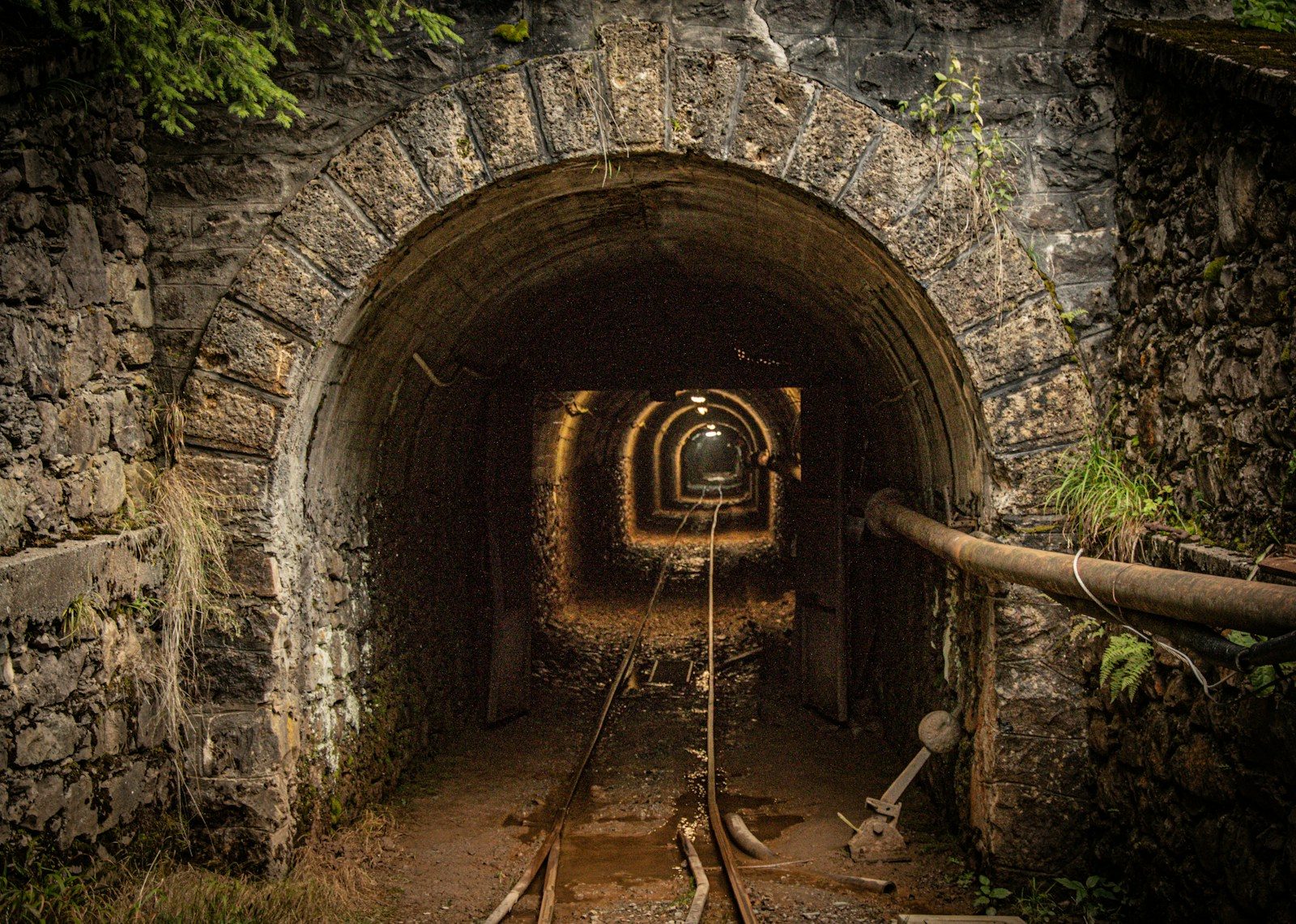
Image: Photo by Luca Maffeis on Unsplash
Guest posts reflect the views and opinions of their authors and do not necessarily represent those of The Quantum Insider, its staff or its affiliated organizations. Publication does not constitute an endorsement of any company, product, service or claim discussed.