Bringing Classical LDPC Code Design Theory to Quantum Computers


Insider Brief
- A new quantum LDPC code adapts classical design principles to pursue high encoding rates, strong error protection and predictable decoding performance.
- The code protects 4,612 logical qubits with 9,216 physical qubits and shows strong evidence of a minimum distance near 48.
- Independent research teams have adapted the approach, known as Kasai codes, for neutral-atom hardware and broader error-correction frameworks.
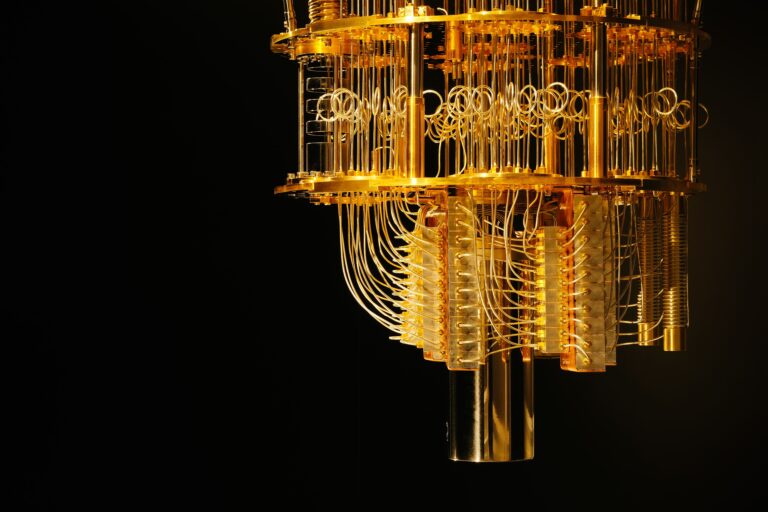
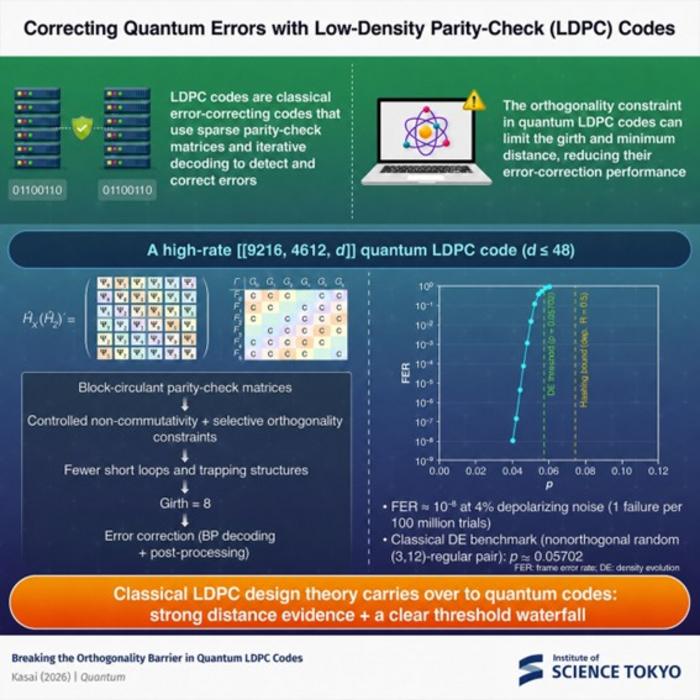
- Image: Institute of Science Tokyo
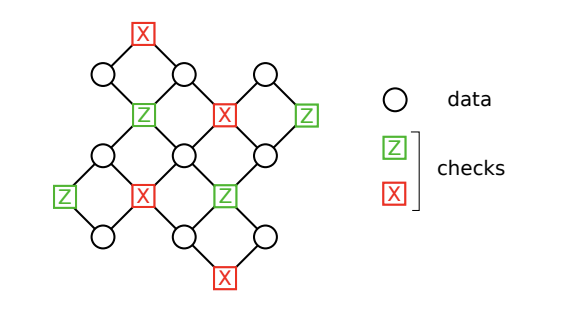
PRESS RELEASE — Quantum error correction must detect and correct errors without directly reading the quantum information. Classical low-density parity check (LDPC) codes have a well-established design theory: by choosing how many checks connect to each bit, retaining appropriate randomness, and avoiding short loops, designers can pursue both a large minimum distance and a threshold phenomenon in which the decoding failure rate drops sharply below a predicted noise level. Quantum LDPC codes must additionally make two types of error checks orthogonal so that they do not interfere. Applying this quantum mechanical constraint throughout the full design can create short loops and weak structures, making it difficult to retain both classical advantages.
Associate Professor Kenta Kasai of Institute of Science Tokyo (Science Tokyo) in Japan asked whether classical LDPC design theory could be transferred to quantum codes while preserving both distance and threshold behavior. He constructed a quantum LDPC code that uses affine permutation matrices and applies orthogonality only to the selected, or active, rows used for error correction. The complementary, or latent, parent rows retain randomness, allowing connection degrees and short loops to be designed according to classical LDPC principles.
His study is published in the journal Quantum on September 9, 2026.

“The quantum constraint is essential, but it does not have to govern every part of the design. By applying it only where error correction uses it, we can preserve the classical LDPC design freedom needed to pursue both a large minimum distance and threshold behavior,” says Kasai.
The method produced a (3,12)-regular, girth-8 code written as [[9216,4612,d]] with d≤48. It protects 4,612 logical qubits using 9,216 physical qubits—a ratio of nearly one logical qubit for every two physical qubits—indicating the potential to reduce the hardware overhead of quantum error correction. Weight-48 logical operators can be constructed explicitly, and the X- and Z-type distances associated with the latent structure are both exactly 48. Detailed searches and low-error-rate simulations found no lower-weight logical errors. Although a global lower bound on d remains open, these results provide strong evidence that the overall minimum distance is near 48. Eliminating 4- and 6-cycles also reduces trapping sets that can stall BP decoding.
“The significance is not only that one high-rate code performs well. Threshold, minimum distance, short loops, and hard-to-decode error patterns can now be considered within the same design framework developed for classical LDPC codes,” says Kasai.
The code was evaluated using BP decoding with low-complexity post-processing. A concrete code protects 4,612 logical qubits with 9,216 physical qubits, shows strong evidence of a minimum distance near 48, and exhibits a clear decoding waterfall close to the density-evolution prediction for the corresponding classical, nonorthogonal random (3,12)-regular LDPC ensemble. That classical BP benchmark is p≈0.05702; notably, this is not a measured threshold of the proposed quantum code. With post-processing, its frame error rate reached 10⁻⁸ at 4% depolarizing noise, corresponding to approximately one failure per 100 million trials.
The high encoding rate—roughly one logical qubit per two physical qubits—could substantially reduce the hardware required for quantum error correction. More broadly, the waterfall’s approach to the classical prediction suggests that the classical methodology of predicting decoder limits from connection degrees and designing toward those limits can also guide quantum LDPC codes. The present results are based on theoretical design and numerical experiments; performance on a specific quantum processor must be evaluated separately.
“Classical LDPC coding has spent decades learning how to predict decoding limits from connection degrees and design toward those limits. Seeing the quantum code’s waterfall approach the same benchmark suggests that this methodology can guide quantum LDPC design,” explains Kasai.
Kasai released the preprint on arXiv on January 13, 2026. While it was still under review, researchers at Harvard University, MIT, and QuEra Computing adapted the construction to reconfigurable neutral-atom quantum computers. Their paper, posted on April 17, designs codes and error-detection procedures around atom rearrangement with acousto-optic deflectors (AODs) and refers to the resulting family as “Kasai codes.” QuEra highlighted this development in official posts, including one titled “Kasai Code Breakthrough in Quantum Error Correction.” Kasai’s paper was accepted by Quantum on August 3, 2026.
Other independent teams have extended the design. A team including Tsinghua University‘s Center for Quantum Information posted Cornucopia codes on August 3, 2026, emphasizing regular structures suited to simultaneous atom movements. Willers Yang and colleagues posted GALA codes on August 7, 2026; their general framework recovers previously developed rate-1/2 Kasai constructions as special cases and incorporates AOD-compatible atom movements and logical operations into code design. Between February and July 2026, Kasai presented the preprint in 11 invited talks at universities, companies, and international workshops and conferences. These included QID2026 at the Korea Institute for Advanced Study (KIAS) in Seoul, Korea, where he gave an invited talk titled “Advancing Quantum LDPC Codes with Classical LDPC Design Principles.” Further invited talks were scheduled for LG Electronics’ Quantum Journal Club in August; the 2026 YITP Fault-Tolerant Logical Processing Workshop at Kyoto University‘s Yukawa Institute for Theoretical Physics in September–October; the international conference Frontiers in Scaling Superconducting Quantum Computing in Italy in October; the Workshop on Quantum Error Correction at CWI in Amsterdam, the Netherlands, in October; the RQC Colloquium at RIKEN‘s Center for Quantum Computing in October; and the 3rd RIKEN-Harvard Joint Quantum Workshop at RIKEN in December. In January 2027, Kasai is also scheduled to give an invited talk in the special session “Coding Theory: From Foundations to Frontiers” at the Joint Mathematics Meetings (JMM 2027) in Chicago, Illinois.
“Independent teams are now adapting the same design principles to hardware layouts and more general code families. This suggests that Kasai codes are becoming a common foundation for international work on scalable quantum error correction,” concludes Kasai.

Keep track of everything going on in the Quantum Technology Market. In one place.
Matt Swayne
With a several-decades long background in journalism and communications, Matt Swayne has worked as a science communicator for an R1 university for more than 12 years, specializing in translating high tech and deep tech for the general audience. He has served as a writer, editor and analyst at The Quantum Insider since its inception. In addition to his service as a science communicator, Matt also develops courses to improve the media and communications skills of scientists and has taught courses.
[email protected]

Stay Ahead of Quantum
Get the latest research, company news, and market intelligence every week.
MENTIONED IN THE ARTICLE

Institute of Science Tokyo
The Institute of Science Tokyo is a public research university in Tokyo, established through the merger of Tokyo Institute of Technology and Tokyo Medical and Dental University.
→

Tsinghua University
Tsinghua University is a Chinese national public research institution located in Beijing. It is supported by the Ministry of Education and is part of the C9 League, Double First Class University Plan, and previous Project 985 and Project 211 initiatives.
→

Korea Institute for Advanced Study (KIAS)
Korea Institute for Advanced Study (KIAS) was founded in 1996 by Korean Government to promote research excellence in the basic sciences. The institute regularly recruits Post Doctoral Research Fellows for their department of physics and quantum technologies. The KIAS Quantum Universe Center also tends to invite applicants for QUC research fellow positions in the field of extra-galactic astronomy and observational cosmology.
→

LG Electronics
LG Electronics Inc is a company based in South Korea that manufactures a diverse array of electronic goods. It operates across several business segments, including home entertainment, mobile communications, home appliances and air solutions, vehicle components, business solutions, and Innotek. The home entertainment segment focuses on producing and selling TVs and digital media products, while the mobile communications segment deals with mobile communication equipment. The home appliance and air solutions segment is involved in the production and sale of products like washing machines and refrigerators. The vehicle components segment is responsible for designing and producing vehicle parts. The business solutions segment engages in manufacturing and selling products such as PCs and solar panels. Innotek specializes in the sale of substrates, sensors, and related items. Notably, the primary sources of revenue for the company are the home entertainment and home appliance and air solutions segments.
→

Kyoto University
Kyoto University (Kyoto Daigaku in Japanese) is a prestigious national research university located in Kyoto, Japan. Established in 1897, it is one of the most esteemed and oldest universities in Japan and Asia.
→

RIKEN
RIKEN (short for Rikagaku Kenkyusho) is a National Research and Development Agency founded in 1917 as private scientific research foundation. Initially modeled after the Kaiser Wilhelm Society in Germany, it has evolved into a comprehensive, state-funded research institution covering a wide range of natural sciences.
→