


Insider Brief
- MIT researchers designed a qubit architecture that simulations suggest could speed quantum operations while preserving stored information, potentially supporting more reliable quantum computers.
- The “arm qubit” separates information storage from interactions with other components, using a specialized coupler to connect the two functions while reducing unwanted interference.
- The researchers plan to fabricate the qubit to test whether its predicted performance holds up in hardware and could support quantum error correction.
MIT researchers have designed a quantum computing component that simulations suggest could perform faster operations while preserving stored information. It’s an advance that potentially could help future machines complete longer, more reliable calculations, according to the researchers.
The architecture separates two jobs within a quantum bit, or qubit. One component stores information, while another connects with other qubits and electronics. According to MIT News, the design could address a central engineering challenge in quantum computing — allowing qubits to interact strongly enough to perform calculations without quickly losing the information they hold.
The researchers call the design an “arm qubit” because its interaction component reaches out to other parts of the system. Their simulations indicate that it could combine long information-storage times with faster operations and faster measurement than existing superconducting qubit designs.

The findings, published in Physical Review Applied, remain a modeling result. The team has yet to fabricate the qubit and establish whether its predicted advantages hold up in hardware.
If those results translate to a working device, the architecture could support quantum error correction, the process of detecting and correcting errors that otherwise derail calculations. That capability is essential to building quantum computers that can reliably run long, complex algorithms.
“The goal for doing all this is to build a fault-tolerant quantum computer where you can correct these errors as they happen, so then you can do long computations and actually do useful things with a quantum computer,” Kevin O’Brien, an associate professor of electrical engineering and computer science at MIT and the study’s senior researcher, told MIT News.
Separating Storage and Interaction
Qubits are the information-holding units of a quantum computer. Their useful quantum properties are fragile, and connecting them to other components can contribute to the loss of stored information.
That deterioration, known as decoherence, introduces errors that can accumulate before a calculation finishes. Researchers therefore need designs that preserve information while allowing the interactions required to process and measure it.
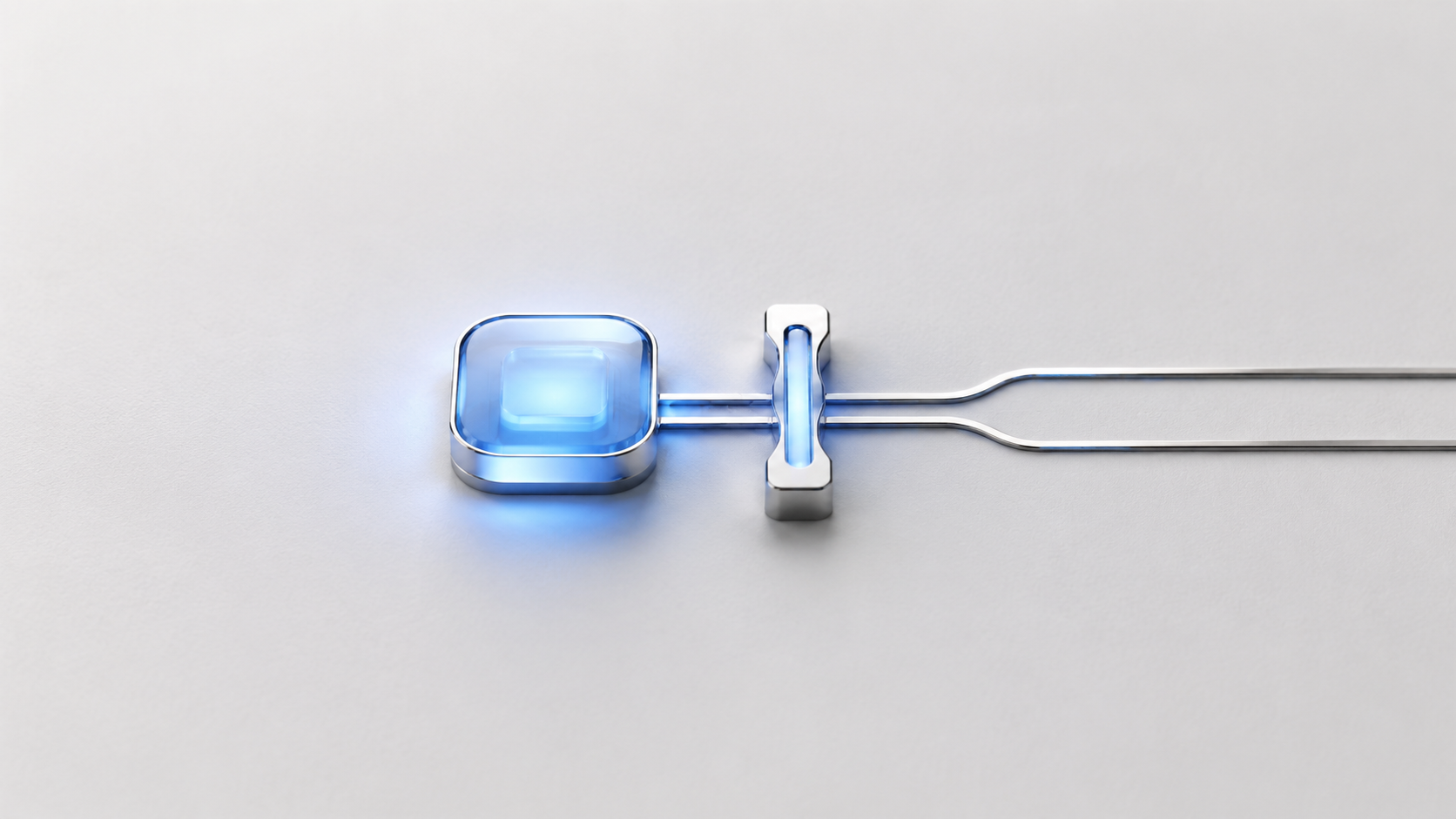
The MIT architecture assigns those responsibilities to two connected components, called modes. The data mode uses a qubit design known for maintaining quantum information for a long time. The arm mode uses a different design that interacts strongly with other components.
Those components also include a resonator, an electronic device used to help measure the qubit’s state. This measurement, known as readout, converts quantum information into a value that conventional electronics can record.
Separating the functions allows the researchers to engineer each component around its principal task. The challenge is linking them without introducing unwanted interactions that negatively affect those benefits.
A Connection Designed to Limit Interference
The team connects the two modes using a device it previously developed called a quarton coupler.
According to MIT News, the coupler produces a strong nonlinear interaction, meaning the state of one component affects the behavior of the other. These types of interactions are needed for most quantum algorithms.
Ordinarily, connecting the modes can also cause unwanted mixing between them, a problem that can grow as more qubits join the system. The quarton coupler enables strong interactions while significantly reducing that mixing, which allows operations to proceed more quickly before information is lost.
“By dedicating the ‘arm’ component to coupling, we were able make a design that is scalable, robust to manufacturing errors, and still uses a quarton coupler to achieve strong nonlinear coupling,” Jeremy Kline, an MIT graduate student and the paper’s lead researcher, told MIT News.
In simulations, the architecture combined what the researchers described as state-of-the-art coherence time — that’s the period when quantum information remains usable — with faster operations and readout.
That combination could help accelerate error correction by allowing a system to carry out more work within the time its qubits retain information.
Hardware Tests Come Next
The next step is fabricating the arm qubit, studying its behavior and determining how to integrate it into a physical quantum system.
“This work leaves me with a lot of suspense because our simulations are very promising. Next, we’ll need to see if we can make it, and determine whether we missed anything in the modeling or design. If we can fabricate this qubit, it could be a building block for future error-correcting quantum computers,” O’Brien told MIT News.
The research team also includes Alec Yen, who earned his MIT doctorate in electrical engineering and computer science this spring, and MIT undergraduate Stanley Chen.
The work received funding in part from the Army Research Office, the Air Force Office of Scientific Research, a Doc Bedard Fellowship from the MIT Center for Quantum Engineering and the Laboratory for Physical Sciences.