

Insider Brief
- China is adding venture-style financing to its state-led quantum strategy to support startups and accelerate commercialization.
- Three regional funds hold a combined $17.5 billion for strategic industries, although China has not disclosed the portion allocated to quantum technology.
- China’s model is adopting market-oriented features as the U.S. expands government purchasing and investment to support its private-sector quantum ecosystem.
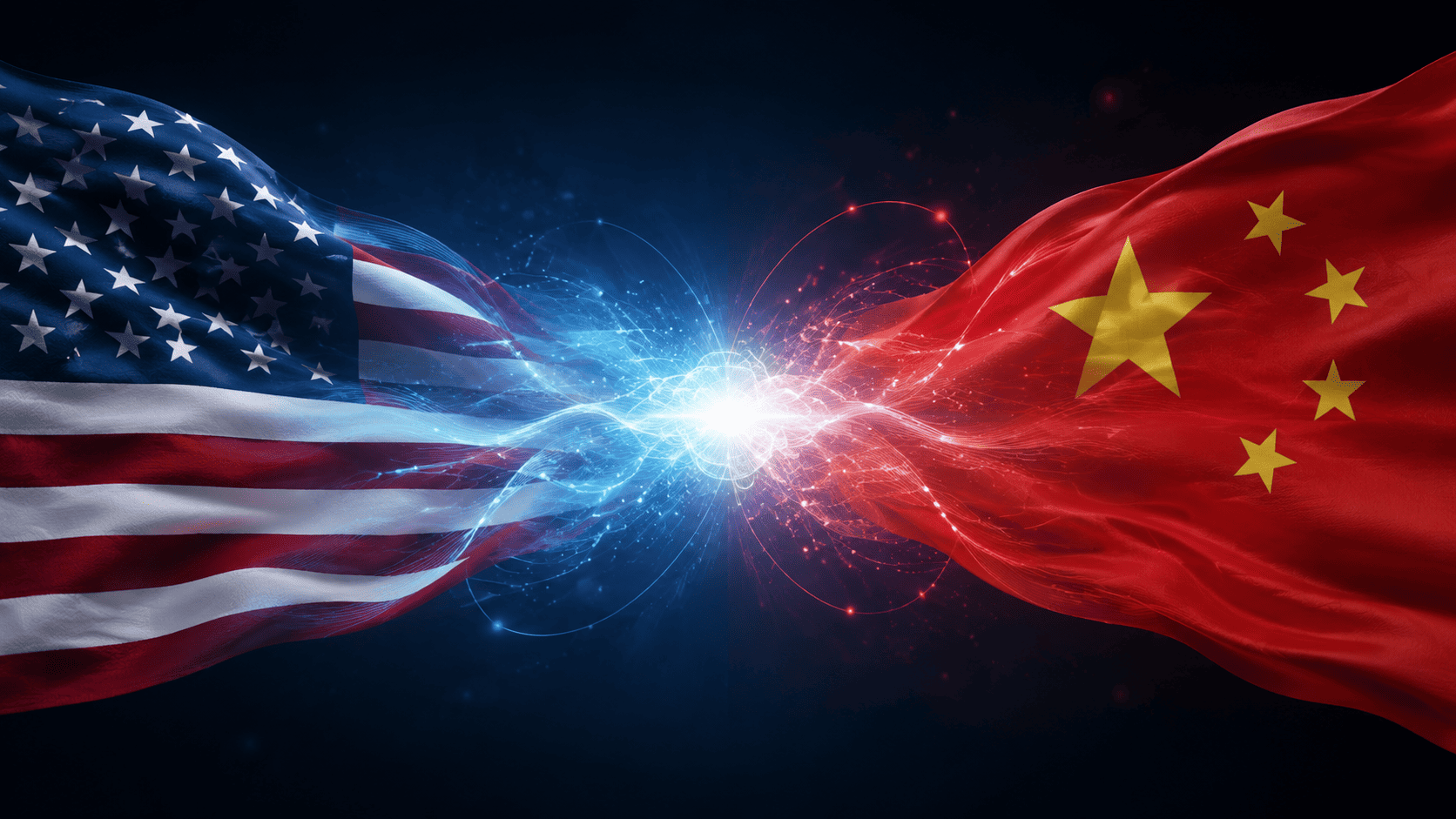
China is adding venture-style financing to its state-led quantum strategy, combining public capital with regional investment networks to accelerate the formation of technology companies.
Three regional funds established through China’s National Venture Capital Guidance Fund have raised a combined 121.8 billion yuan, or about $17.5 billion, according to the The National Bureau of Asian Research. It’s important to not that the billion-dollar fund covers quantum technology, however, it also covers other strategic technologies, including artificial intelligence, semiconductors, biotechnology, aerospace and future energy.
The structure shows China adopting parts of the market-oriented model commonly associated with the United States, Hideki Tomoshige, a fellow for Renewing American Innovation at the Center for Strategic and International Studies, said in an In a Q&A conducted by Gabriela Hartlage. According to Tomoshige, rather than relying solely on government laboratories and large state institutions, Beijing is using public money to attract private investors and support younger companies.

“A common trend in both countries is that quantum technology has emerged as a strategic industry without a single, settled technical roadmap or mature market demand,” Tomoshige told The National Bureau of Asian Research. “As a result, government is increasingly acting as an early demand creator.”
In China, the three regional funds are based in the Beijing-Tianjin-Hebei region, the Yangtze River Delta and the Guangdong-Hong Kong-Macao Greater Bay Area. They currently hold 29.646 billion yuan ($4.26 billion), 47.1 billion yuan ($6.77 billion) and 45.05 billion yuan ($6.47 billion), respectively. Each is intended to eventually invest a total of 50 billion yuan in emerging industries.
The funds signed letters of intent involving 49 subfunds and announced 27 direct investment projects when they launched in December 2025, Tomoshige told The National Bureau of Asian Research. The broader national guidance fund plans to support more than 600 subfunds across the three regions.
China has not disclosed how much of the money will be allocated specifically to quantum technology. Still, including quantum among the targeted industries provides companies in the sector with another potential source of long-term capital.
Patient Capital for Quantum Companies
The Chinese program is designed to address a central problem facing quantum companies. Developing quantum computers, sensors and communications equipment can require years of research before a company has a product that generates significant revenue. There is also limited commercial opportunities during this ramp-up period.
Private investors often seek returns on shorter timelines while government-backed funds can accept longer development periods and assume risks that conventional venture firms may avoid. China’s national guidance fund is intended to operate for 20 years, with extended investment and exit periods.
At least 70% of its capital is expected to support seed-stage and early-stage companies. The fund is also intended to attract money from local governments, state-owned companies, financial institutions and private investors.
That approach could help China move research from universities and national laboratories into commercial products. It could also strengthen regional clusters by connecting startups with manufacturers, technical workers, customers and specialized suppliers.
China’s quantum sector has historically centered on institutions such as the Chinese Academy of Sciences and the University of Science and Technology of China. The country has made sustained investments in quantum research, communications and talent since the early 2000s.
Large technology companies have also transferred quantum operations to state-linked institutions. Alibaba donated quantum laboratory equipment to Zhejiang University, while Baidu transferred a quantum research laboratory to the Beijing Academy of Quantum Information Sciences. Meanwhile, China Telecom Quantum has taken a larger role in manufacturing, system assembly and deployment.
Tomoshige said these developments reflect an effort to divide responsibilities across the Chinese quantum sector. State-supported institutions can conduct long-term research, while companies and regional investment networks focus more closely on production and commercialization.
Different Models Begin to Converge
The United States retains a more decentralized quantum ecosystem built around private companies, research universities, national laboratories and several sources of venture capital. Competition among companies has supported a range of technical approaches, including superconducting circuits, trapped ions, neutral atoms, photons and semiconductor-based qubits.
That diversity reduces dependence on a single technical path. It also forces companies to demonstrate progress to investors and customers.
The model carries its own risks because quantum markets remain small, and many companies must continue raising money before demand for their products is firmly established. Promising businesses could fail because of financing pressure rather than technical shortcomings.
The U.S. government is responding by taking a more active role in creating demand, according to Tomoshige. Federal agencies are considering multiyear procurement contracts, prize competitions, public-private investments and other commitments that could provide companies with more predictable revenue.
Executive Order 14413 also directs agencies to expand quantum research, make computing resources available to national laboratories, strengthen domestic supply chains and encourage federal adoption of quantum applications. The order requires the Department of Defense to identify at least three quantum sensor projects for deployment by Sept. 30, 2028.
These policies suggest that the two national models are beginning to converge. China is adding venture-style financing and regional startup networks to a centralized system. The United States is supplementing its private-sector model with more direct government purchasing and investment.
Investment Alone May Not Determine Leadership
Quantum computing does not yet have a settled hardware design, and there’s still an open debate on whether quantum computers have performed commercially important calculations beyond the practical reach of conventional computers. Ultimately, large funding commitments do not guarantee technical or commercial success.
Independent testing and access to hardware will also affect confidence in national claims. The U.S. ecosystem benefits from academic peer review, customer access and benchmarking programs such as those run by the Defense Advanced Research Projects Agency, Tomoshige said.
China has produced significant results in quantum communications, computing and sensing, but outside researchers have limited access to some systems. Tomoshige said the lack of transparent third-party testing can make it difficult to distinguish technical progress from political signaling.
“At present, independent market or third-party verification for Chinese quantum systems is limited or lacks transparency,” Tomoshige told the bureau. “This can blur the line between genuine scientific progress and political signaling.”
China must also avoid pulling private companies so tightly into the state system that they lose the ability to collaborate across disciplines or respond to customers. Commercial quantum systems will require contributions from physicists, engineers, software developers, manufacturers and specialists in industries such as chemicals, finance and medicine.
Both countries are also using export controls and investment restrictions to protect their positions. The United States has limited China’s access to certain quantum-computing equipment, cryogenic technology and other components. China restricts the export of some quantum cryptography and ultra-low-temperature technologies.
Tomoshige said the eventual outcome will depend less on a single scientific result than on each country’s ability to build a durable network of research institutions, companies, investors, manufacturers and customers.
“The most important factor will be whether a country can build a robust network of quantum ecosystems,” said Tomoshige. “The investments the United States and China make today in research, infrastructure, talent, commercialization pathways, and international partnerships will shape who leads in the quantum era.”