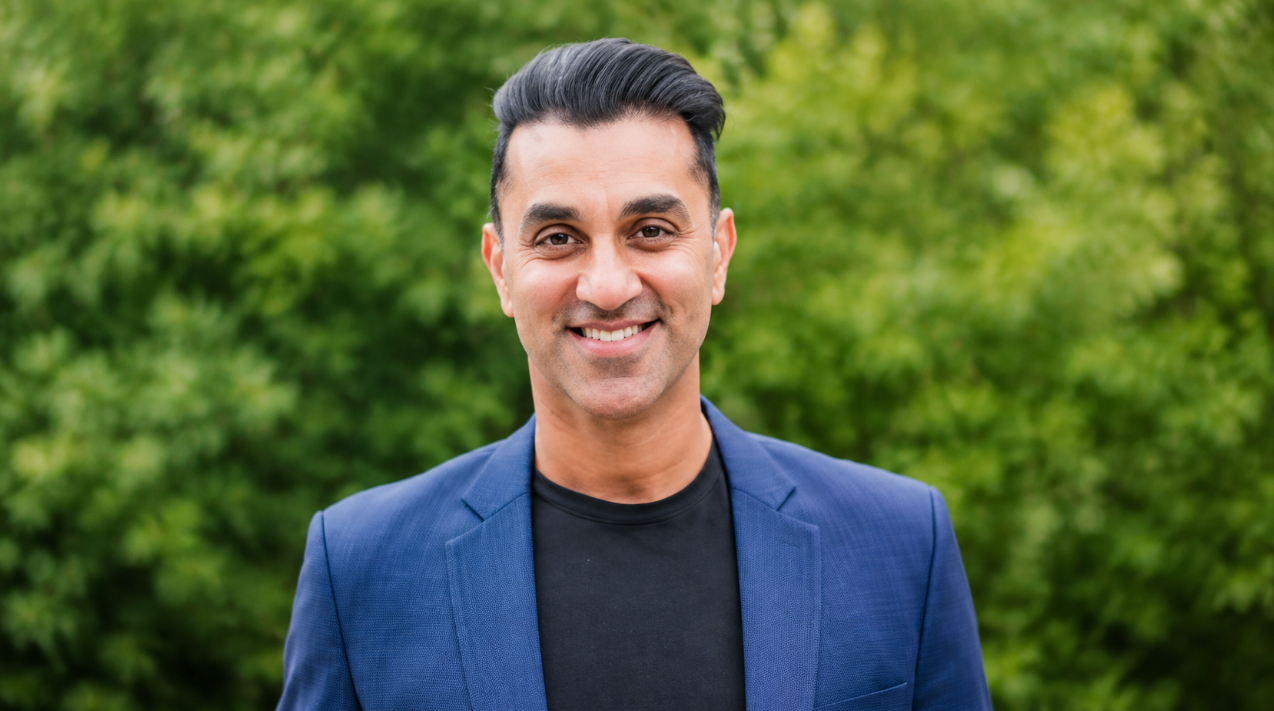


Guest Post By Utkarsh Ahuja, Managing Partner and founder Moon Pursuit Capital
KPMG’s latest Venture Pulse gives you a pretty good sense of where venture capital’s attention is right now. Global VC investment reached $227.4 billion in the second quarter of 2026, making it the second-highest quarter on record, and AI was behind many of the largest financings, including Anthropic’s $65 billion raise and Project Prometheus’ $12 billion round.
I understand the concentration because, as an investor, I have rarely seen a technology move from experimentation into genuine commercial use as quickly as AI has, but periods like this also tend to create blind spots because so much capital and attention ends up chasing what is immediately visible. One area I think deserves more attention is what happens to the security infrastructure underneath the digital economy as quantum computing advances, particularly in financial systems where upgrading security is far more complicated than downloading a software update.
A few years ago, I would have understood an investor looking at quantum security and deciding it was simply too early. Nobody could tell you when a cryptographically relevant quantum computer would arrive, there was enormous disagreement around timelines, and it was difficult to separate problems that needed solving today from problems that might remain theoretical for another decade.

What has changed for me is that we no longer need to agree on that timeline to see the preparation happening around us. It is already very clear, as technology companies are introducing post-quantum protections, governments are pushing federal systems toward post-quantum cryptography, and banks and other institutions are beginning the much less glamorous work of figuring out which systems need to change and how long that migration could actually take. Your browser or phone can increasingly receive those protections without you thinking about them because somebody controls the infrastructure and can push an upgrade when it becomes necessary.
On the other hand, crypto has a much harder problem.
When people talk about the quantum threat to blockchains, the conversation can quickly become extremely technical, but I think the practical problem is actually fairly easy to understand.
If Apple decides an iPhone needs stronger cryptographic protection, Apple can issue an update. If a bank needs to change a security protocol, it can migrate customers over time. Neither process is necessarily simple, but there is an organization responsible for making the decision and carrying it out.
Bitcoin does not have that luxury, and neither do other public blockchains.
Assets are distributed across hundreds of millions of wallets, exchanges, custodians, institutions and long-dormant addresses, and there is no central administrator capable of telling every holder that they need to move their funds or rotate their keys by a certain date. Some people will not see the warning, some will have lost access, and institutional assets may sit behind custody arrangements, governance processes or legal structures that make moving them considerably more complicated than clicking a button.
That is why I think the quantum question for crypto is as much an operational problem as a cryptographic one, because even if the industry agrees on a technical solution, deploying that solution across an ecosystem intentionally designed without central control is another challenge entirely.
And when hundreds of billions of dollars could eventually sit on the other side of that migration, waiting until the threat becomes immediate is difficult to justify.
This thinking has influenced how we have approached the space at Moon Pursuit Capital, including our investment in AmericanFortress. We invested initially around the technical thesis and increased our exposure as we saw further evidence of execution, including continued intellectual property development and partnerships that helped demonstrate how the technology could fit into a broader ecosystem.
One approach the company has since published is ZK-PoSP, a zero-knowledge scheme intended to make existing seed-based Bitcoin, Ethereum and Solana wallets quantum-resistant without requiring holders to move their assets or rotate their keys. What interests me here is the simplicity of the migration model: rather than relying on hundreds of millions of individual users to take action, the quantum-resistant verification can be implemented at the blockchain level while existing wallets remain in place. That begins to turn what could otherwise be an enormous user-by-user migration exercise into an infrastructure upgrade, which is an important distinction when thinking about how decentralized networks could realistically prepare at scale.
For me, that gets to a much broader investment question. When I look at quantum readiness, I am increasingly interested in technologies that account for how existing infrastructure actually works, including all of the operational friction that comes with changing it.
Any new cryptographic approach still needs scrutiny, testing and independent validation, of course, and investors should be especially careful about treating a proposed technical solution as settled infrastructure simply because the problem it addresses is large. But the broader investment thesis is becoming increasingly difficult to dismiss.
This is where I think the venture conversation becomes particularly interesting, as most investors naturally associate quantum investing with the machines themselves, whether that means hardware, qubits, error correction or the broader race toward fault-tolerant computing. On the other hand, there is another investment category developing around what happens if those machines continue to improve.
Security is an obvious part of that, and financial infrastructure may prove to be one of the most consequential areas because so much value depends on cryptographic systems remaining secure for very long periods of time.
From a VC standpoint, I actually find this side of the market easier to think about because I do not have to correctly predict which quantum architecture ultimately wins or tell an investment committee that I know exactly when a machine will become capable of threatening today’s cryptography. I can instead ask much more familiar questions about whether a problem is real, whether customers will eventually have to solve it, how painful the migration will be, whether the technology can fit into infrastructure that already exists and whether the team has built something defensible enough to matter when that market develops.
Those are questions we can start answering now.
They also explain why I think the timing looks different today than it did a few years ago, because the investment case no longer depends entirely on predicting a future quantum breakthrough. The rest of the digital economy is already beginning its post-quantum migration, standards are being established, governments are setting expectations and institutions are thinking about systems that may need years to replace.
Crypto cannot assume it will be able to do all of that at the last minute.
Venture investors spend a lot of time trying to determine whether they are too early or too late, and quantum security is a particularly uncomfortable example because nobody can give us a date on which the market suddenly becomes urgent.
I do not think we need one because what matters to me is the direction of travel and the amount of work required between recognizing a problem and actually fixing it. If migrating a financial system takes years, and decentralized networks make that migration even harder, then preparation has to begin well before the threat is sitting directly in front of us.
A few years ago, quantum-resistant financial infrastructure could reasonably have looked like a niche investment around a distant technical risk. Today, when the broader technology industry and governments are already preparing for a post-quantum world while enormous amounts of digital value still rely on cryptographic assumptions that could eventually be challenged, I think that position is becoming harder to maintain.
In my experience, some of the most interesting venture opportunities appear during exactly this period, when the market has started to accept that a problem will eventually need to be solved but there is still very little agreement around who will solve it, how the solution will work or how large the resulting market will become.
For investors willing to look beyond where the largest rounds are being raised today, quantum readiness may increasingly be one of those opportunities.
The views and opinions in this post are of the author only, it doesn’t reflect the views or opinions of The Quantum Insider or it’s editorial staff.