

Insider Brief
- California selected a UC Berkeley-developed eight-qubit quantum computing chip as one of its contributions to the America250 time capsule, which will be buried in Philadelphia until the United States’ 500th anniversary in 2276.
- The 10-millimeter quantum processing unit, developed with Berkeley Lab, was the first widely distributed QPU and has been used by research groups worldwide to test quantum computing applications, including simulations in particle and nuclear physics.
- Gov. Gavin Newsom’s office chose the chip to represent California’s technology leadership alongside other innovation-focused artifacts, reflecting the state’s investment in quantum research and its growing quantum ecosystem.
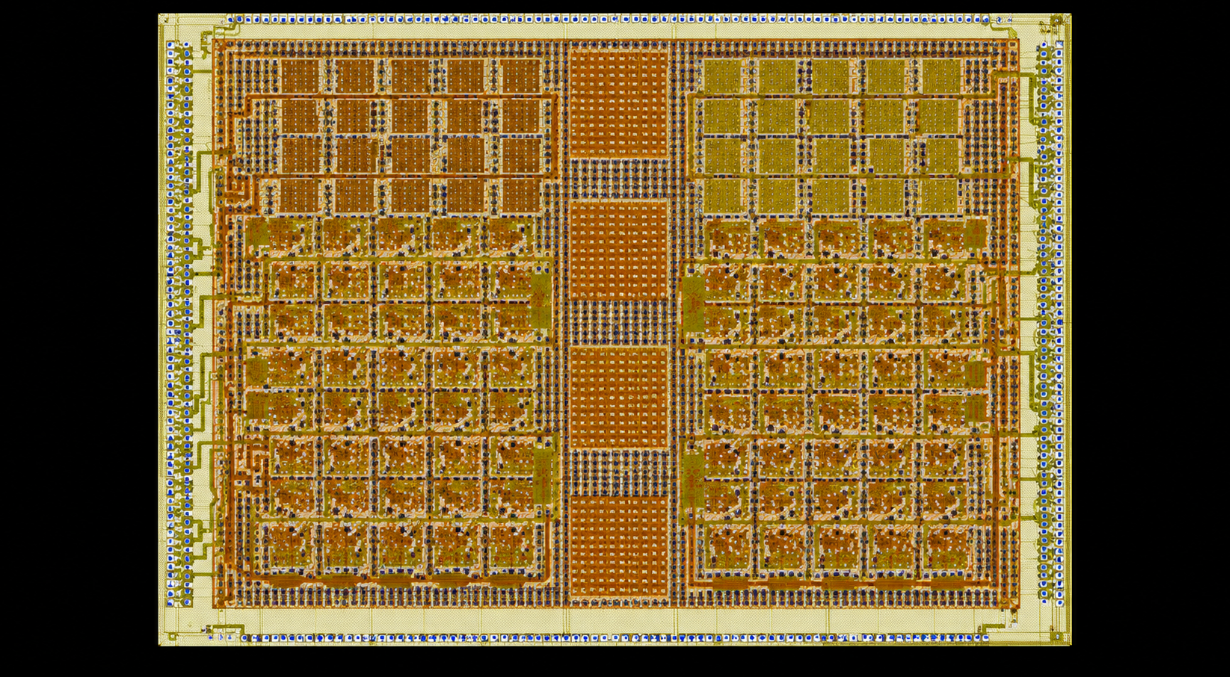
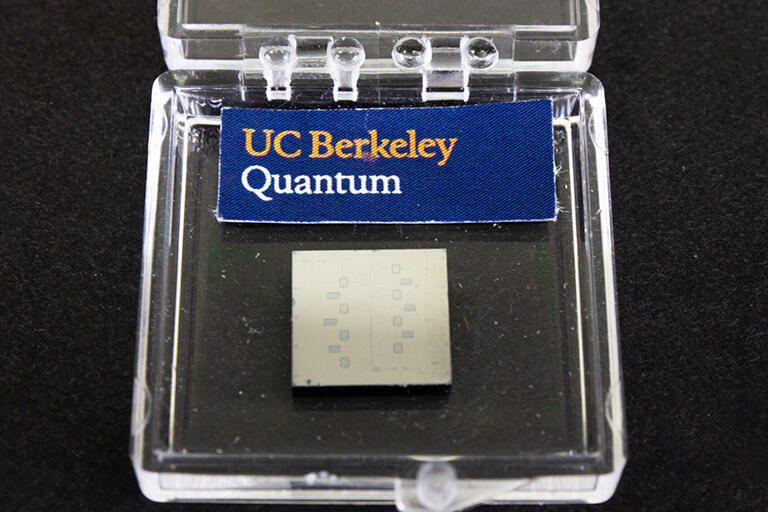
- Image: The UC Berkeley chip is a superconducting quantum processing unit (QPU) consisting of 8 qubits made of niobium and aluminum on silicon and connected to one another via superconducting wires. QPUs are the building blocks for quantum computers. (California Governor’s Office)
PRESS RELEASE — A quantum computing chip fabricated at UC Berkeley was chosen by California Gov. Gavin Newsom as one of the state’s contributions to a time capsule to be buried in honor of the nation’s 250th birthday, or semiquincentennial.
The time capsule was built and its contents assembled by the congressionally mandated America250 organization to represent all 56 U.S. states and territories, three branches of the federal government and other national partners and institutions. Sealed in June, the capsule will be buried on July 4 at Independence National Historical Park in Philadelphia and unearthed again in 2276 — the nation’s 500th birthday, or quincentennial.
Among California’s seven contributions to the time capsule, Newsom selected several items reflecting the state’s innovation economy, including the quantum chip and a segment of a conductor fabricated in San Diego for an experimental nuclear fusion reactor.

“These items represent the innovative technology California leads the nation and globe in, capturing the remarkable spirit and communities that make the Golden State one-of-a-kind,” the governor’s office wrote in a June 15 announcement.
Also included in the time capsule were a letter to future Californians from the governor and his partner, and a prediction of the state’s future generated by Anthropic’s AI agent, Claude.
“We’re thrilled that a qubit chip from UC Berkeley is among California’s distinguished contributions to the America250 time capsule,” said Chancellor Rich Lyons. “It’s a fitting symbol of the indispensable role public higher education plays in driving American innovation — and a reminder that the discoveries happening on our campus today will shape tomorrow.”
The 10 millimeter-square chip is the first widely distributed quantum processing unit, or QPU. Produced in collaboration with Berkeley Lab in a project led by Berkeley physics Professor Irfan Siddiqi, the chip consists of eight qubits — quantum bits that are the fundamental unit of information in a quantum computer, analogous to the binary bits of a digital computer.
Scientists hope that quantum computers will one day solve problems that are computationally challenging or impossible for classical digital computers. Through Berkeley Lab’s Advanced Quantum Testbed(link is external), Berkeley’s eight-qubit QPU has been used by many groups around the world to test new kinds of quantum computations, such as simulating neutrino interactions and the internal structure of nuclei.
“It was designed at UC Berkeley, fabricated at UC Berkeley and provided to the scientific community by Berkeley Lab, so it reminds you of the ecosystem we have in California,” said Kan-Heng Lee, a research scientist at Berkeley Lab who oversaw production of the chip.
Lee said that the chip was fabricated first in the Marvel NanoLab in Sutardja Dai Hall and finished in the Quantum Nanoelectronics Lab in Campbell Hall. When in use, chips like this are cooled to a few thousandths of a degree above absolute zero. At this temperature, the circuit is superconducting and the thermal noise that would interrupt the quantum circuits is substantially reduced.
Newsom became familiar with Berkeley’s quantum computing leadership during a campus visit last year to sign AB 940, which established a strategy to channel the state’s quantum research into jobs to stimulate the economy. The governor’s senior technology policy advisor, Randi Michel, accompanied him to the signing and later spoke at the opening of Berkeley’s Roger Herst Quantum Nexus last November.
As a result, Michel knew whom to ask for a token of the state’s quantum leadership to include in the time capsule. The QPU is labeled with the logo of Berkeley Quantum, a regional initiative to bolster the quantum ecosystem formed by a partnership between the campus and the lab.
For Lee, having the eight-qubit QPU in the time capsule is a reminder to future generations about where the quantum revolution started.
“I think it’s really cool,” he said. “I thought about how much the chip has contributed to the scientific community for four years. There’s a lot of quantum industry already in California, with Google and Amazon, but if you look into the future, I want us to be in the time capsule as a symbol of one of the important places where it began — Berkeley and California.”