


Insider Brief
- Qoro has joined the €3.06 million TruQuaC research project to develop secure control and orchestration technologies for distributed quantum computing systems.
- The German government-funded consortium will build a platform to connect quantum nodes, manage workloads, monitor system status, and improve network resilience.
- Qoro will contribute its quantum software tools, including Maestro, Divi, and Composer, to support distributed quantum computing research with academic and industry partners.
Press release – Qoro has announced its participation in a major €3.06 million collaborative research project funded by the German Federal Ministry for Research, Technology, and Space (BMFTR). The project, titled TruQuaC (Trustworthy Quantum Control and Communication), aims to develop the secure and robust control architecture required to efficiently utilise distributed quantum nodes. This will be an important stepping stone towards using distributed quantum systems of various archetypes as a unified system.
Currently, quantum nodes are largely treated as isolated components. To unlock their full potential across research, industry, and cybersecurity, these nodes must be securely integrated into classical communication networks.
Running from June 2026 through May 2029, the TruQuaC project will solve this by developing a platform that authenticates access, distributes computational tasks, monitors node status, and automatically responds to network disruptions. The project will connect multiple quantum nodes via local network gateways, allowing users to access distributed quantum resources through a single, unified interface without needing to navigate the underlying network complexities.

“Distributed quantum computing systems cannot rely on every quantum node being available all the time,” said Dr. Stephen DiAdamo, CTO of Qoro Quantum. “They need an orchestration layer that continuously monitors the network, intelligently routes workloads, and automatically adapts when resources change. At Qoro, we’re building the secure control plane that makes this complexity invisible to users, enabling quantum networks to operate as a single, resilient system.”
Qoro is providing the orchestration for the project, utilising its unified simulation engine, Maestro, for compute node emulation, and providing an application development layer with Divi, the company’s open-source Python software development kit (SDK) for building, executing, and managing quantum programs. To execute dynamic, distributed algorithms, Qoro’s Composer API will intelligently route tasks across distributed quantum nodes based on compute constraints and other compute-node properties.
“To realise the full potential of distributed quantum computing, the industry must move beyond treating quantum processors as isolated systems,” added DiAdamo. “TruQuaC is addressing one of the biggest barriers to that future: secure, resilient orchestration across multiple quantum nodes. By providing a platform that automatically distributes workloads and manages the underlying infrastructure, we’re laying the software foundation for scalable distributed quantum systems.”
A Collaborative Push for Technological Sovereignty
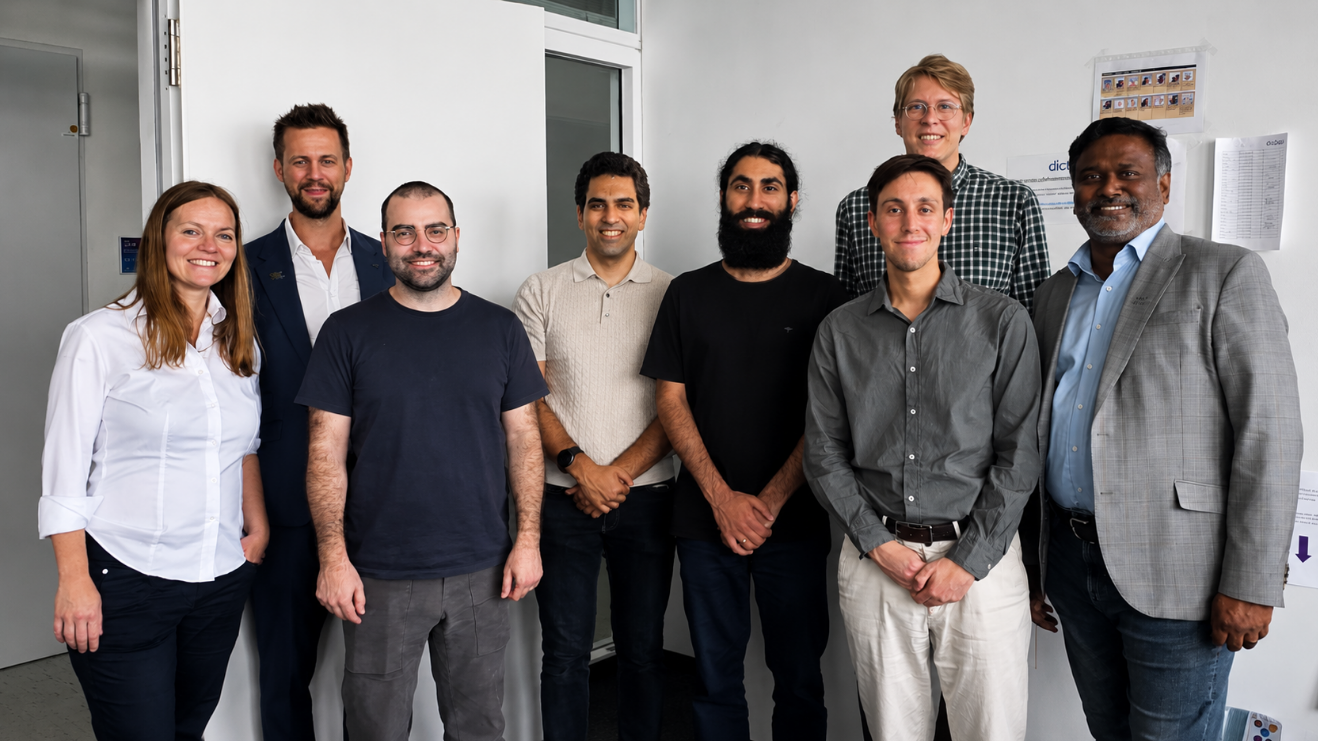
The TruQuaC consortium represents an alliance of commercial and academic quantum pioneers. The project is coordinated by Leipzig-based XeedQ GmbH, which is providing its commercially tested, NV-centre-based quantum processors as the hardware foundation.
Alongside Qoro Quantum and XeedQ GmbH, the consortium includes leading scientific academic partners from TU Dresden and Goethe University Frankfurt.
Of the total €3.06 million project volume, €2.46 million is provided directly through BMFTR funding under the “Transfer and Network Integration of Quantum Communication” call. The initiative forms an essential component of the German government’s cybersecurity strategy, aiming to strengthen Germany’s technological sovereignty in the face of future quantum computing advancements that could threaten current cryptographic standards.
For more information regarding Qoro Quantum’s unified software stack and its role in distributed quantum computing, please visit https://qoroquantum.net/.