



Insider Brief
- BosonQ Psi Federal received its first federal contract through the SpaceWERX Open Topic SBIR program to develop quantum-assisted software for space domain awareness.
- The company’s PC-QAML software is designed to help classify uncorrelated orbital tracks by combining physics-based modeling with quantum-inspired machine-learning techniques.
- BQP says the approach can reduce AI model size by 99%, maintain greater than 99% classification accuracy and run on low-power edge devices rather than cloud systems or quantum hardware.
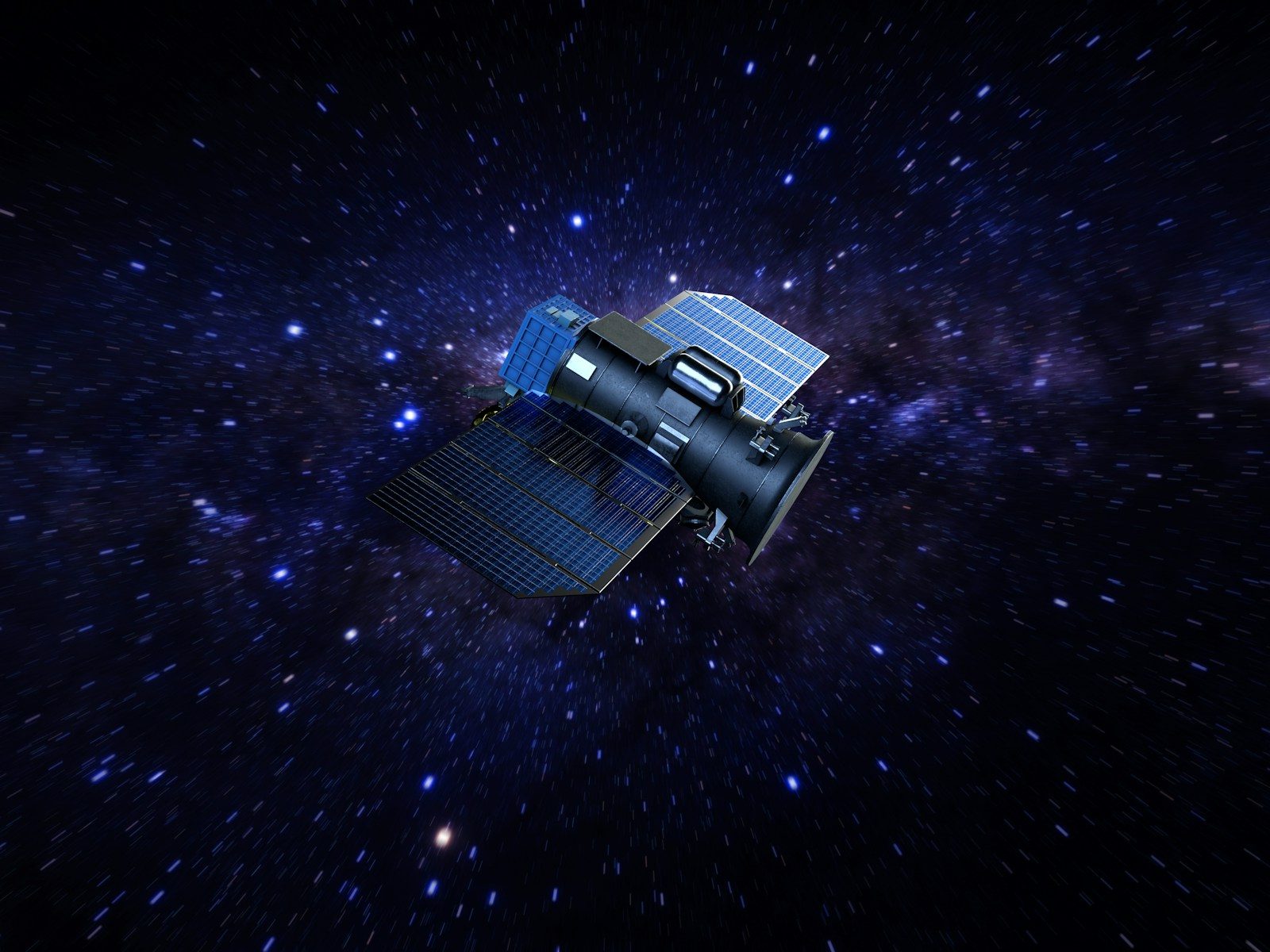
- Photo by Allison Saeng on Unsplash
PRESS RELEASE — BosonQ Psi Federal LLC (BQP), a New York-based developer of BQPhy®, a quantum-powered backend platform for engineering and physics intelligence helping enterprises leverage hybrid quantum algorithms and high-performance computing, today announced it has been awarded its first federal contract through the SpaceWERX Open Topic Small Business Innovation Research (SBIR) program.
The award marks a major milestone for the company, providing non-dilutive federal research funding, establishing BQP’s entry into the U.S. federal market, and enabling close collaboration with SDA stakeholders to address critical challenges in tracking and understanding the space environment. BQP will develop and validate a new Physics-Constrained Quantum-Assisted Machine Learning (PC-QAML) software designed to improve the speed and accuracy of identifying unknown objects and behaviors in Earth’s increasingly congested orbital environment.
Each day, the U.S. Space Surveillance Network collects between 18,000 and 25,000 observations of objects in orbit. Thousands of those detections cannot immediately be matched to known satellites or debris and are classified as Uncorrelated Tracks (UCTs). These unidentified objects can represent newly launched satellites, fragments from collisions, or potentially adversarial systems designed to evade tracking. The inability to rapidly classify these objects can delay operational decisions and reduce overall space situational awareness.
BQP’s software combines physics-based modeling with quantum-inspired computational techniques to perform accurate AI inference using models that are both more efficient and 99% smaller. Rather than relying on cloud computing, GPUs, or future quantum hardware, the approach is designed to run directly on space-qualified processors and other resource-constrained edge devices.
“Our goal is to make advanced AI practical where it matters most: on satellites and forward-deployed systems operating with limited computing power and intermittent communications,” said Abhishek Chopra, Founder and CEO of BQP. “This award represents an important validation of our technology and gives us the opportunity to demonstrate how quantum-inspired computing can solve real operational challenges for national security today.”
According to BQP, PC-QAML reduces AI model size from 14 million to 2,000 parameters, a reduction of 99%, while maintaining greater than 99% classification accuracy. The resulting architecture delivers up to a tenfold reduction in inference latency, approximately 90% lower power consumption, and significantly faster model retraining compared to conventional machine learning approaches.
These capabilities are particularly valuable for Space Domain Awareness (SDA), where satellites and remote sensing platforms must rapidly distinguish between routine orbital activity and potentially threatening behaviors such as satellite maneuvers, separation events, rendezvous and proximity operations, or electronic interference. By enabling autonomous analysis at the tactical edge, the technology has the potential to reduce dependence on centralized computing infrastructure while improving operational responsiveness.
The effort builds on BQP’s previous work with the Space Domain Awareness Tap Lab and supports mission objectives for both Space Operations Command (SpOC) Mission Delta 2 and Space Systems Command (SSC). During the 2025 SDA Mini-Accelerator, the company’s approach demonstrated promising results for orbital separation detection and was identified as a candidate solution for future UCT classification and Threat Simulation Catalog integration.
Beyond defense, the underlying technology also has potential commercial applications anywhere high-performance AI must operate on compact, low-power hardware. By significantly reducing computational requirements without sacrificing accuracy, the approach could enable faster, more efficient AI deployment across autonomous systems, aerospace platforms, industrial monitoring, and other edge computing environments.
This project or effort depicted is sponsored by AFWERX, a component of the Air Force Research Laboratory (AFRL).