
Insider Brief
- The third annual Cleveland Discovery and Innovation Forum showcased how quantum computing and AI are being applied to accelerate advances in healthcare, biomedical research and personalized medicine.
- Organizers highlighted five years of progress through the Cleveland Clinic–IBM Discovery Accelerator, which has supported more than 50 research projects, produced peer-reviewed publications and developed workforce training programs in advanced computing.
- Researchers and collaborators shared updates on initiatives including the simulation of a protein with more than 12,000 atoms on a quantum computer, the 2026 Global Quantum + AI Challenge, and Cleveland Clinic’s Quantum Catalyzer Program supporting quantum-focused startups.
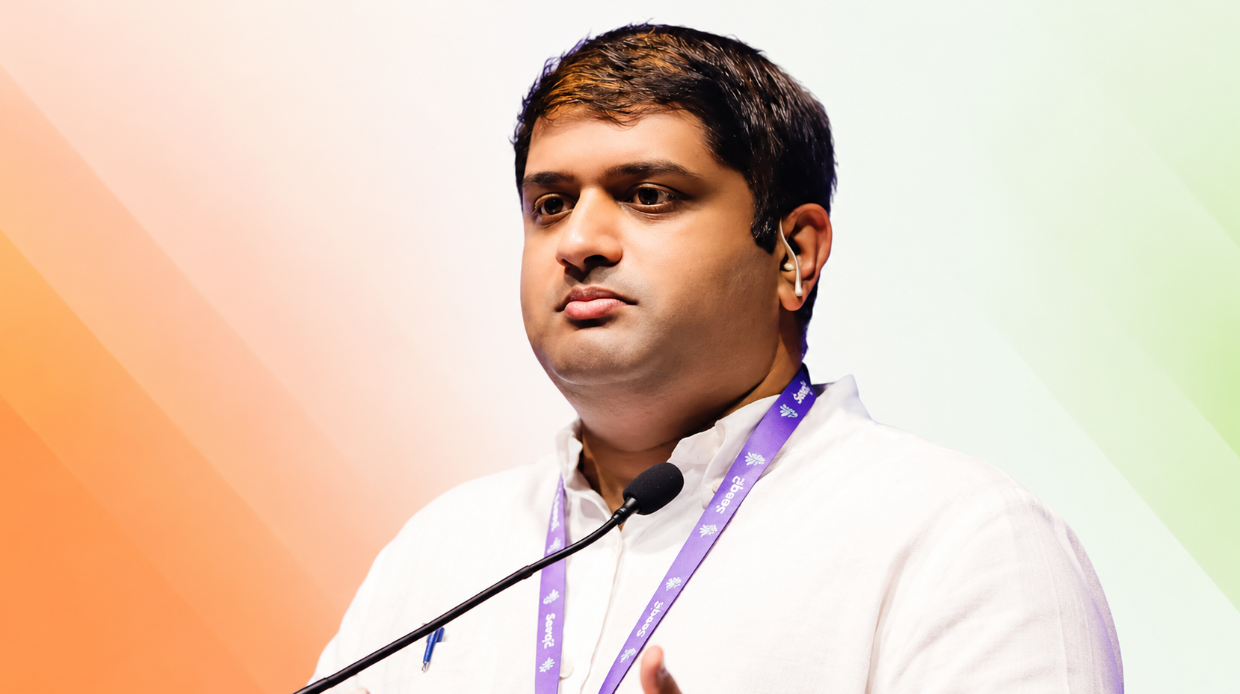
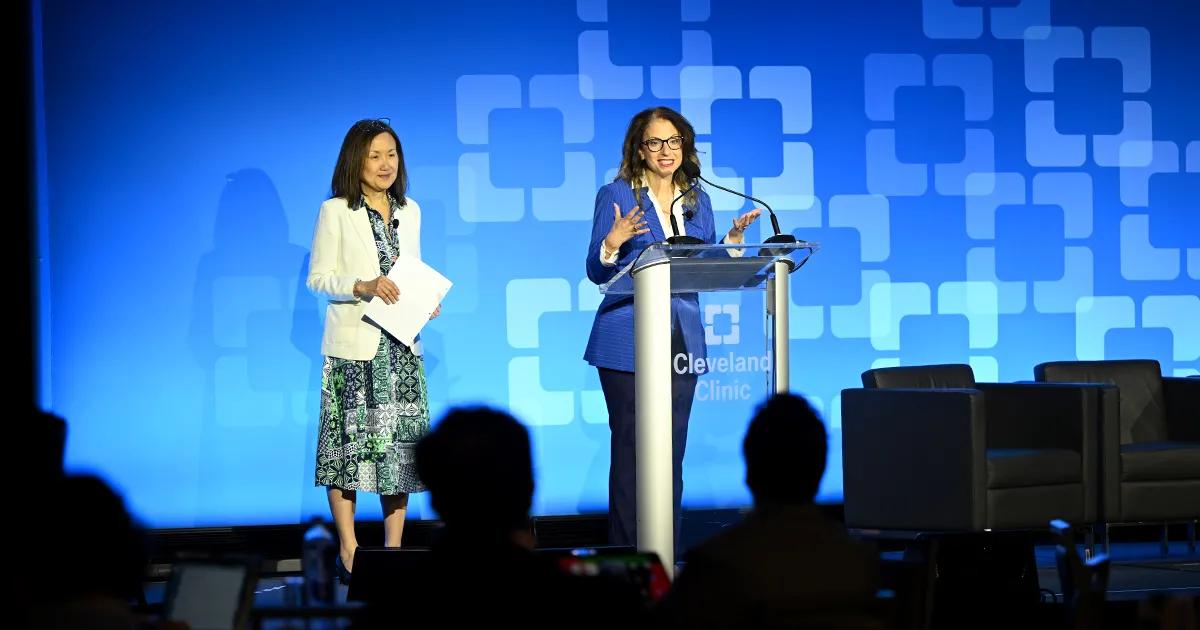
- Image: Lara Jehi, M.D., Cleveland Clinic, (right) and Jianying Hu, Ph.D., IBM, deliver opening remarks. Courtesy of Cleveland Clinic
PRESS RELEASE — The third annual Cleveland Discovery and Innovation Forum, hosted by Cleveland Clinic and IBM, highlighted progress in applying quantum computing and AI to healthcare and life sciences research. The forum brought together global leaders in healthcare, science and technology to share insights into how advanced computing is accelerating discovery and shaping the future of patient care.
The one-day event, held today on Cleveland Clinic’s Main Campus, featured more than 30 speakers from academia, industry, foundations, venture capital and government. Discussions focused on the growing impact of AI and quantum computing in tackling some of the most complex challenges in healthcare and life sciences research.
“The Cleveland Discovery and Innovation Forum highlighted how AI and quantum computing are advancing research across every stage of disease – from prevention and early detection to treatment,” said Lara Jehi, M.D., Cleveland Clinic’s Chief Research Information Officer. “Cleveland Clinic is at the forefront of applying quantum computing to life sciences research. Through this forum and our broader research efforts, we are helping define how advanced computing can unlock new scientific insights and ultimately improve care for patients around the world.”
The forum also highlighted five years of progress by Cleveland Clinic’s and IBM’s Discovery Accelerator, a partnership focused on advancing the pace of biomedical research through high-performance computing, AI and quantum computing. Since its launch, the Discovery Accelerator has supported more than 50 projects, contributed to multiple peer-reviewed publications and developed an innovative education curriculum aimed at building the skilled workforce needed for the future.

“As we mark five years of our collaboration with Cleveland Clinic, we are seeing how quantum and AI can work together to transform biomedical research — modeling molecular interactions, refining machine learning for personalized care, and pushing the boundaries of what’s achievable across healthcare and life sciences,” said Alessandro Curioni, Ph.D., IBM Fellow and Vice President, Algorithms and Applications, IBM Research.
The agenda included keynote presentations, panel discussions and fireside chats led by Cleveland Clinic and IBM executives alongside international leaders. Featured speakers included Eric Isaacs, Ph.D., of Research Corporation for Science Advancement; Curtis Priem, Rensselaer Polytechnic Institute and co-founder of NVIDIA; Alex Shalek, Ph.D., MIT; Sergii Strelchuk, University of Oxford; Serpil Erzurum, M.D., Cleveland Clinic; Alessandro Curioni, Ph.D., IBM; and Percy Carter, Pfizer.
Sessions included panels on applied quantum computing and its role in building a world-class research and healthcare ecosystem, and how AI and quantum computing can realize the potential of personalized therapy as well as a fireside chat on visionary leadership and advanced computational methods in healthcare.
The forum also featured a project showcase from Cleveland Clinic and IBM researchers, including recent work modeling a protein of more than 12,000 atoms, the largest protein structure known to be simulated on a quantum computer. The findings underscore the growing potential of quantum computers as scientific tools for solving fundamental problems in biology, chemistry and life sciences.
Several research announcements and updates were shared during the event and highlighted Cleveland Clinic’s steadfast progress in shaping quantum computing applications in medicine, and building the Ohio Discovery Corridor through its Cleveland Innovation District. These included:
- 2026 Global Quantum + AI Challenge: Details were shared on the international competition launched by the Quantum Insider and Cleveland Clinic. The year-long program is designed to bridge the gap between quantum theory and real-world impact, and unites enterprises, start-ups and research teams to accelerate the adoption of advanced computing technologies in industries where innovation drives competitive advantage. Cleveland Clinic’s challenge is titled: Unlocking Undruggable Targets: Quantum Simulation of Allosteric Signal Propagation. The challenge will award $200,000 across five enterprise challenges, with $40,000 allocated per challenge. Applications are now open: https://quantumaiportal.thequantuminsider.com/
- Cleveland Clinic Quantum Catalyzer Program: Updates on this year’s program, which provides quantum access to start-up companies, as well as Kipu. The Kipu project will focus on a breakthrough quantum algorithm to simulate protein folding, helping researchers better understand disease and develop new treatments. Earlier this year, the competitive program selected EntangleBio, Polaris Quantum Biotech and Singularity Quantum. This year’s selected companies will also receive up to $250,000 from K5 Tokyo Black Fund with an in-kind match from Cleveland Clinic.


.png)