CHIRON Project Launches Quantum Communication Network Initiative in Germany


Insider Brief
- The CHIRON project has launched in Germany to develop a scalable quantum communication infrastructure based on entanglement-enabled Quantum Key Distribution (QKD).
- The consortium will demonstrate quantum-secure networking through testbeds in Berlin and Thuringia, integrating quantum communications with existing digital infrastructure.
- The project combines entangled photon sources, quantum networking technologies, secure operating systems, and intelligent key routing to support future quantum-secure communications.
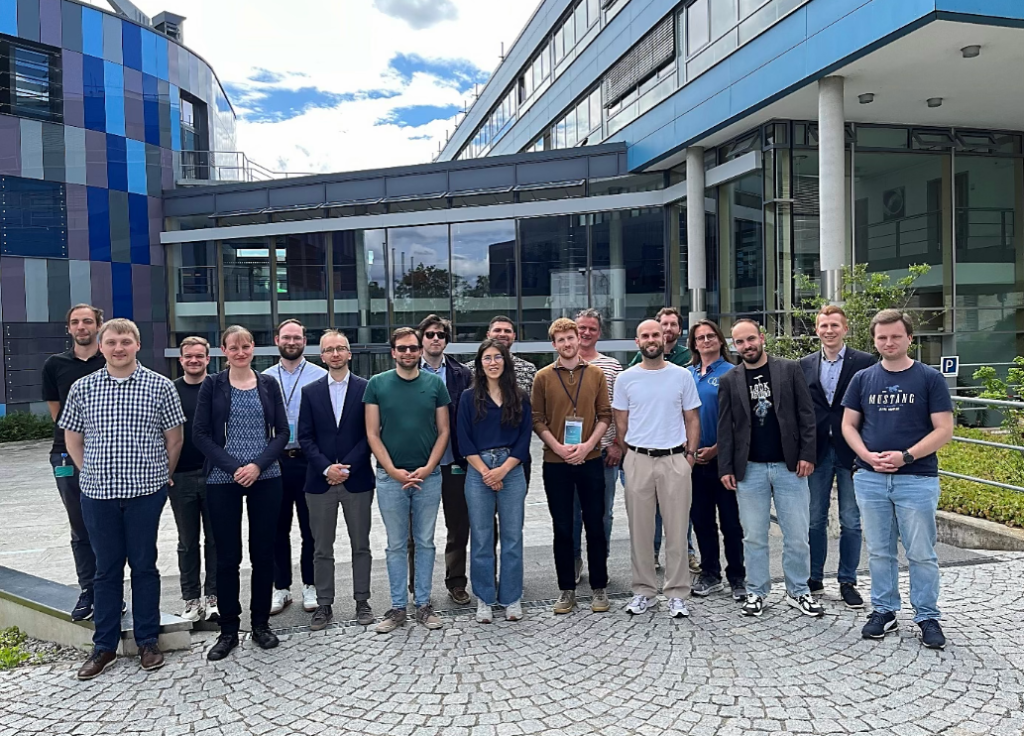
PRESS RELEASE — The CHIRON project has officially launched, bringing together leading German research institutions and technology companies to build a scalable, entanglement-based quantum communication infrastructure designed to secure Europe’s digital networks against emerging cyber threats.
Encryption protecting today’s digital infrastructure is under existential pressure from accelerating computing power, AI-driven attacks, and the approaching reality of cryptographically relevant quantum computers. While post-quantum cryptography (PQC) will strengthen algorithmic resilience, only Quantum Key Distribution (QKD) can provide long-term protection against “harvest now, decrypt later” attacks.
Quantum Optics Jena will play a central role in making that vision a reality. Within CHIRON, the company is building the long-distance quantum communication backbone through SPAD-based polarization-entanglement links and high-brightness, high-heralding photon sources. These technologies are designed to extend the reach of semiconductor-detector-based QKD systems and create a scalable, maintainable network capable of connecting users across large geographic areas.

The BMFTR-funded consortium will demonstrate the network across two real-world testbeds in urban Berlin and rural Thuringia, integrating quantum communications into existing ICT infrastructure. The project will also test quantum-secured access tokens at Bundesdruckerei for users operating in public administration, critical infrastructure, and financial services.
At the heart of the Berlin testbed is a hyper-entanglement source developed by Fraunhofer IOF and Friedrich Schiller University Jena. Combining polarization and energy-time degrees of freedom, the source will act as a central quantum switching station connecting three locations across the Berlin metropolitan area into a fully meshed, demand-driven QKD network.
The project also incorporates a holistic security layer through a hardened QKD operating system developed by NewMediaNet, designed to withstand implementation-level attacks.
Underlying the entire architecture is intelligent key routing and demand-driven active optical switching developed by Hochschule Nordhausen. This will provide the foundation required for the network to grow, adapt, and support an expanding user base without compromising security or performance.
Together, these technologies establish a roadmap toward a quantum-secure communication infrastructure capable of protecting future digital systems against evolving cyber threats.
The project is funded by the German Federal Ministry for Research, Technology and Space (BMFTR).

Keep track of everything going on in the Quantum Technology Market. In one place.

Mohib Ur Rehman
Covering quantum and emerging technologies, Mohib explores the intersection of technology, security, and society. His work also frequently examines surveillance infrastructure and the institutions shaping the digital world. In addition to his work at The Quantum Insider, he co-runs SK NEXUS, an independent technology publication that helps readers understand the technologies shaping their lives.

Stay Ahead of Quantum
Get the latest research, company news, and market intelligence every week.