Qunova Joins JHPC-Quantum Test User Program in Japan, Providing Algorithms For Advanced Industrial Computation


Insider Brief
- Qunova Computing has joined Japan’s JHPC-quantum Test User Program, gaining access to a hybrid computing platform that combines the Fugaku supercomputer with IBM Quantum System Two to advance quantum chemistry research.
- Qunova was selected as one of 21 participating organizations and one of only two non-Japanese participants, reflecting recognition of its hybrid quantum-classical HI-VQE algorithm for materials science applications.
- The company plans to use the platform to tackle complex quantum chemistry problems, including iron-sulfur cluster simulations, while expanding its presence in Japan’s emerging industrial quantum computing ecosystem.
PRESS RELEASE — Qunova Computing, a pioneering maker of software for quantum computing, has signed a Memorandum of Understanding (MoU) with JHPC-quantum (Japan High-Performance Computing), a landmark Japanese national computing initiative funded by NEDO (New Energy and Industrial Technology Development Organization) under Japan’s Ministry of Economy, Trade and Industry. The agreement designates Qunova as an official participant in the JHPC-quantum Test User Program, following a formal selection process that evaluated proposals based on scientific merit, technical feasibility, and the promise of hybrid quantum-HPC applications.
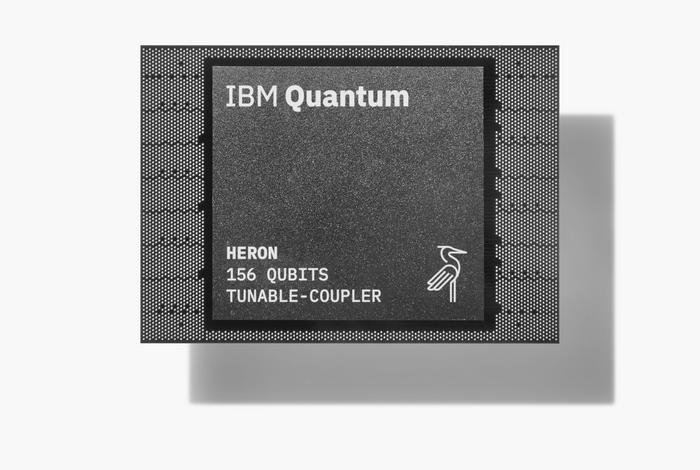
The agreement grants Qunova no-cost access to the JHPC-quantum hybrid platform, combining the Fugaku supercomputer with an IBM Quantum System Two, representing one of the world’s most powerful integrated quantum-classical computing environments. Just 21 organizations have been selected for the program, and Qunova is one of only two non-Japanese organizations participating, reflecting international confidence in its advanced quantum chemistry expertise, especially related to materials science.
“It is a true privilege to be included in JHPC-quantum alongside many of Japan’s most distinguished research institutions and prominent corporations,” said Kevin Rhee, CEO of Qunova Computing. “The fact that Qunova is one of just two non-Japanese organizations participating in this program speaks volumes about the power and maturity of our HI-VQE algorithm. Japan has assembled some of the finest minds in quantum and high-performance computing under this initiative, and our inclusion reflects the confidence those institutions have in our hybrid approach to tackling some of the most complex problems in chemistry. This partnership gives us access to world-class infrastructure and positions us at the forefront of the global effort to achieve industrial quantum advantage.”

JHPC-quantum is now midway through its five-year R&D mandate running from November 2023 through October 2028. Partners are now integrating multiple supercomputers and quantum computers, including simulators. Upon completion, the platform is designed to support commercial deployment of hybrid quantum applications. For Qunova, the MoU opens direct access to Japan’s growing ecosystem of industrial quantum end users and accelerates the company’s path to demonstrating and commercializing industrial quantum advantage in real-world chemistry applications.
Led by RIKEN and SoftBank, the project’s mission is to build and operate an integrated national computing infrastructure that connects supercomputers and quantum computers through advanced system software. The program’s 21 participating organizations, piloted by the RIKEN Center for Computational Science, span multiple industries such as materials science, drug discovery, logistics, finance, manufacturing, and natural sciences.
Qunova is the global leader in developing hybrid quantum-classical algorithms that combine the strengths of conventional supercomputers with the unique capabilities of quantum processors to solve computationally intractable problems in chemistry and materials science. Under the MoU, the company will apply its proprietary HI-VQE (Handover Iterative Variational Quantum Eigensolver) algorithm to some of quantum chemistry’s most demanding open problems. One such problem is the iron-sulfur cluster, a benchmark with major implications for both materials science and drug discovery, and a key test case for demonstrating industrial quantum advantage.
The JHPC-quantum platform includes a superconducting quantum computer installed in Kobe (IBM Quantum System Two “IBM Kobe”) and a trapped-ion quantum computer in Wako (Quantinuum “Reimei”), making it one of the most comprehensive hybrid quantum-HPC environments in existence.

Keep track of everything going on in the Quantum Technology Market. In one place.
Topics

Matt Swayne
With a several-decades long background in journalism and communications, Matt Swayne has worked as a science communicator for an R1 university for more than 12 years, specializing in translating high tech and deep tech for the general audience. He has served as a writer, editor and analyst at The Quantum Insider since its inception. In addition to his service as a science communicator, Matt also develops courses to improve the media and communications skills of scientists and has taught courses.
[email protected]

Stay Ahead of Quantum
Get the latest research, company news, and market intelligence every week.
MENTIONED IN THE ARTICLE

Qunova Computing
Qunova’s mission is to make quantum computing more accessible to scientists and engineers striving to solve the critical challenges that humanity faces, and open innovative new horizons.
→
IBM
IBM is an iconic technology pioneer founded in 1911 as the Computing-Tabulating-Recording Company and officially renamed International Business Machines Corporation in 1924. Beyond foundational computing, IBM possesses a deep legacy in aerospace and defense from building the guidance computers and Instrument Unit for NASA's historic Apollo missions to partnering with Airbus on CIMON, the first AI assistant on the ISS.
→
RIKEN
RIKEN (short for Rikagaku Kenkyusho) is a National Research and Development Agency founded in 1917 as private scientific research foundation. Initially modeled after the Kaiser Wilhelm Society in Germany, it has evolved into a comprehensive, state-funded research institution covering a wide range of natural sciences.
→
SoftBank
SoftBank delivers a range of offerings including fixed-line services, mobile telephony, internet connectivity, telecommunications solutions, and digital television products. This multinational corporation specializes in telecommunications and internet services, concentrating on diverse areas such as broadband, fixed-line telecommunication services, e-commerce, technology services, finance, media and marketing, and various other business ventures.
→

Quantinuum
Quantinuum builds full-stack quantum computing solutions for practical deployment. Leveraging proprietary enhancements to trapped-ion QCCD architecture, the company has launched multiple commercial hardware generations that deliver leading two-qubit gate fidelity and industry-topping accuracy.
→