

Insider Brief
- QuantX Labs launched an optical frequency comb into orbit to validate a key component of its space-based optical atomic clock system.
- The mission, conducted via Exotrail and SpaceX, will test performance in space and reduce risk ahead of a full optical atomic clock launch.
- The technology supports next-generation positioning, navigation, and timing systems with significantly higher precision than current standards.
PRESS RELEASE — QuantX Labs has successfully launched its optical frequency comb into orbit, marking a major milestone in the development of the company’s TEMPO.Space optical atomic clock and bringing the world closer to the first fully operational optical atomic clock in space.
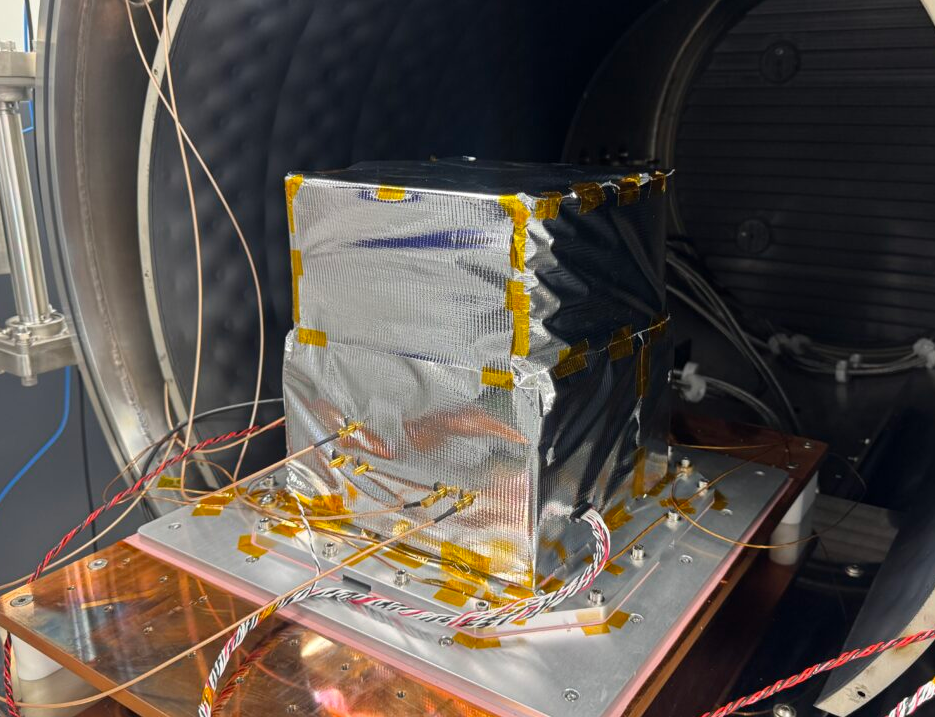
The optical frequency comb, a critical subsystem of QuantX’ s optical clock technology, was launched aboard Exotrail’s spacevan™ orbital transfer vehicle as part of QuantX’s KAIROS mission, hosted on a SpaceX launch. The mission will demonstrate the performance of the optical frequency comb in the space environment, providing critical validation for the next generation of ultra-precise space-based timing systems. QuantX Labs’ Chief Executive Officer, Professor Andre Luiten commented “Successfully demonstrating this technology in orbit represents a major step toward deploying the world’s first optical atomic clock in space.”
This initial launch with Exotrail will deliver critical in-orbit data to support an intended launch of the full TEMPO.Space optical atomic clock later this year. This initial mission will validate the performance of an optical frequency comb in space for the first time while also testing key elements of QuantX Labs’ satellite interface, including communications, mechanical, thermal and environmental systems. The mission marks an important milestone for the company, providing QuantX Labs with valuable space heritage that significantly reduces technical risk ahead of the next phase of the program.

Optical frequency combs are a Nobel Prize-winning technology that enable ultra-precise measurement of time and frequency. They are a core enabling technology for optical atomic clocks. The optical frequency comb acts as the critical bridge that translates the optical outputs of these new generation clocks into usable electronic timing signals, enabling end-users to exploit the extraordinary precision of optical atomic clocks.
This in-orbit demonstration will provide valuable operational data as QuantX Labs prepares to launch the complete TEMPO. Space optical atomic clock, which will represent the first optical atomic clock ever deployed in orbit. The Head of the Australia’s Space Agency, Enrico Palermo welcomed the mission as a significant step forward for Australia’s sovereign space capabilities “This optical frequency comb mission will take QuantX Labs a step closer to realising the full suite of capabilities it has been developing – which are designed to enhance the positioning, navigation, and timing services Australians depend on.”
Professor Luiten adding the launch marks a defining milestone for both the company and Australia’s growing leadership in advanced space technologies.
“This increased accuracy will support the next generation of positioning, navigation and timing systems, improving navigation resilience, enabling advanced space missions and supporting emerging technologies that rely on ultra-precise time synchronisation including synchronised Earth observation networks and advanced communications infrastructure.”
The mission forms part of the KAIROS program, supported by the Australian Space Agency’s Moon to Mars initiative, and delivered in collaboration with international partners, including Exotrail. Mr Palermo added “The Australian Space Agency is proud to have invested in the quantum clock technology developed by QuantX Labs, building on Australia’s rich heritage in quantum and accurate timing technologies” and that they “congratulate QuantX Labs on this next step in building space heritage on the path to launching its full optical atomic clock.”
The KAIROS mission has been enabled through foundational contributions from SmartSat CRC and the University of Adelaide, with significant support from DST Group and Advanced Strategic Capabilities Accelerator (ASCA). Together, these contributions have strengthened the mission’s technical capabilities and underscore the coordinated national effort to advance Australia’s sovereign space technologies.
QuantX Labs engineers are now completing final environmental testing of the full TEMPO.Space optical atomic clock ahead of a planned launch later this year. Once deployed, the system will represent a global first, the first optical atomic clock operating in orbit.