QCi Deploys Dirac-3 System on Quantum Corridor Network


Insider Brief
- Quantum Corridor and Quantum Computing Inc. deployed a Dirac-3 quantum optimization machine on a commercial quantum-safe network to provide secure, on-demand access.
- The system is installed at a commercial data center in Indiana and integrated with fiber infrastructure secured using quantum key distribution.
- The deployment expands enterprise and research access to quantum optimization capabilities across the Midwest via a subscription-based model.
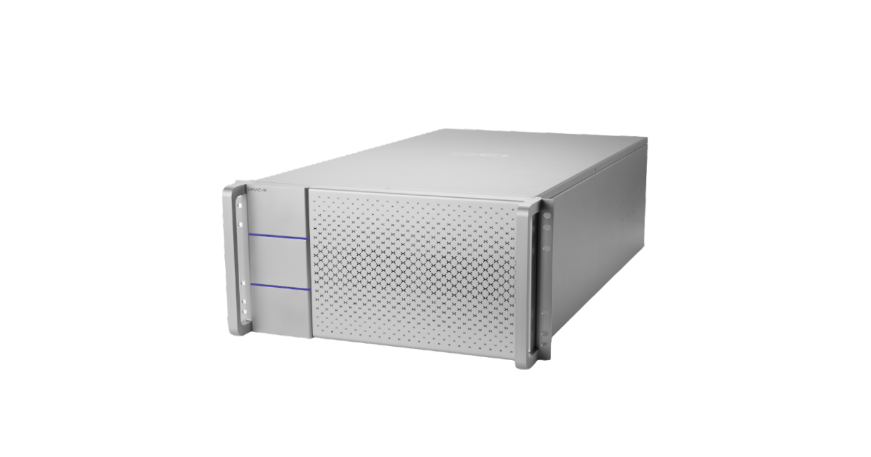
PRESS RELEASE — Quantum Corridor, the first inter-state quantum safe commercial communications network in North America, and Quantum Computing Inc. (“QCi”/Nasdaq: QUBT), an innovative, quantum optics and integrated photonics technology company, today announced the placement of a QCi Dirac-3 quantum optimization machine on the network.
The partnership will allow enhanced customer access for institutions and commercial customers with secure, on-demand access to Dirac-3 over Quantum Corridor’s network. This comes on the heels of Quantum Corridor’s recent breakthrough with Toshiba, implementing Quantum Key Distribution (QKD) over Quantum Corridor’s commercial fiber infrastructure, which provides 10G commercial connection to the QCi machine secured with Toshiba QKD.
Deployed at the Digital Crossroad Data Center in Hammond, Ind., the machine placement marks the first data center installation of a Dirac-3 machine and the first installation of its kind in a commercial data center environment. The Dirac-3 enables a novel revenue approach for QCi and Quantum Corridor alike, allowing clients to access Dirac-3 via Quantum Corridor’s existing subscription and service framework.

“We are proud to partner with Quantum Corridor to deliver the first data center installation of our Dirac-3 computer, designed to solve complex optimization problems,” said Dr. Yuping Huang, CEO of QCi. “This collaboration enhances secure and scalable access to our quantum computing capabilities and marks a significant step forward in QCi’s commercial deployment strategy. By embedding our technology into a highly secure, quantum-compatible network in the Chicago and Northwest Indiana region, we are expanding practical access to quantum infrastructure for both academic and enterprise users. It reflects our commitment to making high-performance quantum solutions available where they’re needed most in real-world IT ecosystems.”
The Dirac-3 delivers computational capabilities that can be used in a wide range of applications, enabling organizations to detect fraud across millions of transactions, optimize complex multi-asset portfolios, plan mission critical operations and manage UAS risk at scale. By solving problems that are extremely complex for classical systems, Dirac-3 empowers faster, data-driven decisions and drives innovation in both commercial and scientific industries.
The partnership expands market reach and improves access to QCi’s quantum hardware for the Chicago Quantum Exchange member institutions and a broader range of enterprises in the Midwest, including future expansion to universities and government partners in Indiana.
“Our purpose-built network is designed to grow to serve as a foundation for quantum internet, and we are delighted to have the QCi machine on our network,” said Dr. Mit Jha, CEO of Quantum Corridor. “This is an important step towards offering our customers unique access to computing solutions in the quantum era. Our quantum safe network that connects research institutions and industries that are expected to benefit significantly from quantum solutions will now have the ability to solve some of the previously intractable optimization problems.”
Quantum Corridor’s quantum-enabled commercial fiber infrastructure spans from Chicago’s ORD 10 Data Center (350 Cermak) to the Digital Crossroad Data Center. Its live high-capacity optical network will link quantum research facilities, hyperscalers and industry leaders across key verticals with a capacity of 40 terabits per second (Tbps)—the equivalent of 1,500 hours of high-quality video per second—at a round-trip latency of 0.274 milliseconds—500 times faster than the blink of an eye and nearly 12 times faster than the average network. For more information, visit quantumcorridor.com and quantumcomputinginc.com.

Keep track of everything going on in the Quantum Technology Market. In one place.
Topics

Mohib Ur Rehman
Covering quantum and emerging technologies, Mohib explores the intersection of technology, security, and society. His work also frequently examines surveillance infrastructure and the institutions shaping the digital world. In addition to his work at The Quantum Insider, he co-runs SK NEXUS, an independent technology publication that helps readers understand the technologies shaping their lives.
Stay Ahead of Quantum
Get the latest research, company news, and market intelligence every week.
MENTIONED IN THE ARTICLE
More in Industry News