

Insider Brief
- Researchers demonstrated logical qubits and a full set of quantum operations in a silicon-based processor, which they say marks progress toward fault-tolerant quantum computing.
- The system encoded information across multiple qubits to detect errors and successfully ran a small quantum chemistry calculation using these logical qubits.
- Results showed improved accuracy with error-mitigation techniques, while challenges such as cross-talk, limited error correction, and scaling remain.
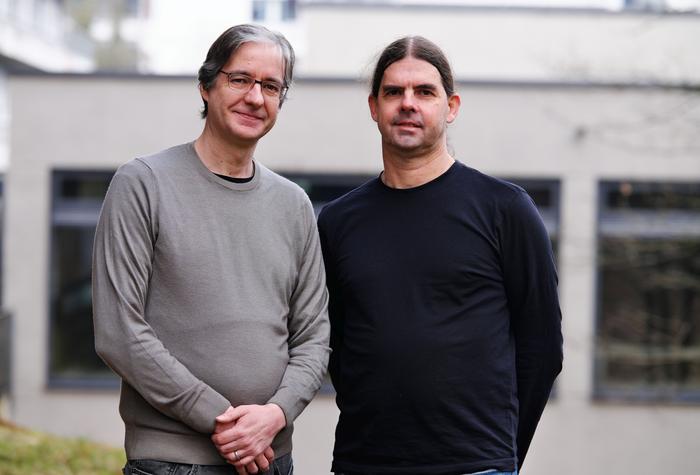
A team of researchers has demonstrated universal logical operations in a silicon-based quantum processor, showing that error-corrected quantum computing can be implemented in a platform compatible with existing semiconductor manufacturing. The team, led by scientists from Shenzhen International Quantum Academy, write that this advance can be seen as a requirement for practical quantum systems.
The researchers, who published their findings in Nature Nanotechnology, report the realization of logical qubits and a full set of quantum logic gates within a silicon device built from phosphorus atoms embedded in an isotopically purified silicon lattice. The work addresses how to control fragile quantum states while mitigating the errors that arise from environmental noise and device imperfections.
The researchers write that quantum errors remain unavoidable in physical qubits, requiring information to be encoded redundantly across multiple qubits to enable reliable computation.

Most quantum computers today operate at the level of “physical qubits,” which are prone to errors from sources such as thermal fluctuations, electromagnetic noise and interference between qubits. These errors accumulate quickly, limiting the size and depth of computations that can be performed.
This study focuses instead on “logical qubits,” which encode information across several physical qubits in a way that allows errors to be detected—and in more advanced schemes, corrected. The approach is widely considered essential for scaling quantum systems beyond laboratory demonstrations.
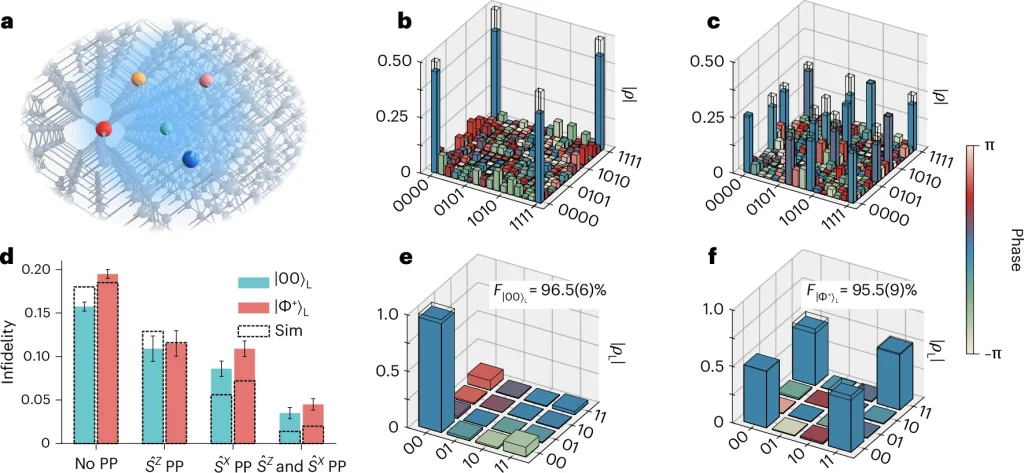
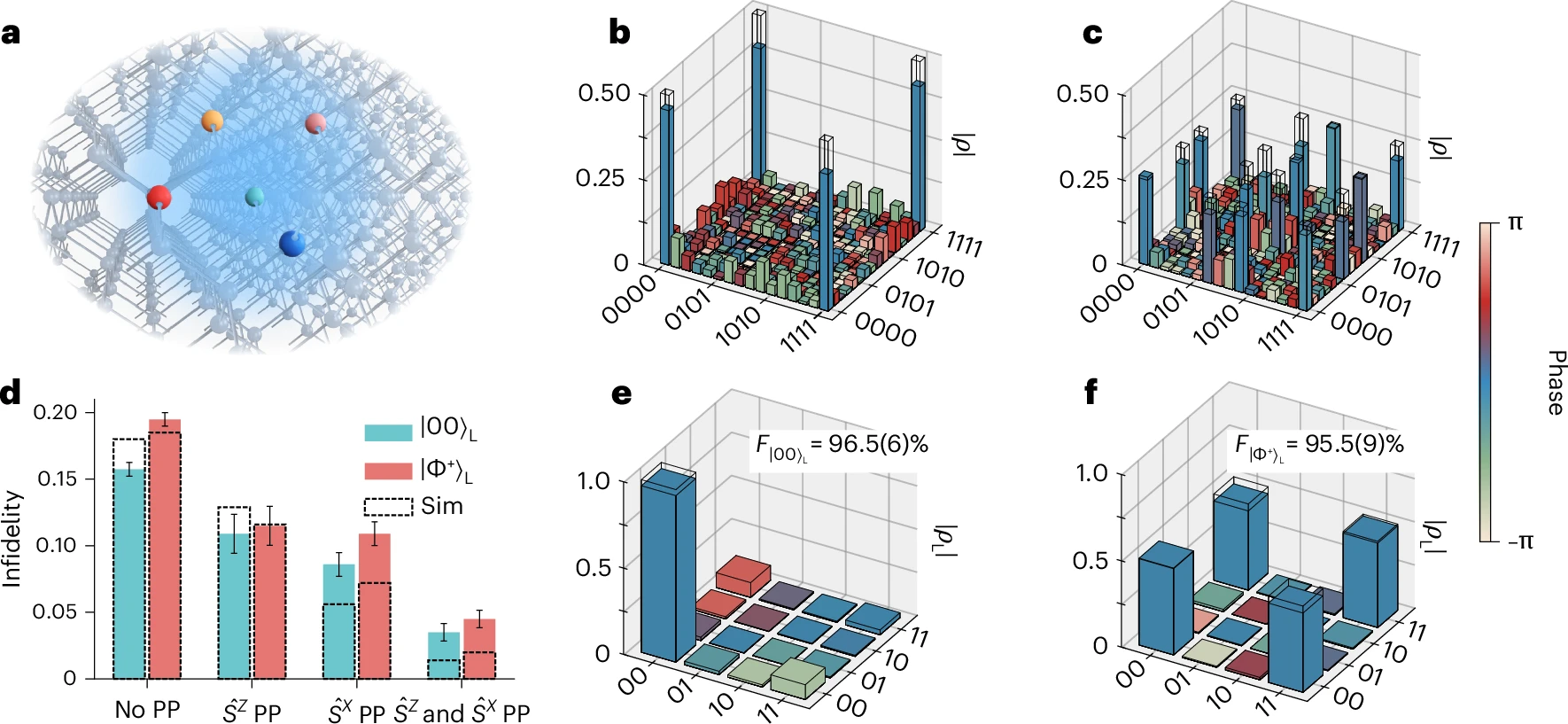
Using a five-spin system based on phosphorus donor atoms in silicon, the researchers implemented a compact error-detection scheme known as the [[4, 2, 2]] code. This encoding allows two logical qubits to be represented using four physical qubits, with an additional qubit serving as an auxiliary.
Within this framework, the team demonstrated key building blocks of logical quantum computing. These include preparation of logical states, execution of both single-qubit and two-qubit logical gates and implementation of a universal gate set that includes non-Clifford operations, which add extra flexibility for general-purpose quantum algorithms.
The study reports that logical state fidelities exceeded 95% after post-processing, indicating that the encoded qubits retained their intended quantum states with relatively high accuracy.
Universal Gate Set and “Magic States”
A central result is the demonstration of a universal logical gate set. In quantum computing, a universal set of gates allows any computation to be performed, analogous to how classical computers rely on basic logic gates.
The researchers implemented logical versions of standard gates, including single-qubit rotations and a controlled-NOT (CNOT) gate, as well as a more complex operation known as the T gate. The T gate is critical because it enables computations that cannot be efficiently simulated on classical systems.
To do this, the team used a “gate-by-measurement”, a method where the sceintists measure a helper qubit to effectively trigger the desired operation — rather than applying it directly — allowing them to carry out more complex steps in the computation.
According to the study, some of these magic states reached fidelities above thresholds required for distillation, a process used to improve their quality in larger systems.
Despite these advances, the logical gate fidelities remained lower than those of the underlying physical gates, reflecting the additional complexity introduced by encoding and multi-qubit operations.
Demonstrating a Quantum Algorithm
To test whether the system could work in a practical sense, the researchers implemented a variational quantum eigensolver (VQE), a hybrid quantum-classical algorithm widely used in quantum chemistry.
The algorithm was used to estimate the ground-state energy of a water molecule by varying the angle between its hydrogen atoms. The quantum processor prepared trial states, while a classical optimization loop adjusted parameters to minimize the energy.
The results showed an average deviation of about 22.7 millihartree, which is very close to the theoretical calculations. The study also found that applying error mitigation techniques — such as parity checks and symmetry constraints — improved accuracy.
While the experiment used a simplified model of the molecule, it demonstrates that logical qubits can be used in practical quantum workflows, rather than only in isolated demonstrations of gate operations.
Methods
The device was built using scanning tunnelling microscopy lithography, a technique that allows individual atoms to be placed with near-atomic precision. Phosphorus atoms were introduced into a silicon lattice and encapsulated within layers of isotopically purified silicon to reduce interference from nuclear spins.
Each phosphorus atom hosts a nuclear spin that acts as a qubit, while an electron shared among the atoms enables interactions between them. Control of the qubits was achieved using nuclear magnetic resonance and electron spin resonance techniques.
The researchers report that silicon offers several advantages as a quantum platform, including long coherence times and compatibility with established semiconductor fabrication processes.
Limitations, Challenges and Next Steps
Despite the progress, the researchers identify several limitations and suggest some steps for future work.
First, logical qubits exhibited shorter coherence times than individual physical qubits, reflecting the increased complexity of entangled states. Second, cross-talk between qubits — where operations on one qubit inadvertently affect others — remains a significant source of error.
The [[4, 2, 2]] code used in the experiment can detect certain errors but cannot correct all single-qubit errors, limiting its effectiveness compared with more advanced error-correction codes.
The system relies on post-processing to apply parity checks, rather than performing real-time error detection during computation. This constrains its ability to operate as a fully fault-tolerant system.
The researchers also note that their system exhibits a strong bias toward certain types of errors, a property that could be exploited to reduce the overhead required for fault-tolerant computing.
However, significant work remains to translate these results into scalable architectures. Future efforts will focus on reducing cross-talk, improving fabrication precision, and integrating larger arrays of qubits.
The next steps include scaling the system to include more logical qubits and implementing more advanced error-correction schemes capable of correcting, rather than only detecting, errors.
The study also points to the potential for “donor cluster arrays,” in which multiple clusters of atoms are interconnected to form larger processors. Such architectures could support more complex computations and enable fault-tolerant operation at scale.
In parallel, improvements in control electronics and device engineering will be needed to reduce noise and improve gate fidelities.
The researchers conclude that the work represents a shift toward fault-tolerant quantum computation in silicon. Because the silicon system can leverage existing semiconductor infrastructure, this could potentially pave the way for large-scale manufacturing and move the field closer to practical quantum systems.
The study indicates that the challenge of fabricating donor-based devices with atomic precision, which becomes increasingly difficult as systems scale.
The demonstration marks a transition from controlling individual qubits to performing computations using encoded logical qubits in silicon, something that has been achieved in other platforms but not previously in this one.