


Insider Brief
- Silent Waves launched Zephyr, an integrated cryogenic amplifier combining a TWPA and pump coupler into a single device.
- The system reduces component count, footprint, and insertion losses in superconducting quantum readout chains.
- These improvements increase quantum efficiency and simplify integration for scaling quantum processors.
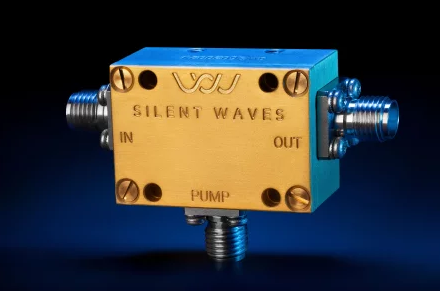
PRESS RELEASE — Silent Waves today announced the launch of the Zephyr, a new cryogenic amplifier solution that integrates a traveling-wave parametric amplifier (TWPA) and pump coupler into a single compact component. With the Zephyr, Silent Waves brings its Josephson TWPA technology into an integrated architecture, combining amplification and pump coupling in a single cryogenic device. By merging these functions, the Zephyr simplifies cryogenic amplification architecture while improving overall quantum efficiency.
A single device for coupling & amplification
Silent Waves, a French quantum hardware company specializing in advanced cryogenic readout technologies, designed the Zephyr to address a persistent challenge in superconducting quantum systems: the complexity and losses introduced by multi-component amplification chains. In conventional setups, a high-performance TWPA must typically be paired with a pump coupler and two isolators, adding connectors and cabling that introduce insertion losses and reduce overall quantum efficiency. Silent Waves’ existing TWPA products, the Argo and the Cathargo, operate within these traditional architectures.
With the Zephyr, the company integrates the TWPA and pump coupler into a single device, reducing the number of external components required in the cryogenic chain. The resulting architecture cuts the system footprint in half while reducing insertion losses between the signal source and the amplifier by 0.5–1 dB. Reducing component count in cryogenic readout chains is increasingly important as quantum processors scale to thousands of qubits.

These improvements translate into a 1.12–1.26× increase in overall quantum efficiency, a key parameter that determines how accurately quantum processors measure qubit states during readout.
“Making progress in quantum computing requires solutions that improve both system footprint and readout performance,” said Luca Planat, CEO of Silent Waves. “With the Zephyr, we focused on both of these critical aspects—reducing the size of the readout chain while improving overall performance. As with all Silent Waves products, the Zephyr was designed to be straightforward to install and easy to integrate into existing cryogenic systems.”
Simplifying the quantum readout stack
The device was developed as part of Silent Waves’ broader effort to simplify the cryogenic readout stack required for large-scale superconducting quantum processors.
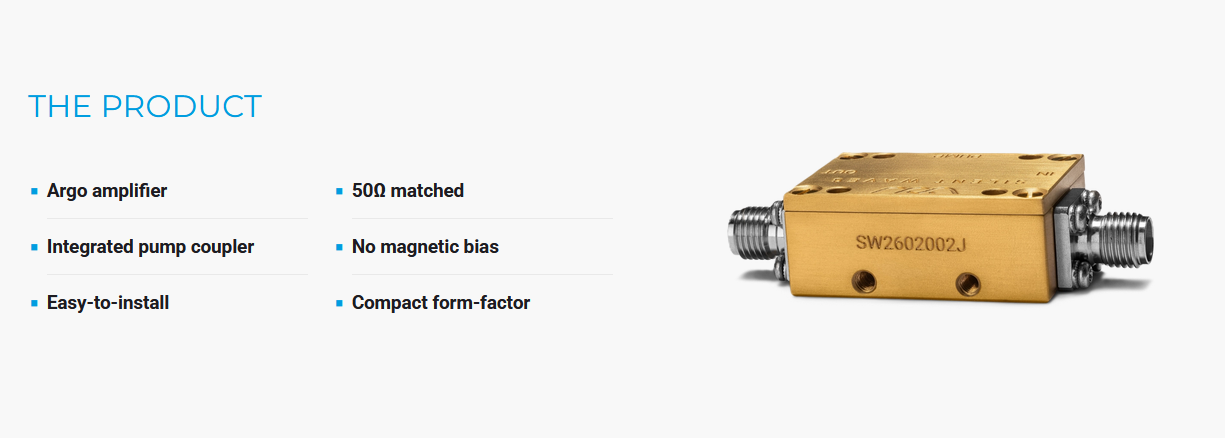
Like all Silent Waves amplifiers, the Zephyr is designed with practical system integration in mind. The solution is compact, easy to install, and requires fewer external peripherals, helping reduce both hardware complexity and integration time. Each unit undergoes full cryogenic characterization prior to shipment, and customers receive detailed product-specific specifications to ensure reliable operation from the first installation.