

Insider Brief
- Clemson University is expanding quantum computing research, coursework and student programs to prepare South Carolina for the technology’s growing economic and security impact.
- Faculty are developing quantum algorithms, software and cybersecurity applications while launching new courses and a planned minor to build a skilled workforce.
- Student interest is rising through the Clemson Quantum Club and national hackathon participation as state leaders call for stronger investment to remain competitive.
- Images: Clemson’s College of Engineering, Computing and Applied Sciences
Quantum computing is moving from theory toward application, and Clemson University is positioning South Carolina to compete, according to Clemson’s College of Engineering, Computing and Applied Sciences.
Faculty from across the college are expanding research, coursework and student engagement in anticipation of what many describe as the next computing shift. According to university researchers, quantum computing holds the potential to solve certain types of problems far faster than today’s most advanced classical machines, particularly as data sets grow and calculations become more complex.
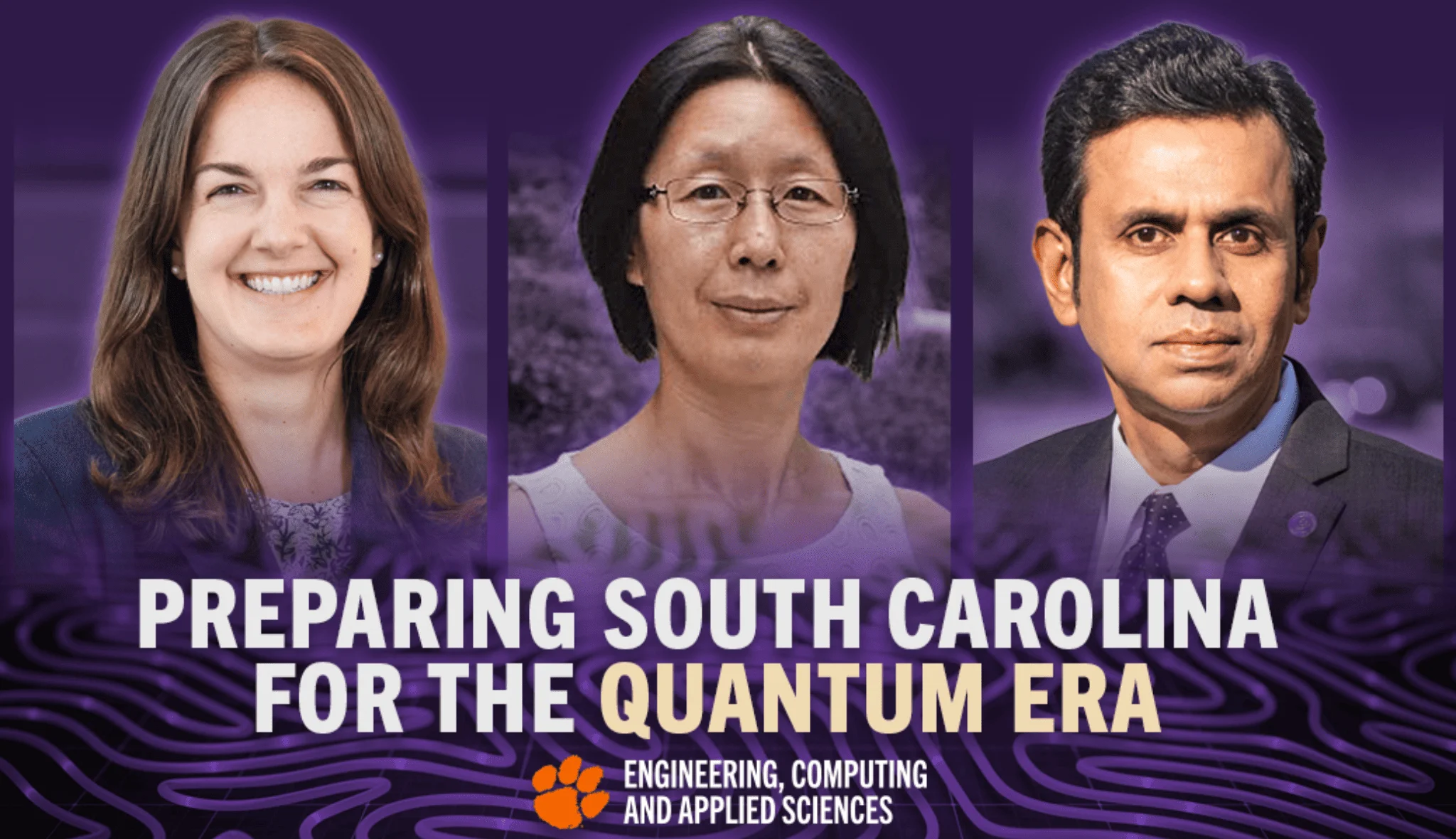
For years, the technology has remained largely confined to research laboratories. Emily Tucker, an assistant professor of industrial engineering, said quantum computing has long been viewed as experimental and theoretical.

That’s changing.
While quantum computers are not yet ready for widespread commercial deployment, advances in hardware and algorithms are narrowing the gap. Clemson faculty say the question is shifting from whether quantum computing will matter to which institutions and regions will be prepared when it does.
“The conversation has shifted from what to why and how — why should I care and how could I use it?” said Tucker. “Five years ago it was too early, and five years from now it might be too late. Now is the time to start building capacity and talent.”
Rong Ge, a professor in the School of Computing, pointed out that some computational problems are already stretching the limits of classical systems.
“We always want to do more — more data, more accuracy, more detail — but there comes a point where classical computing just isn’t enough,” Ge said. “That’s where quantum computing has the potential to take things to the next level.”
Preparing a Workforce
Clemson is responding on multiple fronts. Faculty are conducting research in quantum algorithms, software and hardware design, aiming to translate theory into practical tools. At the same time, the university has introduced new courses and is developing a minor in quantum computing to prepare students for emerging roles in industry.
University leaders frame the effort as part of Clemson’s broader mission to build a skilled workforce for South Carolina’s industries. Quantum computing is expected to influence fields ranging from cybersecurity and advanced manufacturing to materials science and logistics. Researchers say equipping students with foundational knowledge now will allow the state’s businesses to adopt the technology more quickly as it matures.
Cybersecurity Push
Among Clemson’s leading voices in the field is Mashrur “Ronnie” Chowdhury, the Eugene Douglas Mays Chair of Transportation. His work focuses on how quantum computing could both strengthen and threaten critical infrastructure systems.
Quantum machines operate differently from classical computers. Instead of processing information in bits that represent either 0 or 1, quantum computers use quantum bits, or qubits, which can theoretically represent multiple states simultaneously. This capability allows them to efficiently explore possible solutions.
That power could accelerate research and optimization problems, but it also carries risk. Certain encryption methods that protect financial transactions, communications and infrastructure rely on mathematical problems that are difficult for classical computers to solve. Researchers warn that sufficiently advanced quantum systems could make some of those methods easier to break, raising concerns about data security and privacy.
Chowdhury’s research examines how to safeguard transportation networks and connected infrastructure against emerging cyber threats in a future that includes quantum-enabled attackers.
Chowdhury said South Carolina risks falling behind economically and technologically if it does not make sustained, aggressive investments in quantum computing research and workforce development.
“It would pose a significant risk to our state if we do not invest aggressively in quantum computing,” Chowdhury said. “We need to cultivate talent because quantum technology is already here and advancing rapidly. If we want to compete not only with other states but globally, we must invest aggressively in quantum computing. We have the full potential to position South Carolina as a leader in quantum computing.”
Student, State Momentum Builds
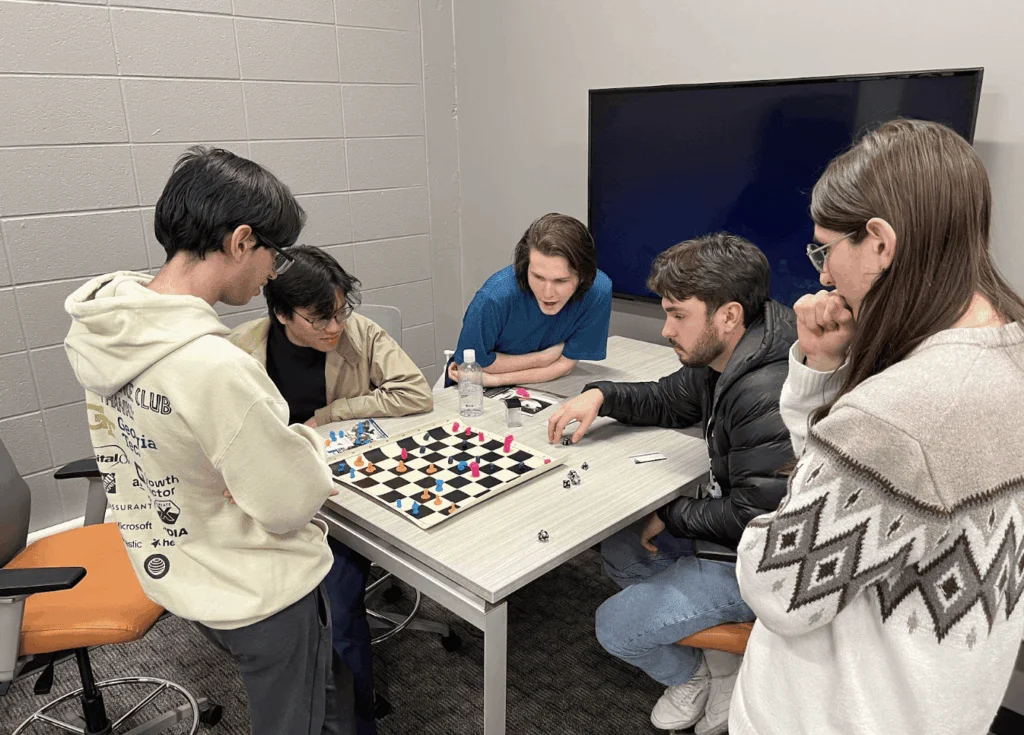
Student interest is rising alongside faculty research. The student-led Clemson Quantum Club launched last year and has grown to roughly 40 members. The club is seeking university funding and plans to hold its first presidential election this semester.
Club members have participated in national quantum computing hackathons, including MIT’s iQuHACK, where teams work to solve programming challenges using quantum platforms.
Nathan Jones, a third-year Ph.D. student and club president, has compared the current moment in quantum computing to a sense of curiosity about what lies behind the curtain.
“I think that gets a decent amount of students in the door,” Jones said. “Then they learn it’s not what sci-fi makes it out to be, but there are real parts to it, which I think grabs a lot of students and makes them stay.”
For students, the field represents both a technical frontier and a career opportunity.
Beyond campus, the broader ecosystem is taking shape. Joe Queenan, founder of the South Carolina Quantum Association, has said the state stands to benefit if it invests in research, talent development and collaboration.
“Universities like Clemson play a critical role in that process by preparing students, advancing research and working alongside industry to translate emerging ideas into real-world capability,” Queenan said. “That’s how South Carolina ensures it’s not just watching this technology develop, but helping shape what comes next.”