


Guest Post by Marvin Cheung
Co-Managing Director, Quantum Oaks Advisory at Unbuilt Labs
In my briefing last month, I offered an introduction to quantum for non-technical board members. This month, I want to unpack some of the latest developments in artificial intelligence (AI), most notably the phenomenon of Moltbook, and explore the intersection of quantum and AI. I will address a few questions:
- What are AI, LLM, generative AI, agentic AI, world models, and quantum AI?
- What does the global policy landscape (including export control programs) look like today and what might we expect?
- How might board members upskill to prepare for quantum and AI?
Join me in exploring the future of these technologies.

What are AI, LLM, generative AI, agentic AI, world models, and quantum AI?
Artificial Intelligence (AI) describes machines that simulate human thought and activities. Chatbots like ChatGPT, Claude, and Gemini leverage a specific technology called Large Language Models (LLMs) trained on massive datasets to process human language. They are generative AI in the sense that they generate text, images, and other outputs. Agentic AI describes models (agents) that represent people in specific activities. For example, chatbots that can make purchases on your behalf or facilitate medical diagnostics. Moltbook, strictly speaking, is a forum for chatbots. They are not technically agents within that context.
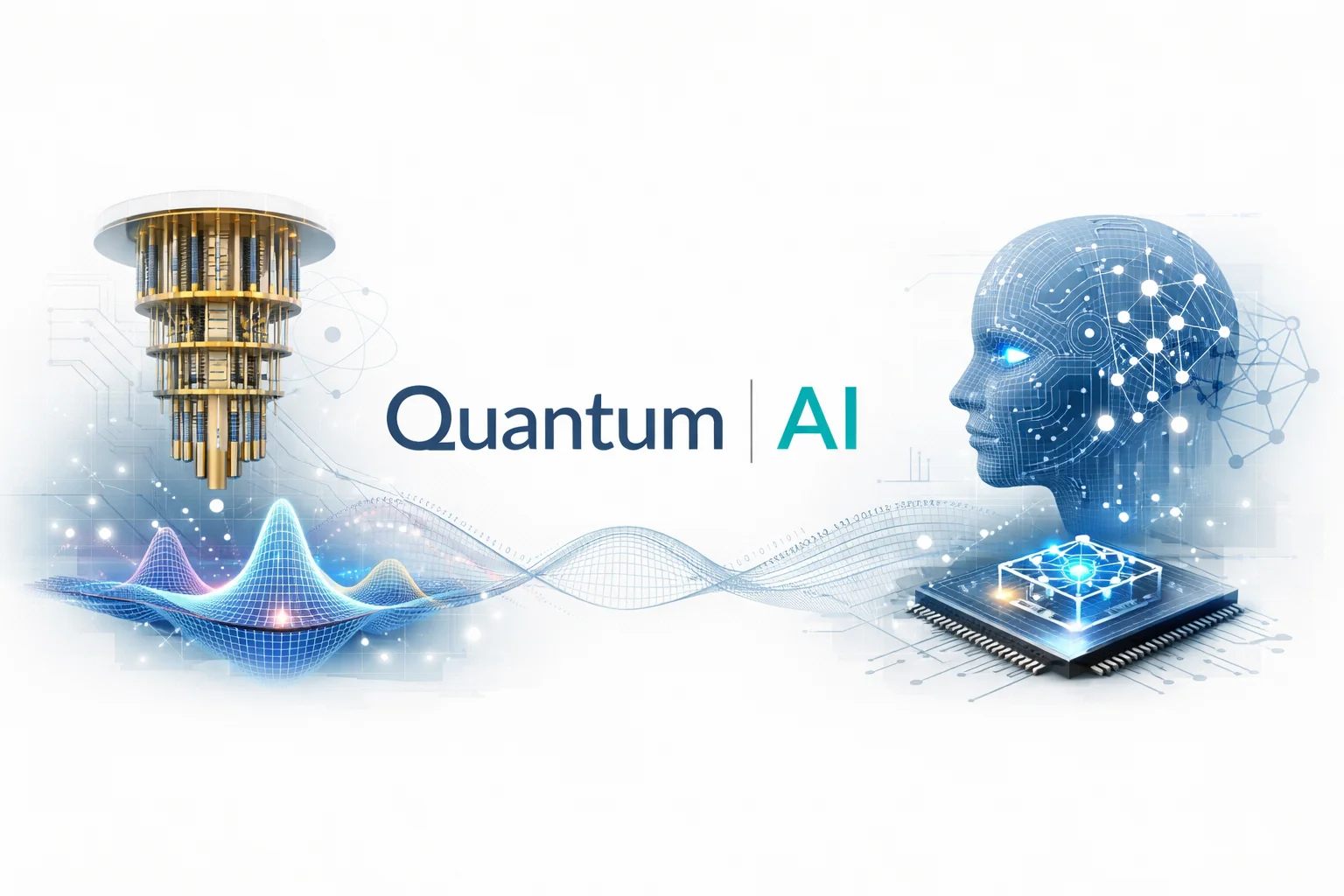
World models are expected to be the future of AI. Whereas LLMs process 2D characters, world models are expected to process 3D inputs. AI can be facilitated by quantum technologies, which is one way “quantum AI” can be interpreted. Another way to interpret the term is AI that facilitates quantum technologies. For example, AI models for quantum error correction, which is when AI tools like machine learning are used to understand disturbances or noise in quantum computers.
What does the Global Policy Landscape (including export control programs) Looks Like today and What Might We Expect?
Given recent geopolitical tensions, the global policy landscape has been fragmented as countries identify new cooperation opportunities and pull back from select prior engagements. This divide is heightened by increased competition in high-tech industries. The current paradigm of export control regime is built around the post-Cold War, Wassenaar Agreement established in 1996. The Agreement brings together 42 member states. They discuss the Control List of arms as well as dual-use goods and technologies; disclose transfers and denials of items on the Control List to non-member states; and notify all member states of any “essentially identical” transactions that have previously been denied by another member state within the past three years. This paradigm along with membership to the Agreement is being reconsidered as the geopolitical landscape shifts.
Generally speaking, quantum computers are export controlled based on the number of qubits. This number can be somewhat arbitrary. Other areas where states exert export control are microchips, machines to support the manufacture of quantum computers, and rare earth minerals. Software is generally more challenging to regulate. There is no multilateral consensus on an export control framework for AI. However, the Framework for Artificial Intelligence Diffusion in the US has been effective since 2025. In essence, the model weights and parameters within advanced AI models have become export controlled. Open-source, open-weight models that have been “published” as defined by the framework, will not be affected.
Consistent with last month’s briefing, boards are encouraged to foster a relationship with local technology providers whether that is in quantum or AI. We were introduced to the power of AI LLM chatbots such as ChatGPT in 2022. As the social, financial, economic, and environmental impacts of such technologies became clearer over the past few years, our access to these technologies may be more limited in the future. This will likely hold true for future specialized models in research, transportation, manufacturing, design, luxury businesses, real estate, health, law, finance, etc. It may be prudent for boards to direct investment into or jointly develop proprietary AI models based on existing data sources, supported by open-source models. For boards that are concerned about limited access to quantum technology vendors, we recommend thinking proactively about the role of quantum in your strategic plan.
How Might Board Members Upskill to Prepare for Quantum and AI?
As the pace of technological adoption speeds up, a general principle will hold for better or for worse: anything that can be automated will be automated. On one hand, there may be fewer “bullsht” jobs. On the other hand, there may be fewer opportunities to learn. Board members will have to evaluate their own skillsets honestly as they think about the future, and upskill around areas that cannot be automated. Practically speaking, the tangible skills we have relied on to demonstrate professional competency e.g. knowledge of a programming language or spreadsheet modelling, may be devalued. Intangible skills like creative thinking, community-building, communications, or strategic planning, may become more sought after. A future with quantum and AI will demand boards to dream a little bigger, in a world where the mundane will be available to anyone with a chatbot. It will also ask us to look more closely at areas where humans have agency. A closer look at philosophy, history, and the humanities in general may yield fruitful results.
Disclosure: This material is provided for informational purposes only and nothing herein constitutes investment, legal, accounting or tax advice. Information is obtained from sources deemed reliable, but there is no representation or warranty as to its accuracy, completeness or reliability. In no event shall Quantum Oaks Advisory at Unbuilt Labs or any of its directors, officers, employees or agents be liable for any use of, for any decision made or action taken in reliance upon, or for any inaccuracies or errors in or omissions from, the information in this content.
Marvin Cheung, Co-Managing Director, Quantum Oaks Advisory at Unbuilt Labs
Marvin Cheung is a Co-Managing Director at Quantum Oaks at Unbuilt Labs, where he helps boards to demystify quantum, strategize, and explore creatively. An experienced board member himself, he has given talks at the UN, MIT, Board Impact Forum, and ChairX. He also mentors at Yale University’s Tsai Center for Innovative Thinking. Marvin@UnbuiltLabs.com