


Insider Brief
- Nu Quantum has opened a new trapped-ion quantum networking laboratory in Cambridge, UK, doubling its research infrastructure to accelerate distributed quantum computing.
- The facility will host a multi-node networking testbed to validate Nu Quantum’s Qubit-Photon Interface technology for linking trapped-ion processors via scalable photonic networks.
- The expansion follows a $60 million Series A round and supports collaborations with UK research institutions and industry partners while remaining adaptable to multiple qubit modalities.
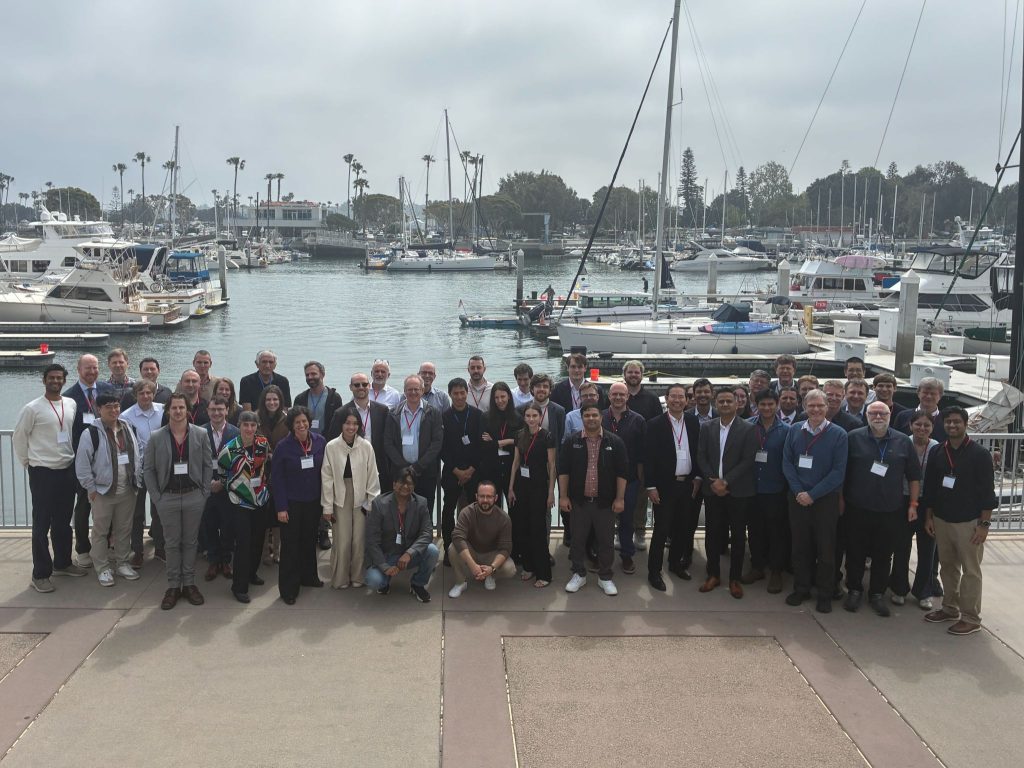
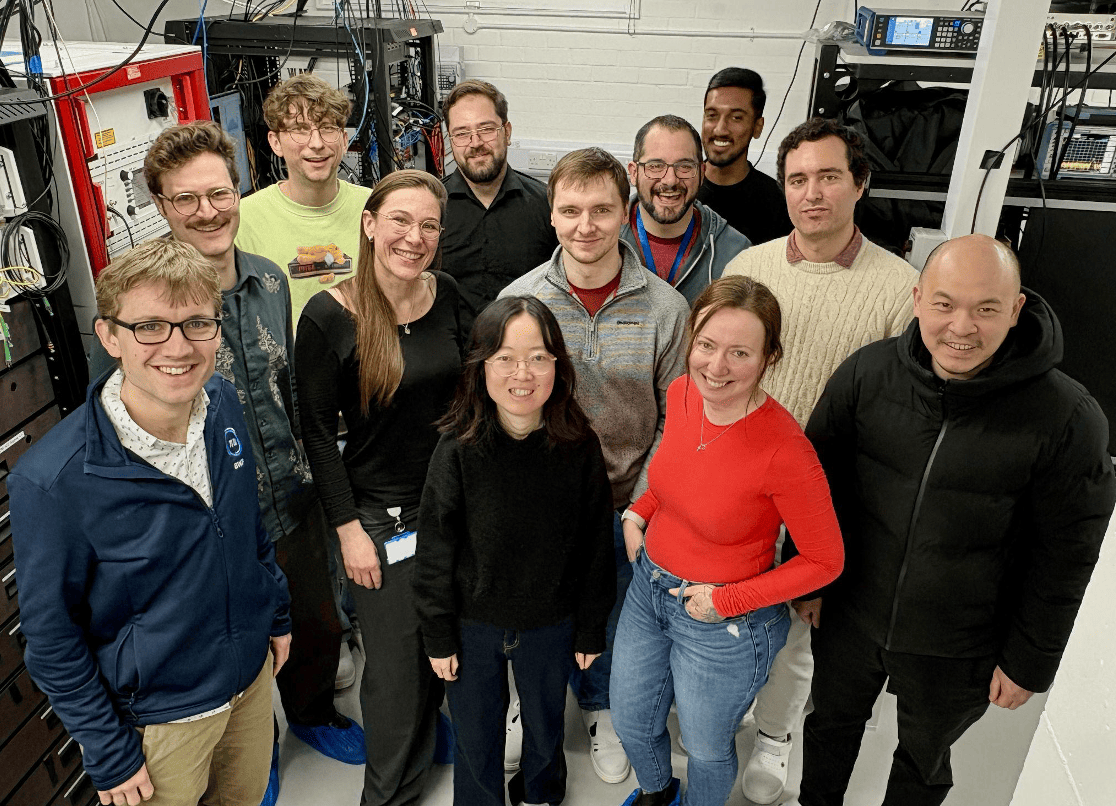
- Image: Nu Quantum staff at the newly inaugurated trapped-ion networking laboratory. (Nu Quantum)
PRESS RELEASE — Nu Quantum, leader in quantum computer networking, has announced the opening of a new trapped-ion networking laboratory in Cambridge, UK. Based close to its existing R&D headquarters, this state-of-the-art facility will double the company’s research infrastructure to accelerate progress towards distributed quantum computing.
Achieving real utility for quantum computers requires scaling. Nu Quantum’s technology enables quantum computers to scale by weaving individual quantum processors into a modular, distributed computing fabric. Crucially, Nu Quantum’s architecture is adaptable to support scaling for different types of quantum computing modalities.
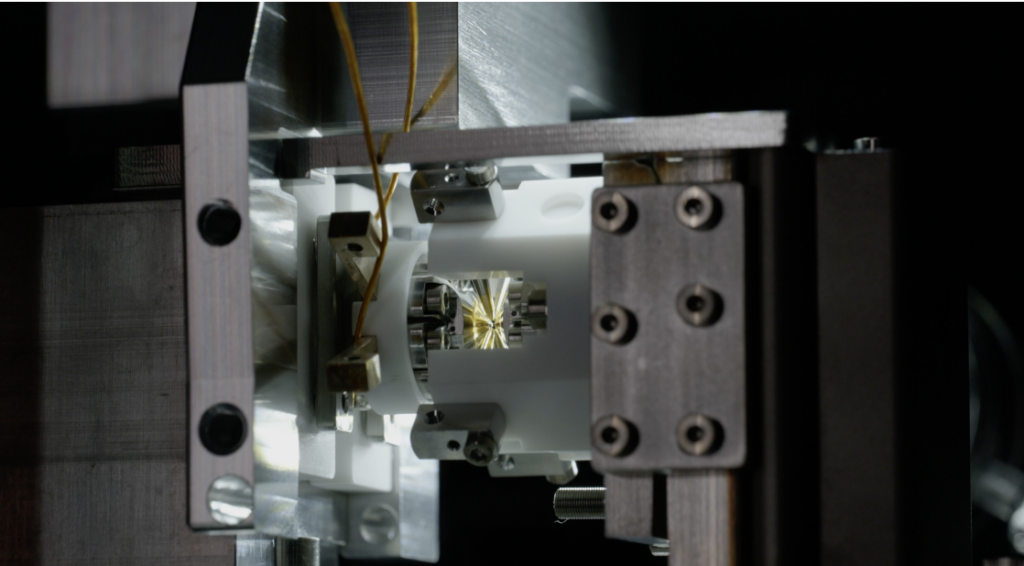
The new facility will host Nu Quantum’s multi-node networking testbed, where the company’s world-leading Qubit-Photon Interface (QPI) technology will be proven with trapped-ions. Nu Quantum’s QPI technology is designed to interconnect clusters of commercial processors from industry leaders via a scalable photonic network, paving the way towards distributed quantum computing architectures. These interfaces, based on optical microcavity technology and integrated into novel custom-built ion traps, will enable high-performance entanglement links between qubits in different nodes.

Nu Quantum’s QPI hardware is designed to push the performance of remote entanglement links beyond current state-of-the-art demonstrations, thanks to innovations ranging from world-leading expertise in optical microcavity mirror fabrication, novel entanglement protocols, and a systems-level approach to distributed quantum computing. The Qubit-Photon Interface forms part of the company’s Entanglement Fabric technology roadmap to develop a robust photonic networking layer that facilitates modular quantum computers.
Nu Quantum recently announced their $60 million Series A fundraising round, the largest for a quantum company in the UK and for quantum networking globally. This investment, alongside the expansion of R&D facilities, marks a new period of growth for the company, which is currently hiring across several technical areas including a dedicated focus for scientists and engineers specialised in trapped-ion and AMO fields.
Adding to the company’s existing research facilities, which include access to cleanrooms, optics labs, and mechanical and electronics engineering resources, the new laboratory will also benefit from active research collaborations with the UK’s National Quantum Computing Centre, the University of Sussex,the University of Cambridge, Cisco, and foundry subcontractor Infineon Technologies.
While this new laboratory will firstly focus on networking trapped-ion qubits, Nu Quantum’s technology is readily adaptable to other modalities, as showcased in the company’s announcement of a first Qubit-Photon Interface for neutral atom qubits in 2024 as part of an Innovate UK project with collaborator Infleqtion.
“The opening of our new laboratory is a huge milestone as it constitutes the first dedicated industrial R&D facility for trapped-ion distributed quantum computing in the UK and Europe. This state-of-the-art laboratory will accelerate our roadmap to enabling interconnected quantum computing architectures,” said Dr Carmen Palacios-Berraquero, Founder and CEO of Nu Quantum.
“After years of R&D achieving unprecedented cavity performance for fast, efficient quantum networking, we are now preparing to test one of our core technologies in-house with trapped-ion qubits. This lab opening is a major milestone for Nu Quantum and this is an incredibly exciting time for the team,” said Dr Claire Le Gall, VP Technology at Nu Quantum.
Collaborator Professor Matthias Keller at University of Sussex added, “The opening of Nu Quantum’s Networking Testbed Lab in Cambridge is yet another sign that Nu Quantum is pushing the frontier of quantum networking. I am looking forward to continuing and deepening our fruitful collaboration and to seeing the positive impact the new lab will have on the business.”
Professor Mete Atature, Head of the Cavendish Laboratory at the University of Cambridge and Founding Advisor at Nu Quantum, said “Quantum is an important science and technology area for the UK, and industry-led R&D is critical for us to stay at the forefront. The quantum interconnection challenge remains a bottleneck from communications to distributing computing, and Nu Quantum’s new Testbed Lab will push the limits of networked quantum systems at industrially relevant scales.”
Central to the test and measurement hardware housed within the new facility is a laser suite with wavelength stabilisation and photonics delivery. This capability was developed in partnership with the NQCC funded through a National Security Strategic Investment Fund programme, advancing quantum technologies through targeted collaboration between government end-users and technology providers.