


Insider Brief
- Silicon Quantum Computing has launched Quantum Twins, an application-specific quantum simulator that uses atomically precise silicon qubit arrays to model quantum physics and chemistry beyond the reach of classical computers.
- The system uses up to 15,000 qubit registers patterned on pure silicon with 0.13-nanometer accuracy, allowing physical replicas of real quantum and chemical systems to be encoded directly in hardware.
- The launch follows recent manufacturing milestones, including patterning 250,000 qubit registers in eight hours, and is supported by peer-reviewed results published in Nature and progress in DARPA’s Quantum Benchmarking Initiative.
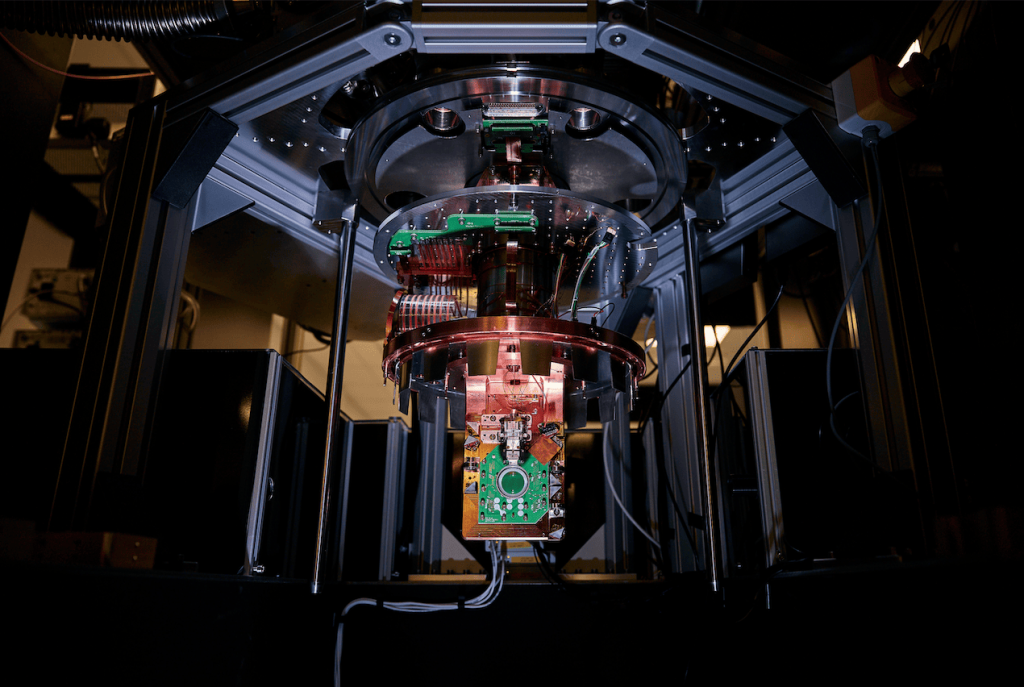
- Image: Quantum Twins illustration; thousands of quantum dots patterned with atomic precision on pure silicon.
PRESS RELEASE — Silicon Quantum Computing (“SQC”), a leader in quantum computing and quantum machine learning, today announced the launch of Quantum Twins, an application-specific quantum simulator designed to accelerate molecule and materials discovery. Built utilizing the company’s atomic-scale semiconductor manufacturing process, Quantum Twins showcases the exceptional precision and already-achieved scalability of SQC’s full-stack approach to quantum computing.
Quantum Twins are comprised of large arrays of qubit registers (quantum dots) patterned on pure silicon with 0.13 nanometer (atom level) accuracy. This exquisite precision enables SQC to create custom chips – Quantum Twins – that physically encode direct replicas of the physical systems and chemical interactions that customers wish to analyse and understand.
This world-first product provides a pathway to simulation of quantum systems that is impossible for classical computers. Quantum Twins provide an enhanced understanding of quantum interactions. Analysing magnetism, atomic interaction and superconductivity at this scale will pave the way for novel information storage, low power electronics and broad materials discovery. Details on the scientific foundation of this platform were published today in Nature, a system including 15,000 qubit registers.

The launch follows a period of rapid expansion in SQC’s manufacturing capabilities. In November 2025, the company demonstrated the ability to pattern 250,000 qubit registers in just eight hours, de-risking the required manufacturing yields and volumes needed to deliver commercial-scale, fault-tolerant quantum computers. As a full-stack company, SQC can design, produce and test new quantum chips in under a week. It’s one of the many key advantages of the company’s 14|15 platform in the race to deliver the world’s first commercial scale quantum computer.
SQC’s Founder and CEO, Michelle Simmons, said: “Quantum Twins represents a window into the quantum world that customers can use for materials discovery today. The enabler is that we can engineer hundreds of thousands of qubit registers with atomic precision. It’s an incredible achievement in semiconductor manufacturing with sub-nanometer accuracy.”
SQC’s Chair and former ARM CEO, Simon Segars, added: “Expanding our product offering with the launch of Quantum Twins brings SQC’s atomic-scale advantage to the global materials and chemistry sectors. Having demonstrated commercial success with our quantum machine learning system, Watermelon, SQC’s latest offering is a definitive signal of our world leading manufacturing precision and scalability.”
SQC debuted its multi-qubit, multi-register processor last month with industry-leading fidelities up to 99.99% and performance that improves as the system scales. The company recently progressed to Stage B of DARPA’s Quantum Benchmarking Initiative and its quantum machine learning system, Watermelon, is already delivering impact across a variety of sectors including telecommunications and defence.
Quantum Twins are now available via direct contract with SQC. For more information, visit www.sqc.com.au.