

Insider Brief
- EdenCode Inc. has emerged from stealth in San Jose with an AI-powered, real-time decoder designed to reduce latency and improve accuracy in quantum error correction for fault-tolerant quantum computing.
- The company says its neural-network-based system achieves sub-millisecond decoding, a 99.9% error detection rate, and up to 10x faster processing while remaining compatible with multiple quantum hardware architectures.
- Founded by researchers from Harvard and UC San Diego, EdenCode is positioning its scalable, hardware-agnostic platform for enterprise deployment with continuous learning, security features, and integration into existing quantum workflows.
EdenCode Inc., a San Jose–based startup focused on artificial intelligence for quantum computing, emerged from stealth and closed a $1.3 million pre-seed round to create a real-time decoder designed to correct errors fast enough to support practical, large-scale quantum machines.
The company said its platform uses neural networks trained on quantum error patterns to detect and correct faults in less than a millisecond, a speed intended to keep pace with the fragile states inside quantum processors. EdenCode reports an error-detection rate of 99.9% and processing speeds up to 10 times faster than conventional approaches, positioning the system as a drop-in layer for existing quantum error-correction stacks.
Quantum computers are highly sensitive to noise from their environment, which can disrupt calculations long before useful work is completed. Because these errors are emerging as the field’s central obstacles, error correction is a prerequisite for fault-tolerant systems. However, current decoding methods can be slow or difficult to scale as machines grow. EdenCode said its approach focuses on reducing latency while maintaining accuracy, which allowa corrections to be applied in real time rather than after the fact.

Founded by researchers from Harvard University and University of California, San Diego, the company aims to operate across hardware platforms rather than being tied to a single quantum architecture. Its decoder is designed to be hardware-agnostic, supporting superconducting, trapped-ion, photonic and other quantum systems without requiring custom redesigns for each machine.
From Lab Research to Real-Time Systems
EdenCode’s technology is built around advanced neural decoders that learn from observed error patterns and adapt as hardware conditions change. Rather than relying on fixed rules, the system continuously updates its internal models, improving performance as it is exposed to new data from a given processor. The company said this allows it to reduce error rates by as much as a factor of 10 and extend coherence times, a measure of how long quantum information remains usable.
The startup describes its architecture as a modular system that can scale alongside expanding quantum infrastructures. As machines add more qubits, the decoder can be deployed across larger systems without a corresponding rise in processing delays, a challenge that has constrained some existing approaches.
Commercial Focus and Team
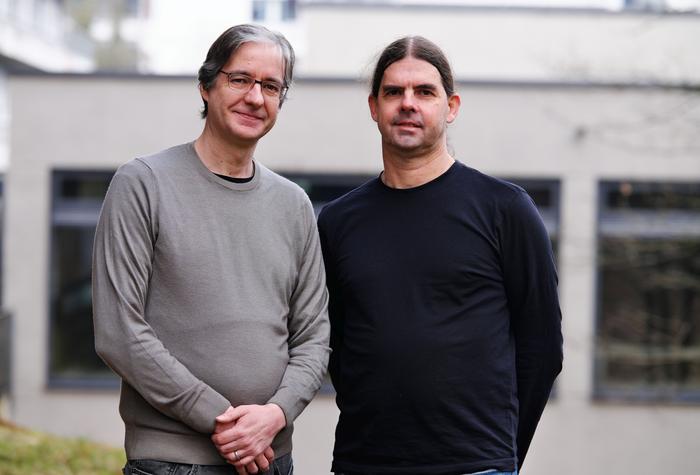
EdenCode is led by CEO and co-founder Dr. Wanda Hou, who holds a doctorate in physics from UC San Diego. The technical direction is overseen by co-founder and CTO Prof. Yi-Zhuang You, a physics professor at UC San Diego, with additional founding input from Dr. Hongye Hu of the Harvard Quantum Initiative. The company said its leadership combines academic research in quantum physics with applied work in machine learning.
Beyond performance metrics, EdenCode is positioning its product for enterprise use. The company said it offers security and reliability features designed for commercial deployments, along with continuous monitoring and around-the-clock technical support. Integration is intended to be seamless with existing quantum workflows, reducing the need for customers to overhaul their software stacks.