

Insider Brief
- The U.S. Department of Energy renewed $125 million in funding over five years for the Quantum Science Center to advance quantum-accelerated high-performance computing, with Los Alamos National Laboratory continuing as a principal partner alongside Oak Ridge National Laboratory.
- Hosted by Oak Ridge and supported by three national laboratories, universities, and industry partners, the center aims to build the scientific foundations for fault-tolerant, quantum-classical computing systems under the DOE Office of Science.
- Los Alamos researchers will lead and contribute to open-source quantum-classical software, hybrid algorithms, and scientific applications focused on quantum simulation, materials modeling, and integration of quantum and conventional computing.
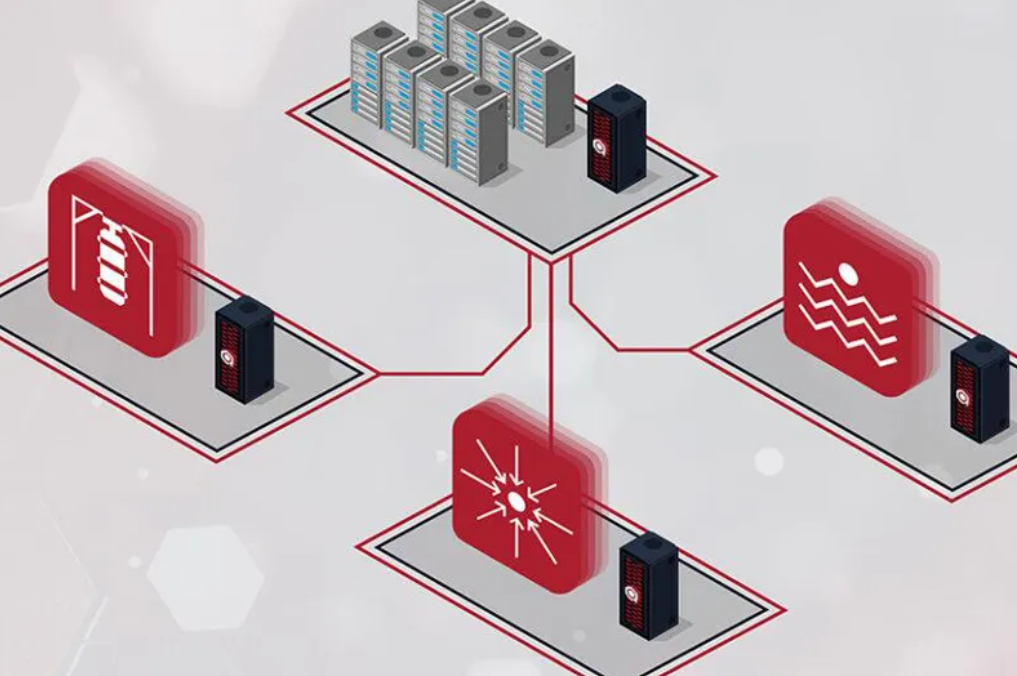
- Image: The Quantum Science Center will develop hybrid computing architectures that integrate quantum computers with leadership-class HPCs. Image courtesy Adam Malin/ORNL, Dept. of Energy
PRESS RELEASE — The Department of Energy has renewed funding for the Quantum Science Center, with Los Alamos National Laboratory continuing to play a vital role along with Oak Ridge National Laboratory in the center’s mission to advance quantum science and technology. The center will be funded for $125 million over five years to focus on quantum-accelerated high-performance computing.
“The Quantum Science Center is establishing the scientific and technical foundation for quantum computing,” said Mark Chadwick, associate Laboratory director for Simulation, Computing and Theory. “In this new, critical evolution for the center, the integration of quantum and high-performance computing stands to accelerate advancements in crucial scientific areas related to technological progress and even national security applications.”
The Quantum Science Center combines the efforts of three national laboratories, with ORNL hosting the center and Los Alamos a principal partner alongside various universities, industry partners and other laboratories. Created as one of five National Quantum Information Science Research Centers supported by the DOE’s Office of Science, the Quantum Science Center seeks to create a scientific ecosystem for the advancement of fault-tolerant, quantum-accelerated high-performance computing.

“Integrating quantum computing and high-performance computing hardware and developing a software ecosystem that leverages the respective strengths of the different technologies represents a ‘best of both worlds’ approach for running scientific applications at unprecedented speeds,” said Scott Pakin, chief scientist on the QSC leadership team and a Los Alamos National Laboratory computer scientist. “As we pursue that goal, Los Alamos National Laboratory brings established expertise across key areas in this field, and we’re excited to contribute our leadership, insight and innovation as the center meets these challenges.”
The center’s primary focus will be the development of open-source software for quantum-classical workflows. Los Alamos scientist Yigit Subasi leads the QSC’s hybrid algorithms thrust, with the goal of designing new algorithmic workflows that target quantum simulation and characterization of model materials systems. Andrew Sornborger, another Los Alamos scientist, helms the scientific applications thrust, charged with developing and validating computer simulations of quantum materials for computer systems that integrate quantum and high-performance computing.
Los Alamos scientists will contribute to other areas of research, including quantum and hybrid quantum-classical algorithms, quantum simulation, quantum information processing, scientific applications of quantum computing, analysis of quantum systems, characterization of advanced materials, and software engineering.
“An important task for the Quantum Science Center is to evaluate how conventional and quantum computing models can solve scientific problems, including topics such as quantum materials discovery and design,” said Ellen Cerreta, associate Laboratory director for Physical Sciences. “Los Alamos’ cutting-edge capabilities in essential areas like this will help take quantum computing from the realm of experiment to deployment.”