


Insider Brief
- A RIKEN-led project is developing system software to tightly integrate quantum computers with supercomputers, aiming to show that hybrid quantum–HPC workflows can outperform supercomputers alone for certain classes of problems.
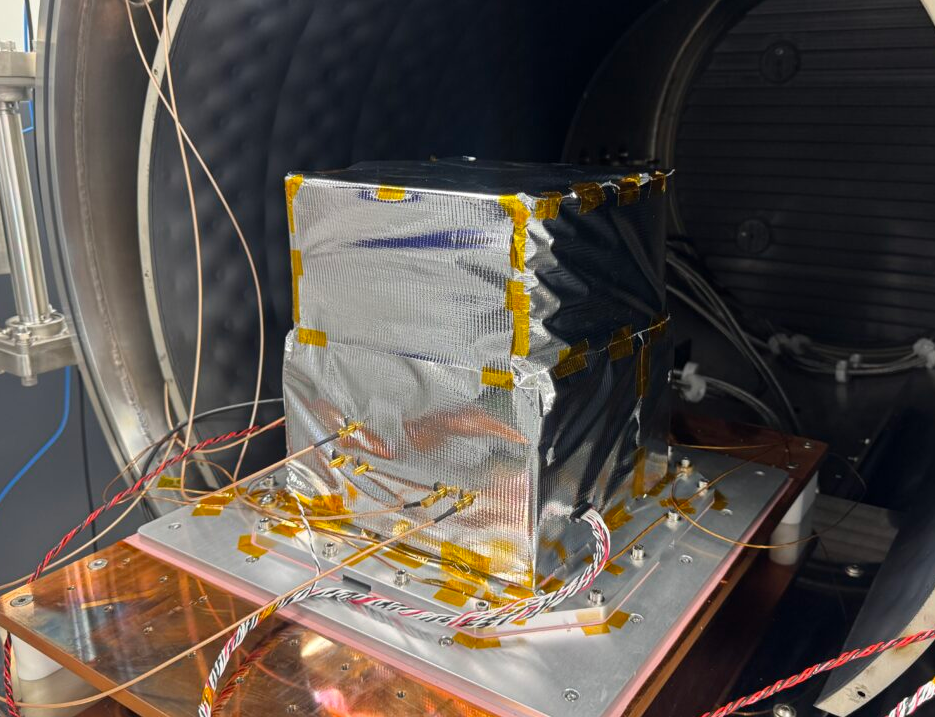
- The effort brings together researchers behind Japan’s Fugaku supercomputer and deploys both ion-trap and superconducting quantum systems—developed by Quantinuum and IBM—to ensure the software remains compatible as quantum hardware scales.
- Running since 2023 with partners including the University of Tokyo, University of Osaka and SoftBank, the five-year project is testing real-world hybrid use cases to demonstrate what today’s quantum computers can practically contribute when coordinated with supercomputer-level control.
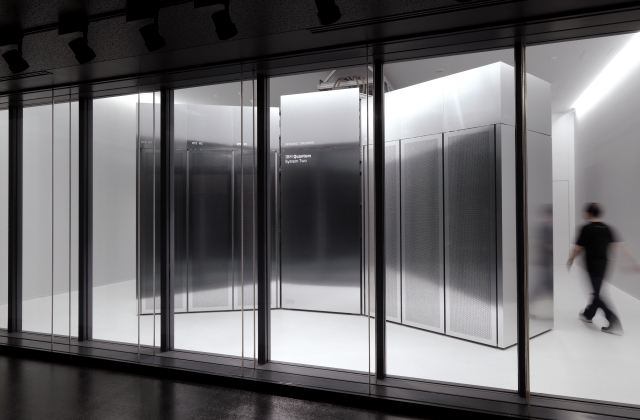
- Image: IBM Quantum System Two, installed at RIKEN’s Kobe campus, uses superconducting qubits cooled to near absolute zero to perform quantum operations. (RIKEN)
A pioneering project led by RIKEN is underway to develop software to efficiently integrate quantum computers with supercomputers. Leading the project are three figures from the Quantum–HPC Hybrid Platform Division at the RIKEN Center for Computational Science, in Kobe, Japan.
These lead researchers include Division Director Mitsuhisa Sato and Deputy Director Yuetsu Kodama, both of whom contributed to the development of Fugaku, one of the world’s fastest supercomputers. They also include Deputy Director Tamiya Onodera, who joined the division in April 2025 after having worked at IBM Research– Tokyo for more than 35 years.
We spoke with all three researchers about their project’s goals and key aspects of their research and development.

Parallel growth
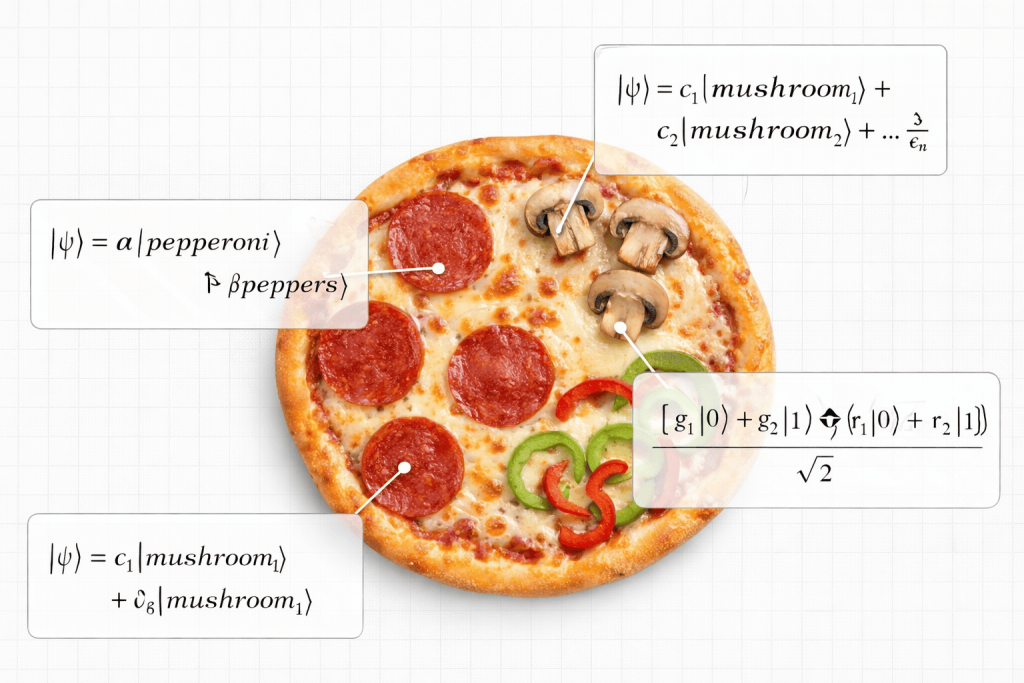
Quantum computers use a principle called quantum superposition, which allows for processing of multiple possibilities simultaneously. Leveraging this principle will generate new quantum computers that promise to process vastly more information than conventional computers, which only handle one data state at a time. This means that quantum computers have the potential to solve problems that are extremely challenging for conventional computers.
Current quantum computers use a range of strategies and technologies to achieve this feat, including ion traps, superconducting circuits, optics and silicon-based approaches.
Given their increasingly impressive performance, some may wonder why quantum computer integration with supercomputers is necessary at all. However, quantum and conventional computers, including supercomputers, excel in fundamentally different areas, meaningfundamentally different areas, meaning each has unique strengths and weaknesses.
Supercomputers excel at general-purpose tasks, large-scale simulations and reliably processing massive datasets. Quantum computers, while powerful at solving specific problems, are still experimental and not suited for broad, data-heavy or routine computing tasks.
Mitsuhisa Sato, division director of the Quantum-HPC Hybrid Platform Division, says that while quantum computers can solve problems that supercomputers struggle with, they currently only function usefully when controlled by conventional computers. “In the future, as quantum computers improve ten-fold or even a hundred-fold, control and communication will require much more help from supercomputer-level computing,” he says.
Options explosion
While supercomputers are powerful, they struggle in fields where a ‘computational explosion’ is occurring, explains Sato. For example, choosing 10 binary options yields 2¹⁰ or 1,024 combinations, which is manageable for conventional computers. But with 20 binary options, the combinations jump to 2²⁰ or 1,000,000 and the number of combinations grows exponentially, requiring enormous computation time and power.
Quantum computers excel in these scenarios. Thus, they are particularly valuable when processing problems with many potential combined options as solutions. This ability is particularly useful to materials development, drug discovery, artificial intelligence and optimization processes that involve many combinations.
By delegating the most challenging calculations to quantum computers, overall processing efficiency is improved, says Sato.
Currently, leading quantum computers, such as those produced by American technology company IBM, are modest in size. They have just surpassed 100 qubits, with qubits being in some ways analogous to the bits used in conventional computers to store information and perform calculations.
However, while bits are either 0 or 1, qubits can exist in multiple states at once. This allows quantum computers to process complex problems faster than classical computers in specific scenarios. However, Sato notes that quantum computers require the input of conventional computers to understand and execute commands. To use an analogy: if a quantum computer is like a piano and its program is the sheet music (see diagram on page 29), the conventional computer is the pianist who plays the keys, he explains.
Thus, as the number of qubits in quantum computers increase to 1,000 or even 10,000, the inclusion of supercomputer-level performance will be essential to their effective operation.
Developing software
To address this need, the RIKEN-led JHPCquantum project—a project conducting R&D of a quantum–supercomputers hybrid platform for exploring uncharted computing capabilities—is focused on creating fundamental system software that links quantum and classical computing systems. This software manages basic computer operations and enables other software to function.
The five-year project launched in November 2023 is a collaboration between RIKEN, the University of Tokyo, the University of Osaka and SoftBank Corporation, a Japanese tech company focused on telecommunications that is headquartered in Tokyo. SoftBank is responsible for finding ways to apply the project’s results to industry.
So far, two types of quantum computers have been deployed. The first is Reimei, an ion trap quantum computer, developed by Quantinuum (a global quantum computing company formed through the merger of Honeywell’s quantum division, known for its advanced hardware and Cambridge Quantum Computing, a UK-based company specializing in quantum software and algorithms). Reimei was introduced in February 2025 at RIKEN’s Wako campus and it uses tiny, charged atoms (called ions) held in place by electric fields and controlled with lasers to perform calculations.
The second is a superconducting-type IBM Quantum System Two, named as ibm_ kobe, introduced in June 2025 at RIKEN’s Kobe campus. This system uses ultracold electrical circuits that allow electricity to flow without resistance, enabling quantum operations.
JHPC-quantum is looking at both types of quantum computers because it is unclear which technology will become mainstream, explains Division Deputy Director Tamiya Onodera. Focusing on both ensures software compatibility regardless of future developments. “Superconducting quantum computer types will likely achieve more than 10,000 qubits, but no one really knows which technology will reach one million qubits,” he says.
The two systems are currently being tested by 21 external users, including researchers and institutions, to explore how they can be used in fields like science, medicine and technology. “From now on, actual evaluations will be conducted using the programming environment on the system software we have developed,” says Kodama.
A pioneering effort
Globally, there is a growing movement to introduce quantum computers to centers traditionally focused on supercomputers, where they are often assigned specific calculations. Through this project, a program enables direct communication between the quantum and supercomputers, allowing quantum processing to be applied selectively to key computations.
“Our project is the only one globally attempting large-scale, tightly integrated collaboration between quantum computers and supercomputers,” says Sato. “In that respect, we are ahead of other efforts around the world.”
The goal is to demonstrate that collaboration between quantum computers and supercomputers is more effective than using supercomputers alone.
“There are many discussions about what quantum computers will be able to do in ten years. But there are very few answers to ‘What can they do now?’ Through this project, we want to clearly show how useful today’s quantum computers are,” says Sato.