


Insider Brief
- A new study outlines how quantum computing, used alongside classical computing and AI, could help address computational limits in analyzing complex single-cell and spatial omics data for biomedical research and therapeutics.
- IBM and the Quantum for Healthcare Life Sciences Consortium researchers report that quantum algorithms may improve tasks such as spatial analysis, temporal modeling of cell behavior, and prediction of cellular responses to drugs, particularly in data-limited and high-dimensional settings where classical methods struggle.
- While current quantum hardware remains limited, the study concludes that hybrid quantum–classical approaches could become increasingly relevant as quantum systems mature and single-cell datasets continue to grow in scale and complexity.
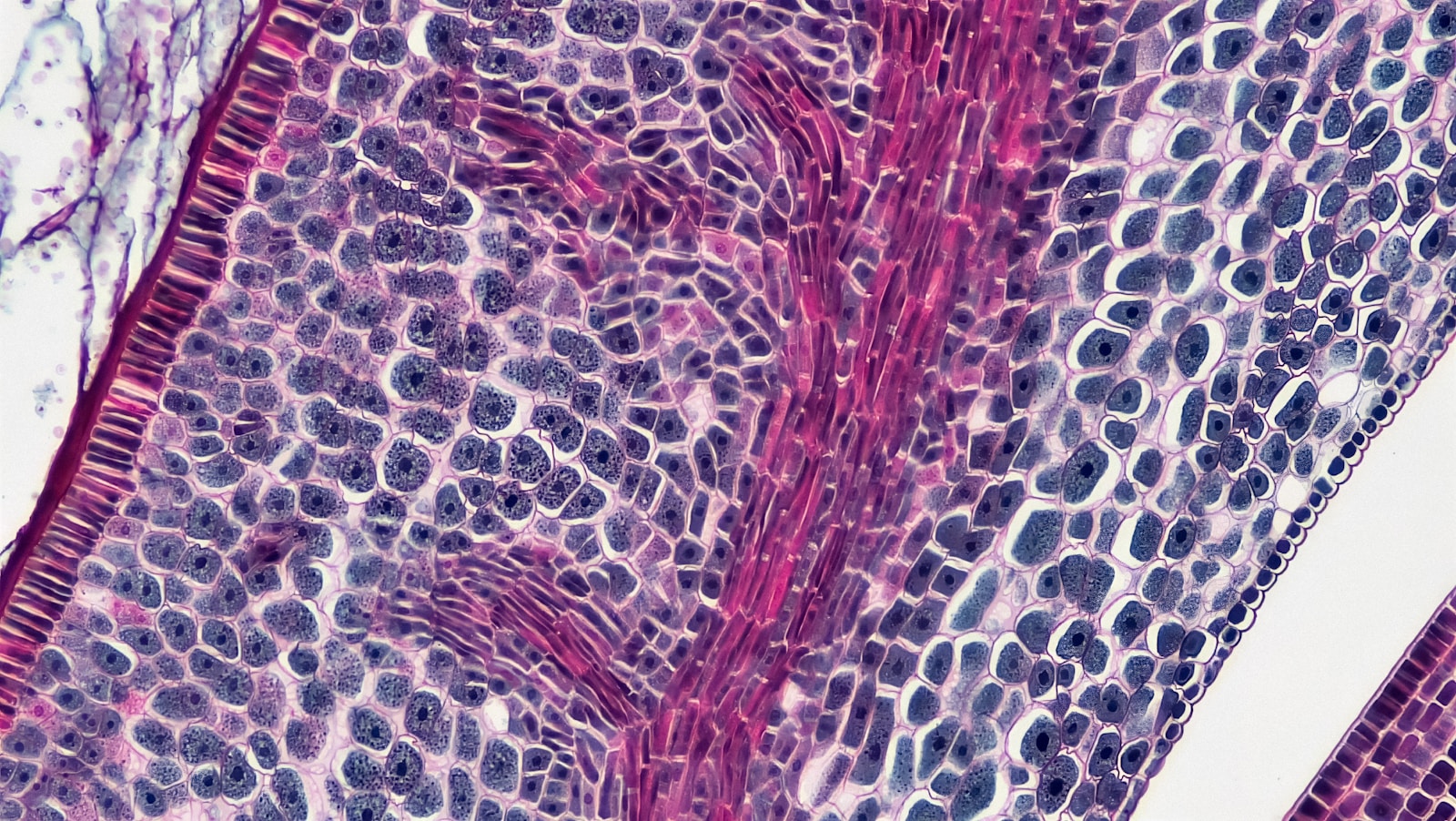
- Photo by Bioscience Image Library by Fayette Reynolds on Unsplash
Quantum computers could eventually help researchers make sense of the overwhelming complexity of single-cell biology, offering new ways to model disease and design cell-based therapies that strain today’s computing systems, according to a new roadmap study published in Nature Reviews Molecular Cell Biology by researchers affiliated with IBM and the Quantum for Healthcare Life Sciences Consortium.
The researchers report that quantum computing, used alongside classical computing and artificial intelligence, may help overcome bottlenecks that limit how scientists analyze single-cell and spatial “omics” data — or measurements of genes, proteins, and other molecular features inside individual cells and tissues. Those limits, the team writes, increasingly stand in the way of translating advances in single-cell technologies into clinical tools.
“The specific confluence of quantum and classical computing with high-resolution assays may offer a crucial path towards the generation of transformative models of cellular behaviours and perturbation responses,” the researchers write.

If the study’s findings prove out, quantum computing could help researchers better understand how individual cells change and respond to treatments, leading to more precise diagnoses and more effective, personalized therapies.
Transformational Biology
Single-cell and spatial assays have transformed biology over the past decade by allowing scientists to observe how individual cells behave, interact and change over time, according to the researchers. These tools underpin major international efforts such as the Human Cell Atlas and large cancer-mapping projects. But the resulting datasets are vast, noisy, and highly dimensional, often involving millions of cells and tens of thousands of measured features. Even the most advanced classical computers struggle to process such data efficiently, particularly when researchers try to model how cells evolve over time or respond to drugs.
The paper positions quantum computing as a possible complement to existing methods rather than a replacement. Quantum computers operate using quantum bits, or qubits, which offer the potential for certain calculations — especially those involving complex probability distributions, optimization, or high-order interactions — to outpace classical computers.
While today’s quantum hardware remains limited and error-prone, the researchers suggest that hybrid approaches combining quantum and classical algorithms could deliver practical benefits well before fully fault-tolerant quantum computers arrive.
Single-cell Biology Faces Computational Limits
Modern single-cell studies rarely rely on a single type of measurement. Researchers increasingly combine gene expression data with information about proteins, chromatin structure, spatial location in tissue, and even live-cell imaging. Integrating these “multi-omics” layers is essential to understanding diseases that arise from subtle changes in cell populations rather than single genetic mutations.
Classical machine-learning methods have been central to this progress, powering tools for cell classification, trajectory inference, and prediction of drug responses. But the study outlines several persistent problems. Many algorithms require large, well-labeled training datasets that are difficult or expensive to generate from human tissue. Others struggle to generalize when applied to new experiments, disease states, or patient populations. Computational cost also rises steeply as datasets grow, especially for methods that rely on repeated sampling or optimization over large graphs.
These problems become more severe when scientists attempt to model cell behavior over time or under perturbation, such as drug treatment or gene editing. Predicting how a therapy will shift the balance of cell states in a tumor or immune system often requires simulating high-dimensional dynamics that push classical methods to their limits.
Where Quantum Methods Could Help
The roadmap surveys a wide range of quantum algorithms that could, in theory, address some of these challenges. For spatial transcriptomics — which measures gene activity while preserving the physical layout of cells in tissue — the team highlights quantum analogs of neural networks, graph methods, and optimal transport. These approaches could improve how cells are segmented, classified, and linked to reference datasets when data are sparse or noisy.
For temporal modeling — or, analysis of how a system changes over time — quantum versions of techniques such as random walks, ordinary differential equations and probabilistic graphical models may offer advantages in capturing complex cell trajectories. These methods aim to reconstruct how cells differentiate, respond to stress, or progress toward disease states using snapshots collected at different times.
One area of particular interest is perturbation modeling, where researchers try to predict how cells respond to interventions such as drugs or gene knockouts. Classical models have made progress, but they often require extensive training data and can miss higher-order interactions among genes and pathways. The study indicates that quantum generative models and quantum-enhanced optimization could represent these interactions more compactly, potentially improving predictions in data-limited settings.
The researchers also write that quantum techniques for detecting higher-order structure in data, such as topological data analysis and tensor decomposition. These methods seek patterns that emerge only when considering combinations of many features at once — patterns that may be invisible to pairwise statistical analyses. In biology, such interactions can reflect coordinated behavior among groups of genes or cells that drive disease progression or therapeutic response.
Implications For Cell-based Therapeutics
The roadmap frames cell-based therapeutics, including immunotherapies like CAR-T cells, as a key use case for quantum-enabled analysis. Designing effective cell therapies requires understanding how engineered cells interact with complex tissue environments and how those interactions change over time. It also involves navigating large design spaces with limited experimental data, since producing and testing modified cells is costly.
Hybrid quantum–classical models could, in principle, help researchers explore these design spaces more efficiently. For example, classical algorithms might compress experimental data into lower-dimensional representations, while quantum algorithms analyze those representations to identify promising therapeutic strategies or predict failure modes.
Such approaches remain speculative, and the researchers are careful to note that most proposed quantum algorithms have yet to demonstrate clear advantages on real biological datasets. Still, they point out that early exploration is warranted, given the pace of progress in both quantum hardware and single-cell technologies.
Limits And Near-term Realities
The paper does not downplay the challenges of implementing quantum or hybrid quantum strategies. Current quantum computers operate with limited numbers of qubits and are sensitive to noise, restricting the size and depth of calculations they can perform. Encoding classical biological data into quantum states — a prerequisite for quantum machine learning — can itself be computationally expensive, potentially offsetting theoretical speedups.
As a result, many near-term applications are likely to rely on shallow quantum circuits, problem-specific heuristics, or quantum-inspired algorithms that borrow ideas from quantum computing but run on classical hardware.
The team also stresses the need for rigorous benchmarking to determine when quantum methods truly outperform classical alternatives, rather than simply adding complexity.
Despite these caveats, the study concludes that quantum computing deserves a place on the long-term roadmap for computational biology. As quantum hardware improves and hybrid systems become more common, the researchers see opportunities for tighter integration of quantum processors with classical high-performance computing and AI workflows.
For single-cell biology, where data complexity continues to grow faster than computing capacity, even incremental gains in efficiency or accuracy could have outsized impact. The scientists suggest that exploring quantum approaches now may help ensure that future breakthroughs in measurement technology translate into equally powerful tools for understanding disease and designing therapies.
IBM researchers include Aritra Bose, Kahn Rhrissorrakrai, Filippo Utro and Laxmi Parida.