

Insider Brief
- The Royal Navy, working with Imperial College London, has completed Arctic trials of quantum-enhanced inertial navigation sensors designed to provide accurate, satellite-free positioning in environments where GPS is unavailable or unreliable.
- The sensors use cold-atom quantum effects to measure acceleration and rotation with high long-term stability, enabling navigation without external signals and making them resistant to jamming, spoofing, or signal loss.
- The Arctic deployment builds on earlier demonstrations since 2018, including trials aboard Royal Navy vessels and the London Underground, as part of efforts to ruggedize the technology for maritime, transport, and other real-world applications.
PRESS RELEASE — The Royal Navy has continued to trial quantum technology aimed at satellite-free navigation – this time in the Arctic with Imperial College London.
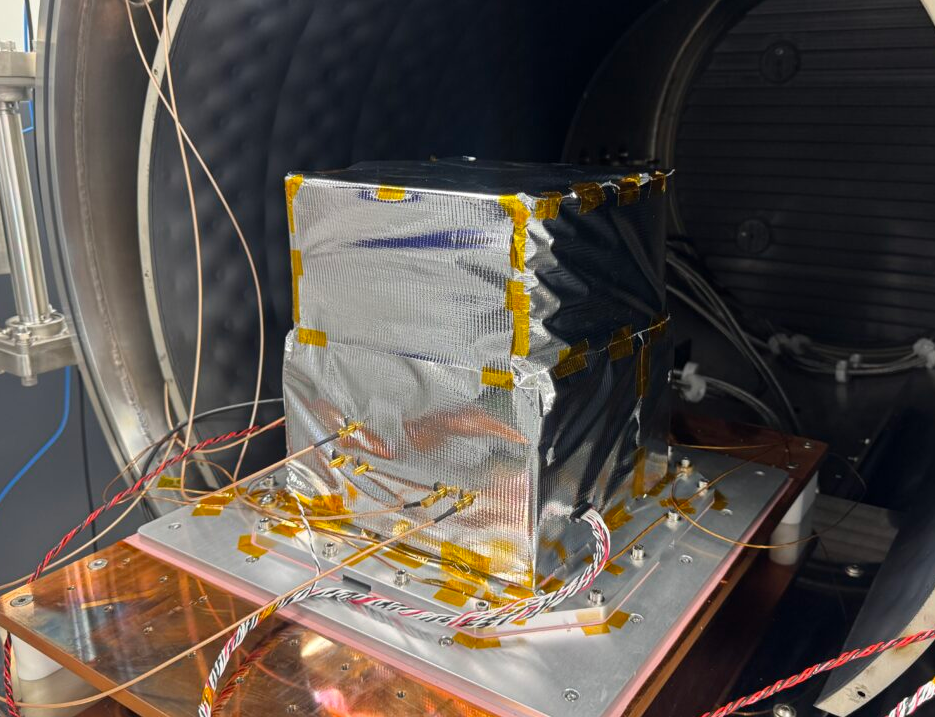
The test, carried out in collaboration with Imperial, is the latest step in a year-long effort to turn quantum-enhanced inertial sensors from a physics experiment into a real-world technology.
For thousands of years, people have turned to the skies to understand where they are on planet Earth. Early sailors navigated vast oceans by reading the constellations, using the night sky to understand their position and chart their course. Today, most of us rely on global navigation satellite systems like GPS (Global Positioning System), to position ourselves in unfamiliar places. Satellites act like the stars that early sailors relied on – each follows a known path, allowing us to predict their exact positions at any moment.

However, GPS isn’t perfect: it doesn’t work underground or underwater, its signal can be blocked by tall buildings or bad weather, and jammed, spoofed, or interfered with remotely. It is estimated that a single day of GPS denial would cost over £1 billion to the UK economy.
The quantum sensors being developed at Imperial College London use quantum phenomena (the wave-like behaviour of cold atoms) to accurately measure accelerations and rotations. If we know our initial position, measurements of acceleration and rotation can be used to work out our location during a journey, without ever having to send or receive a signal remotely. They are highly accurate, remain stable over long periods of time, and are resilient to spoofing attempts.
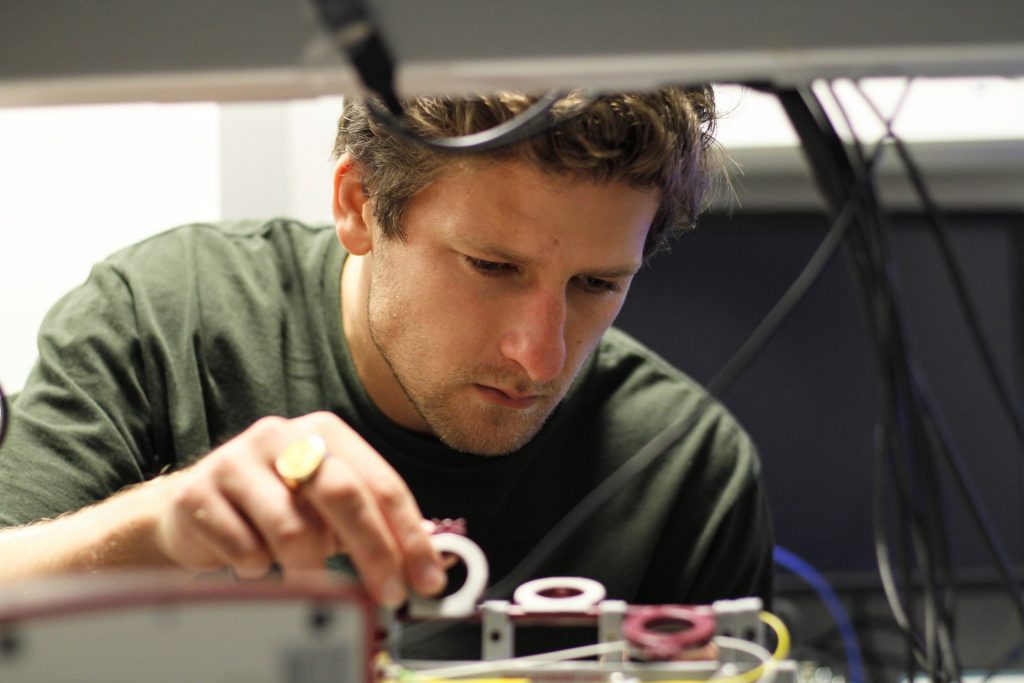
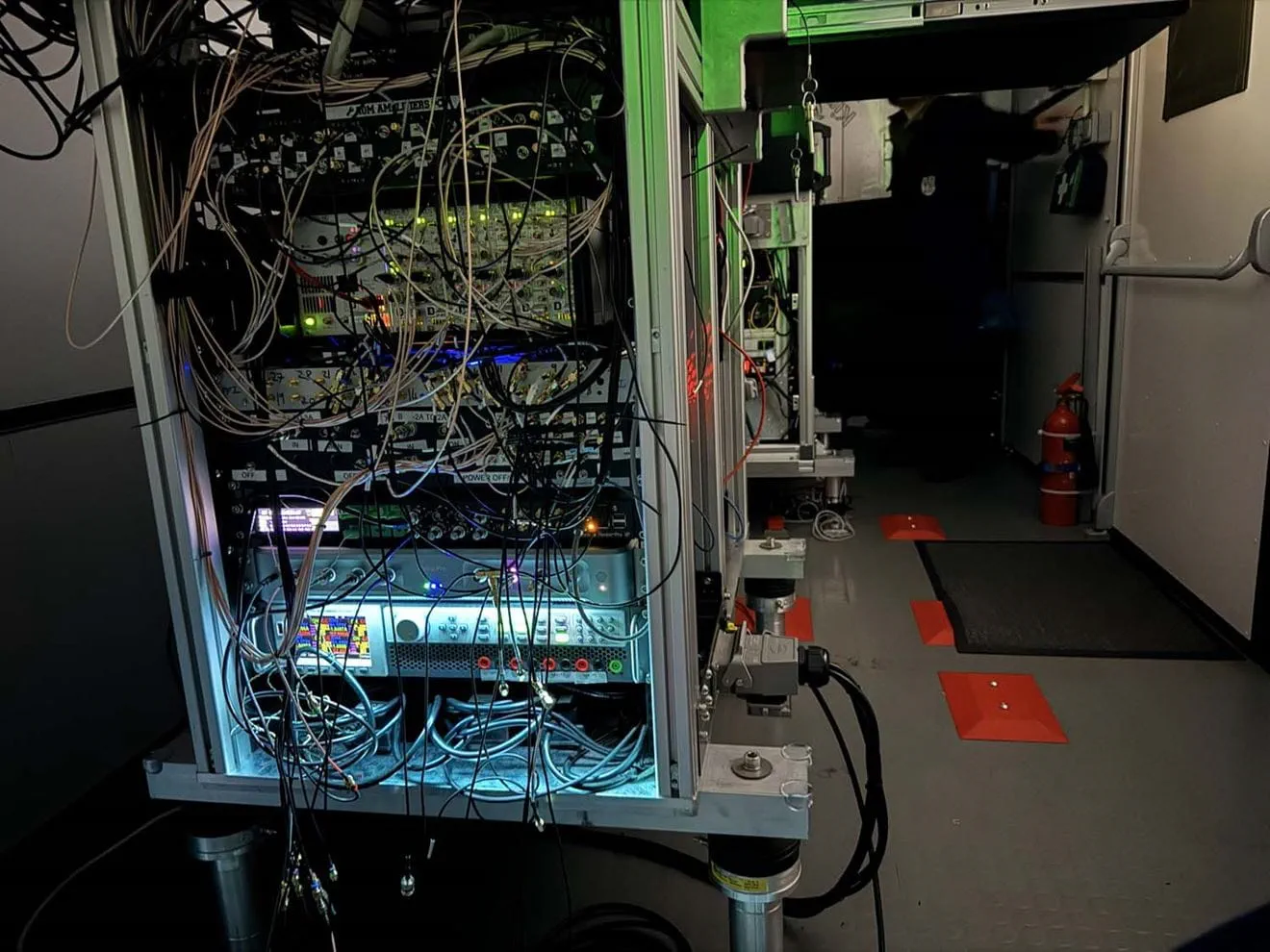
Designing and building the sensors in a lab in South Kensington is one thing, making them rugged and robust enough to operate onboard a ship is another.
Dr Joseph Cotter, lead scientist for the project, working across the Department of Physics and Department of Materials, said: “In the lab our quantum sensors perform extremely well, which is why we’re so excited about their potential for inertial navigation.
“The Arctic field trial lets us test how these devices perform in unpredictable environments, and helps us work out what we still need to do to make them shock resistant, and able to withstand life at sea.”
Quantum-enhanced inertial sensors could revolutionise industries such as aerospace, agriculture, maritime and transport.
The first Imperial quantum sensors for navigation were demonstrated in 2018, and first deployed aboard the Royal Navy research ship the XV Patrick Blackett in 2023. The Imperial quantum sensor has also been deployed on the London Underground, and may one day enable more reliable signalling systems in rail.
Commander Matt Steele Royal Navy, SO1 Future Technology for the Royal Navy’s Disruptive Capabilities and Technologies Office (DCTO), said: “As Head of Futures in the DCTO, I am delighted that Dr Joseph Cotter’s team at Imperial College London was able to test its revised Quantum Inertial Navigation Sensing (INS) technology, onboard MV Anvil Point.