

Insider Brief
- Riverlane has published a peer-reviewed Nature Communications paper demonstrating its Local Clustering Decoder (LCD), a hardware-based decoder delivering real-time, scalable quantum error correction for surface-code systems.
- Implemented on FPGA hardware, the LCD performs decoding rounds in under one microsecond while maintaining high accuracy through adaptive noise modeling.
- The LCD underpins Riverlane’s Deltaflow stack and is already deployed across multiple quantum platforms, supporting progress toward fault-tolerant, utility-scale quantum computing.
PRESS RELEASE — Riverlane today announced the peer-reviewed publication of its Local Clustering Decoder (LCD) paper in Nature Communications, showcasing a hardware decoder that delivers real-time, scalable quantum error correction for the surface code — the error-correction architecture used in many of today’s leading quantum computers.
This is the first time a decoder has delivered real-time speed, high accuracy and adaptive performance together in hardware, a combination widely viewed as essential for building the first useful, error-corrected quantum computers.
Quantum computers promise breakthroughs in fields from materials discovery to drug design, solving problems far beyond the reach of today’s most powerful supercomputers. Yet their building blocks, qubits, are highly sensitive to noise and hardware instabilities, making them prone to frequent errors.

To make quantum computers useful, those errors must be detected and corrected in real-time, as fast as they appear and with sufficient precision to prevent them from spreading. This requires a decoder: a classical algorithm that rapidly interprets error signals (known as syndromes) from the qubits and determines how to correct them. Until now, decoders have faced an unforgiving trade-off: fast decoders lose accuracy, accurate decoders are too slow, and few can scale to handle the rapidly growing volume of error data generated by larger quantum processors.
As quantum processors grow, this decoding bottleneck has become one of the field’s biggest challenges.
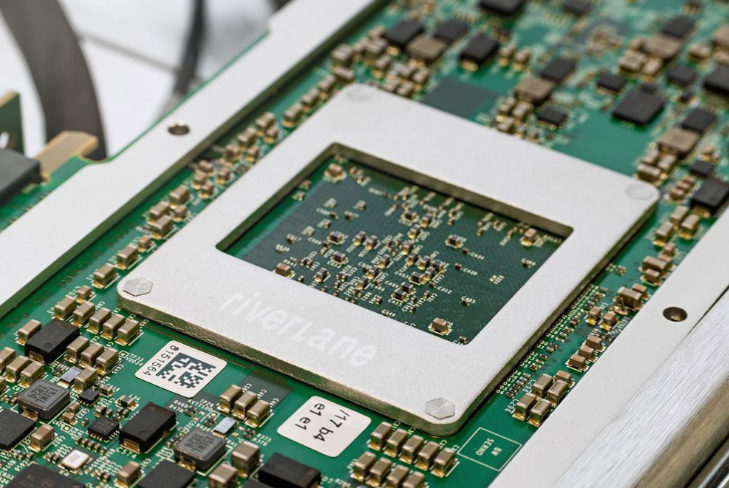
Riverlane’s Local Clustering Decoder breaks this trade-off by adapting to the specific needs of each quantum computer. Implemented on FPGA hardware, the LCD decoder performs one decoding round in under one microsecond, delivering real-time speed and high accuracy in a single, adaptive design. Its adaptivity allows the decoder to respond to changing noise conditions, maintaining accuracy as quantum systems scale.
“The core challenge in quantum error correction has always been achieving real-time speed without compromising accuracy,” said Neil Gillespie, VP of Applied Research at Riverlane. “With the Local Clustering Decoder, we’ve shown that you can deliver both in hardware, with adaptive performance that keeps pace with today and tomorrow’s quantum computers.”
How the Local Clustering Decoder (LCD) Works
The Local Clustering Decoder (LCD) works by grouping nearby qubit errors into clusters and resolving them in parallel, a design that makes it naturally suited to run on bespoke reprogrammable FPGA hardware. This parallelism allows the decoder to process vast streams of quantum error data almost instantaneously.
What sets the LCD apart is its adaptivity. As the quantum computer runs, the decoder continually updates its internal model of the noise environment, recognising patterns such as correlated errors (occurring over multiple qubits), which require real-time adjustments to the model. This helps deal with a common source of noise called ‘leakage’, where qubits can drift into a higher excited state, corrupting the quantum information. In effect, this adaptivity engine behaves like a GPS that continuously recalculates the best routes as road conditions change.
This combination of local clustering and adaptive updating gives the LCD both the speed required for real-time operation and the intelligence to maintain accuracy as hardware conditions fluctuate.
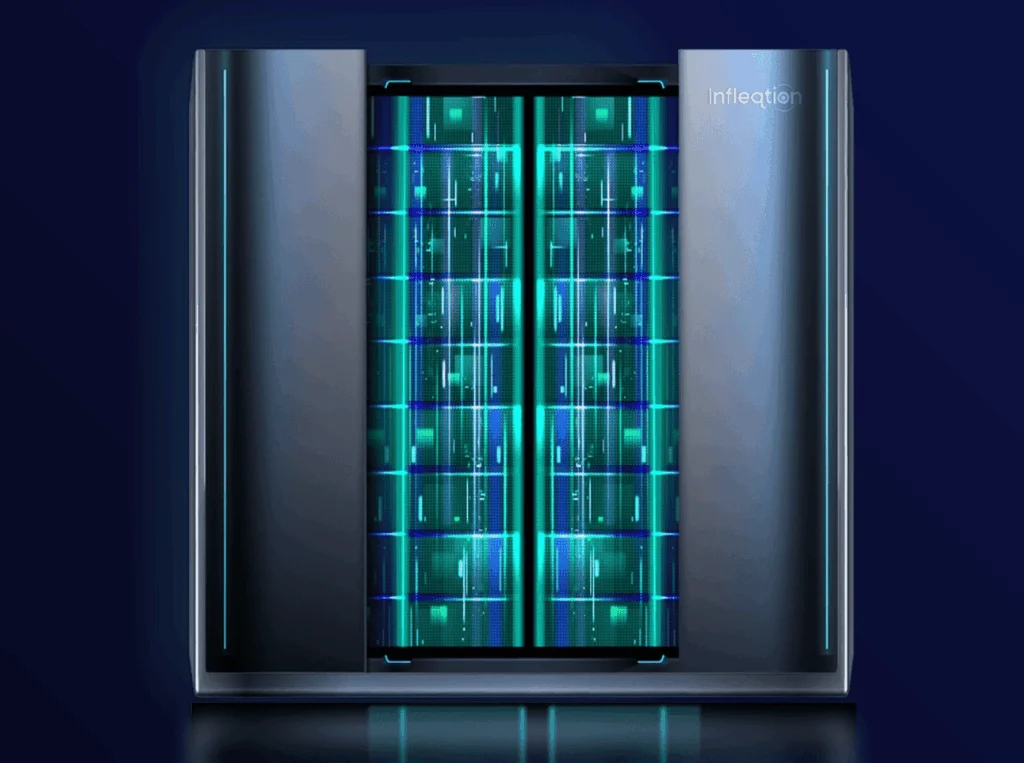
The LCD technology in the Nature Communications paper forms the core of Riverlane’s Deltaflow stack for real-time quantum error correction. The latest release, Deltaflow 2, incorporates the LCD and has been deployed on several quantum computing systems, including those of Infleqtion, Oxford Quantum Circuits, Oak Ridge National Laboratory, and Rigetti Computing. These deployments demonstrate the decoder’s ability to scale across multiple qubit types and integrate with a variety of quantum hardware and QPUs.
The LCD decoder is also available in Deltakit, Riverlane’s software platform for learning and experimenting with quantum error correction in software.
Looking Ahead – Toward Utility-Scale Quantum Computing
Riverlane continues to advance its roadmap toward continuous, real-time error correction – a requirement for the first fault-tolerant quantum computers. Deltaflow 3, expected in late 2026, will introduce a new capability called ‘streaming logic’, enabling quantum computers to detect and correct errors continuously while performing operations on logical qubits.
Every generation of Deltaflow is engineered with the full constraints of large-scale quantum error correction in mind – including speed, accuracy, adaptivity, and system-level integration – ensuring that today’s capabilities translate directly to the performance levels required for future million- and billion-operation systems.
Riverlane’s long-term goal is to help the quantum community reach utility-scale, the point at which quantum processors can perform a range of practical, error-corrected applications beyond the reach of any classical computer. The Local Clustering Decoder represents an important step along that path.
“We have shown that real-time error correction is possible,” said Steve Brierley, Founder & CEO of Riverlane. “Our focus is on scaling this capability and delivering the QEC technologies that will enable every quantum computer to reach utility-scale.”