


Insider Brief
- Photonic Inc. has introduced a distributed Quantum Resource Estimation (QRE) method that measures the full cost of scaling fault-tolerant quantum systems using SHYPS QLDPC codes.
- The approach accounts for inter-module communication and networking costs, providing realistic benchmarks for large-scale quantum applications such as Shor’s algorithm.
- Photonic’s method enables accurate comparisons across architectures and informs timelines for practical deployment of quantum algorithms.
PRESS RELEASE — Photonic Inc. – announced a comprehensive approach to Quantum Resource Estimation that fundamentally shifts how quantum performance will be measured & compared. This method accounts for the costs of distributed quantum computing using Quantum Low-Density Parity Check (QLDPC) codes.
For the first time, a QRE estimate for Shor’s algorithm has been precisely calculated with Photonic’s high-connectivity SHYPS QLDPC code family on a fully distributed architecture. This estimate includes the cost of operations within and across multiple systems, establishing a new benchmark for realistic quantum computing.
Quantum computing stacks are complex, they have interdependent layers of hardware, software, and algorithms.

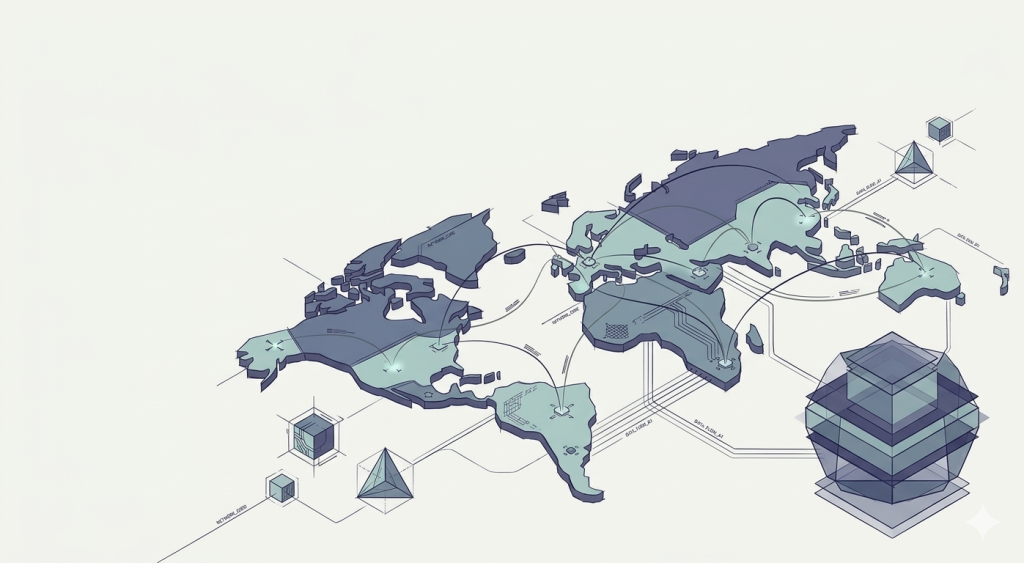
Historically, resource estimates have assumed all qubits reside in a monolithic system – overlooking the additional costs of networking and distributed computation–discounting the challenges inherent in engineering high-performance, post-hoc intermodular links. Yet most commercially valuable quantum algorithms will require hundreds to thousands of logical qubits, which need millions of physical qubits to support them, so today’s simplified estimates do not reflect the true cost of scaling.
“Distributed QRE matters because it finally reflects the true cost of scaling quantum systems,” said Dr. Stephanie Simmons, Chief Quantum Officer at Photonic. “By fully accounting for networking and connectivity, we bring realism to resource estimates—enabling apples-to-apples comparisons across vendors and architectures, so the industry can see when quantum applications will move from theory to practice.”
Photonic’s distributed QRE, based on their Entanglement FirstTM architecture, accounts for inter-module communication costs from the outset, providing actionable, full-stack resource estimates for practical quantum applications. This approach enables development teams to track the impact of hardware, software & algorithmic improvements, and most importantly, offers the industry a realistic timeline for when key quantum applications will become practical.
While recent QRE analyses for Shor’s algorithm set a high bar, they underestimate costs by assuming the algorithm can be completed on monolithic designs that won’t be easy to achieve by today’s leading qubit modalities. Photonic’s distributed architecture – designed for scalability – delivers competitive resource forecasts using the same algorithmic approach, but with results that are truly comparable and practical for large-scale deployment.
The full logical argument for distributed QRE and resulting qubit counts and runtime on Photonic’s architecture with SHYPS are presented in the whitepaper, “SHYPS to Shor’s: A Call for Distributed QRE,” available for download. Photonic’s latest QRE results will be presented by Dr. Stephanie Simmons, Chief Quantum Officer at Q2B 2025, taking place December 9–11 at the Santa Clara Convention Center in Santa Clara, California.
For more details, please read Photonic’s whitepaper: SHYPS to Shor’s A Call for Distributed QRE.