

Insider Brief
- G7 ministers concluded their Montréal meeting with new commitments on artificial intelligence, quantum technologies, digital infrastructure, supply chain security and industrial competitiveness.
- Canada led the launch of a new SME AI Adoption Blueprint and companion AI Toolkit to help small and medium-sized businesses deploy artificial intelligence responsibly and at scale.
- On the margins of the talks, Canada announced new digital and quantum cooperation agreements with the European Union, the United Kingdom and Germany.
- Image: Government of Canada
Canada and its G7 partners held a three-day meeting in Montréal with new commitments on artificial intelligence (AI), quantum technologies, digital infrastructure and industrial competitiveness, as ministers sought to deepen cooperation amid growing economic and geopolitical uncertainty, according to a statement from the Canadian government.
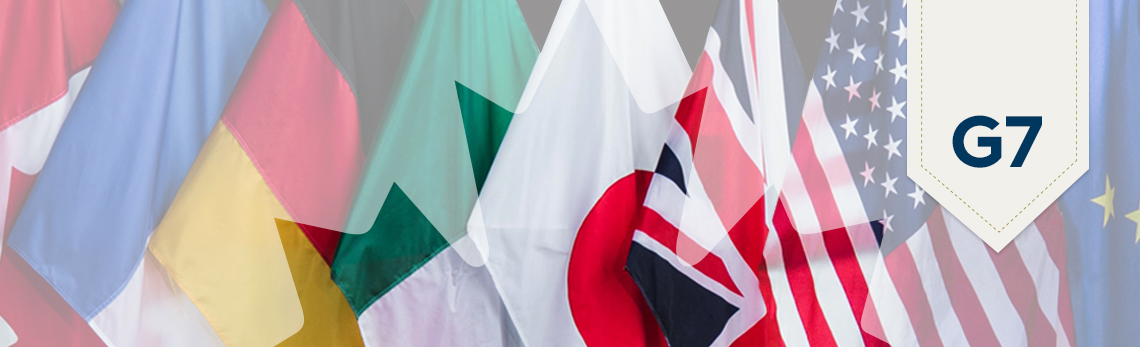
The G7 Industry, Digital and Technology Ministers’ Meeting brought together officials from Canada, France, Germany, Italy, Japan, the United Kingdom, the United States and the European Union, along with representatives from the Republic of Korea. The talks focused on shared priorities including supply chain security, access to critical industrial inputs, artificial intelligence and emerging technologies, such as quantum computing.
The meeting was co-chaired by Mélanie Joly, Canada’s Minister of Industry and Minister responsible for Canada Economic Development for Quebec Regions, and Evan Solomon, Canada’s Minister of Artificial Intelligence and Digital Innovation and Minister responsible for the Federal Economic Development Agency for Southern Ontario.

“As we conclude this G7 Industry, Digital and Technology Ministers’ Meeting, I am proud to see Canada and our G7 partners united in strengthening global supply chains and driving forward strategic industrial investments. Together, we are protecting our industrial competitiveness and ensuring our economies remain resilient. Canada reaffirms its commitment to international collaboration, democracy and economic leadership—building a future where our industries thrive and our partnerships set the standard for global progress,” Joly said.
Trade Conditions, Geopolitical Risks
Ministers agreed that tightening global trade conditions and rising geopolitical risks are making it harder for countries to secure the materials and technologies needed for industrial growth without creating new economic dependencies. They emphasized the need to remove barriers to innovation while advancing both industrial and digital transformation.
Quantum technologies featured prominently in the discussions as governments weighed their economic promise alongside their national security implications. Lisa Lambert, Chief Executive Officer of Quantum Industry Canada, addressed ministers during a dedicated quantum session, framing the stakes of international coordination in the sector.
“Every major technological shift has been defined by the alliances behind it. Quantum will be no different, and the stakes may be higher,” Lambert said, in a LinkedIn post. “Real capabilities are emerging in sensing, secure communications, networking, and specialized computing. These technologies are dual-use, strategically decisive, and advancing on different timelines, making quantum both a now and next technology.”
Under Canada’s leadership, G7 countries formally welcomed a new Small and Medium-sized Enterprise AI Adoption Blueprint, a practical framework designed to help small and medium-sized businesses deploy artificial intelligence responsibly and at scale. The blueprint outlines policy tools, trusted use cases and deployment strategies to boost productivity. It is paired with a new SME AI Toolkit, delivered under Canada’s G7 presidency, which provides hands-on resources to help firms adopt AI and compete in global markets.
“Our G7 collaboration has delivered concrete tools to help businesses compete—especially the SME AI Toolkit and the SME AI Adoption Blueprint that Canada took the lead on. We are giving entrepreneurs trusted, practical solutions to adopt AI, scale faster and grow productivity. Through new partnerships with the European Union, the United Kingdom and Germany—including the Canada–Germany Digital Alliance and a joint quantum commercialization call—we are strengthening digital sovereignty, accelerating innovation and opening new frontiers of opportunity. Together with our G7 partners, Canada is not just envisioning the future but also building it,” Solomon said.
Digital and Technology Ministerial Declaration
Ministers also endorsed the 2025 G7 Industry, Digital and Technology Ministerial Declaration, which sets out areas for continued cooperation across technology, industrial policy and economic security. The declaration is intended to strengthen the competitiveness of G7 economies as digital and advanced technologies reshape global industry.
On the margins of the meeting, Solomon concluded a series of international agreements aimed at expanding Canada’s digital partnerships. Canada signed two memoranda of understanding with the European Union to deepen collaboration on AI, data governance and trusted digital services, while advancing shared work on digital sovereignty. A separate memorandum with the United Kingdom will focus on national digital public infrastructure and secure, interoperable digital systems.
Canada and Germany also launched a new Canada–Germany Digital Alliance, a strategic framework for cooperation on artificial intelligence, quantum technologies, digital infrastructure and talent mobility. As part of that effort, Solomon and German Digital Minister Karsten Wildberger highlighted an upcoming joint call for proposals to support the commercialization of quantum technologies. Solomon also confirmed that Canada and the United Kingdom are preparing to solicit expressions of interest for a future quantum communications demonstration project.
Canadian officials added that the agreements overall are intended to strengthen shared industrial capacity, accelerate innovation ecosystems and lay the groundwork for the next phase of the global digital economy.