

Insider Brief
- Fujitsu plans to build a 10,000-qubit superconducting quantum computer by 2030 to achieve 250 logical qubits and enable early fault-tolerant computation for industrial applications.
- The project expands on Japan’s national quantum strategy and leverages partnerships with RIKEN, AIST, and universities to advance qubit manufacturing, interconnects, cryogenic packaging, and error-correction technologies.
- Fujitsu’s roadmap includes integrating superconducting and diamond spin-based systems after 2030, with a target of reaching 1,000 logical qubits by 2035 through modular, hybrid architectures.
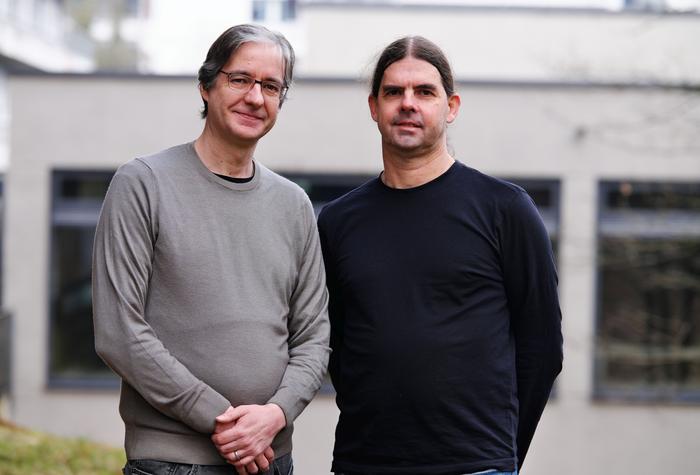
- Images: Courtesy of RIKEN
By 2030, Fujitsu aims to build a superconducting quantum computer with more than 10,000 qubits, a goal that would place it among history’s most ambitious engineering undertakings. Unlike the moonshot for a fully fault-tolerant million-qubit machine, Fujitsu’s program is pragmatically built around achieving 250 logical qubits,and making use of the quantum computer for useful computations in fields like materials science, chemistry and industrial design.
This effort, rooted in decades of quantum research and Japan’s national technology strategy, marks the next phase of Fujitsu’s evolving quest to make quantum computing practical and commercially viable, according to Vivek Mahajan, Corporate Executive Officer, Corporate Vice President, CTO, in charge of System Platform, Fujitsu Limited.
“Fujitsu is already recognized as a world leader in quantum computing across a broad spectrum, from software to hardware,” said Mahajan, in a company statement.

“This project, led by NEDO, will contribute significantly to Fujitsu’s goal of further developing a Made-in-Japan fault tolerant superconducting quantum computer. By realizing 250 logical qubits in fiscal 2030 and 1,000 logical qubits in fiscal 2035, Fujitsu is committed to leading the path forward globally in the field of quantum computing.”
Fujitsu’s focus goes beyond superconducting architecture, and quantum computing. “We would also be aiming to combine superconducting quantum computing with diamond spin technology as part of our roadmap. Fujitsu will further integrate its platforms for high-performance and quantum computing to offer a comprehensive computing platform to our customers”, Mahajan continued.
From “Dream Computers” to Early Fault-Tolerance
Using quantum computers to solve problems impossible for classical computers has fascinated researchers since Richard Feynman first imagined a computer based on quantum mechanics in 1982.
The first experimental superconducting qubit was realized in 1999, but progress was slow. As late as 2015, the number of controllable qubits doubled only every few years. Then, around 2017, a new surge began: coherence times improved and error rates dropped, leading to Google’s “quantum supremacy” demonstration on contrived tasks in 2019.
Despite that progress, practical computing remains elusive. Error correction—the process of maintaining information fidelity across noisy quantum operations—requires orders of magnitude more qubits than are currently available. Fujitsu’s researchers estimate that solving real-world problems will demand at least one million physical qubits for a single error-corrected processor.
According to a company white paper written by Fujitsu Laboratories’ Yoshiyasu Doi and Shintaro Sato, that is the scale problem Fujitsu now seeks to bridge, not by leaping directly to a million, but by building a practical intermediate. The company is focused on building a plus-10,000-qubit superconducting system supporting 250 logical qubits. This machine will form the foundation for what the company calls early-stage fault-tolerant quantum computing, or early-FTQC.
The STAR Architecture and the Path to Practical Use
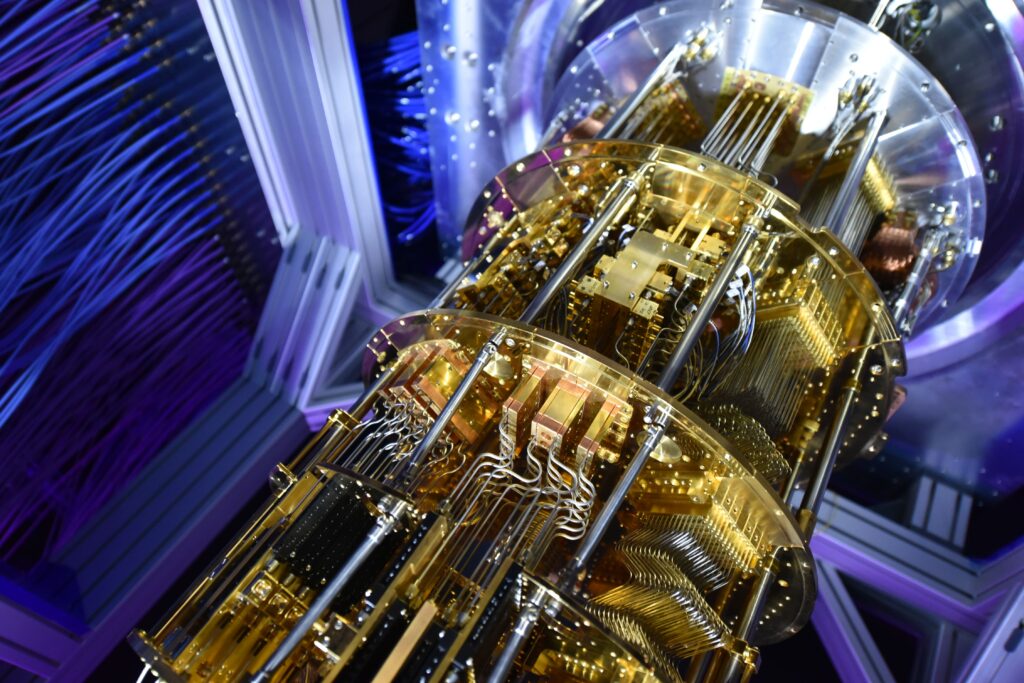
At the heart of this new system is Fujitsu’s proprietary STAR architecture, unveiled in 2023 in collaboration with Osaka University. Based on phase rotation gates, STAR is optimized for efficient logical gate operations and lower operational overhead. The architecture theoretically enables quantum advantage – the outperforming of classical computers—with as few as 60,000 physical qubits.
Fujitsu’s new project builds directly on that foundation. The 10,000-qubit system, to be completed by 2030, will serve as a testbed for early-FTQC and a stepping stone to the long-term goal: a 1,000 logical qubit machine by 2035. To reach that, Fujitsu is developing a suite of enabling technologies designed to scale qubits reliably while controlling cost, heat, and noise.
The company’s research focus spans four critical areas:
- High-throughput, high-precision qubit manufacturing: improving Josephson junction precision to minimize frequency variation in superconducting qubits.
- Chip-to-chip interconnects: advancing wiring and packaging to connect multiple qubit chips into unified processors.
- High-density packaging and low-cost control: reducing component count and heat load in cryogenic environments.
- Decoding for quantum error correction: designing algorithms to interpret measurement data and correct operational errors efficiently.
A Legacy of Open Innovation
Fujitsu’s current program did not arise in isolation. It builds on over two decades of work uniting academic and industrial research through what the company calls open innovation.
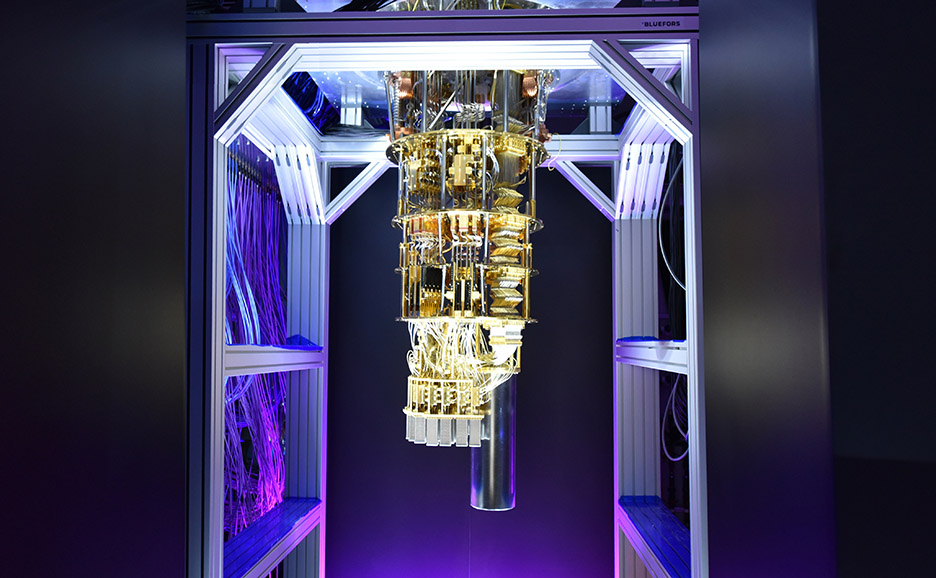
The RIKEN RQC–Fujitsu Collaboration Center, established in 2021, has become Japan’s cornerstone for superconducting quantum R&D. The team unveiled a 64-qubit processor in 2023 and followed it with a 256-qubit system in 2025—currently one of the largest in operation. These systems provide experimental grounding for the 10,000-qubit roadmap.
Parallel research at Delft University of Technology and QuTech focuses on diamond spin-based qubits, which use light to connect qubits over longer distances. Unlike superconducting qubits that must operate near absolute zero, diamond spin systems can tolerate higher temperatures, potentially enabling modular, optically linked processors. Fujitsu intends to combine these two approaches after 2030, exploring hybrid systems that merge superconducting and photonic connectivity.
The team writes in the white paper: “… stable nuclear spins in diamond are used as memory qubits to hold quantum information, and operations between qubits are achieved by using quantum teleportation mediated by light. This technology, which allows higher-temperature operation as compared with the superconducting method and does not require a large dilution refrigerator, is promising for realizing larger-scale systems.”
Tackling the Error Problem
Even if qubits can be scaled, their fragility could still remain a bottleneck, according to the Fujitsu teams. Small fluctuations in magnetic fields, temperature, or control signals can cause decoherence—loss of the delicate quantum information. The teams describe this as the “core fragility” of the qubit system, which makes error correction indispensable.
In 2020, Fujitsu began joint research with Quantum Benchmark Inc. (later acquired by Keysight) to apply randomized compiling, a statistical method that suppresses certain gate-level errors. The technique rearranges logically equivalent gate sequences to statistically mitigate the effects of coherent errors in quantum computers and obtain more reliable computational results.
At Osaka University, another long-term collaboration is exploring various software approaches aimed at achieving practical computation in early fault-tolerant quantum computing era. This includes investigating performance innovations for the STAR architecture and exploring new quantum error correction schemes that form its foundation.
Building for Industrial Use
Unlike many Western peers whose business models revolve around cloud access to quantum prototypes, Fujitsu’s roadmap emphasizes industrialization. The company envisions its 10,000-qubit machine not as an isolated scientific instrument but as part of Japan’s broader national computing infrastructure – integrated with supercomputers and AI accelerators.
In fact, the 10,000-qubit project is an extension of Fujitsu’s long history of developing computing solutions. Its Digital Annealer, launched in the 2010s, brought a new computing paradigm using digital circuits to emulate quantum annealing and solve large-scale optimization problems for finance, logistics, and materials design.
The new quantum initiative inherits that pragmatic ethos: delivering computational utility in the short term while advancing toward full-scale quantum advantage.
Collaboration with RIKEN and AIST
Japan’s approach to quantum technology is strongly institutional, relying on inter-agency collaboration to maintain global competitiveness. Fujitsu’s alliance with RIKEN, AIST and major universities like Osaka and Tokyo places it at the center of Japan’s national quantum ecosystem.
RIKEN provides world-class superconducting expertise – led by researchers such as Prof. Yasunobu Nakamura, one of the pioneers of superconducting qubits – while AIST contributes semiconductor fabrication and system integration capabilities. Fujitsu brings decades of industrial engineering and system scaling experience to the partnership.
These collaborations are essential, Fujitsu notes, because “research on quantum computing requires knowledge across numerous technical fields,” from cryogenics to photonics to mathematical optimization.
The result is a vertically integrated effort that spans from qubit device physics to application software.
“We intend to move ahead with R&D leading to practical application in terms of both software and hardware with the aim of utilization of NISQ computers in the near future and large-scale fault-tolerant quantum computers in the further future,” writes Doi and Sato.
Toward a Hybrid Quantum Future
Looking beyond 2030, Fujitsu plans to merge its superconducting and diamond spin-based systems into hybrid architectures. These would leverage superconducting qubits for local, high-fidelity operations and photonic spin-based qubits for long-distance entanglement and interconnectivity.
Such an approach aligns with global trends toward modular quantum computing—the idea that smaller, highly reliable processors can be networked together to form distributed quantum systems. Fujitsu’s research into chip-to-chip interconnects and cryogenic packaging technology directly supports this vision.
By fiscal 2035, the company aims to deliver a 1,000-logical-qubit system, using interconnected multi-chip modules. Achieving that would mean overcoming not only the physical constraints of cryogenic wiring but also the algorithmic challenges of coordinating computation across multiple chips—a technical feat comparable to the early days of supercomputing clusters.
Part of a Broad National Strategy
These engineering efforts are coordinated under Japan’s NEDO “Post-5G Information and Communication Systems” program, which supports next-generation computing infrastructure. Fujitsu’s role, alongside partners AIST and RIKEN, is to advance quantum technologies from laboratory prototypes to industrial-scale systems by 2027.
Although the “Post-5G” initiative may sound peripheral, it underpins the data backbone required for Fujitsu’s vision. Quantum computers—especially modular ones—depend on ultra-fast, low-latency connections to move entangled quantum information and control signals.
Fujitsu’s inclusion in the NEDO project thus reflects the convergence of quantum computing. Quantum systems will require classical control networks capable of handling terabit-scale data transfers at cryogenic temperatures, synchronized with microwave and optical channels. Post-5G technologies could provide the infrastructure for that synchronization.
In this sense, quantum computing is not an isolated field but part of Japan’s broader strategy for post-Moore computing—combining AI and supercomputing, to sustain performance growth beyond the transistor era.
A Measured Path to Utility
The company’s roadmap, stretching from its current 256-qubit system to a 10,000-qubit early-FTQC machine, is a bet on practicality over publicity. It suggests that quantum progress may come not from a single leap to a million-qubit computer, but from disciplined, incremental engineering, each stage building the infrastructure, algorithms, and error correction required for the next.
While rivals compete to demonstrate quantum advantage through cloud experiments, Fujitsu’s focus is slower but steadier: industrial-scale readiness. By aligning government funding, academic partnerships, and hardware manufacturing expertise, Fujitsu is positioning Japan as a key node in the global quantum supply chain.